Key Points
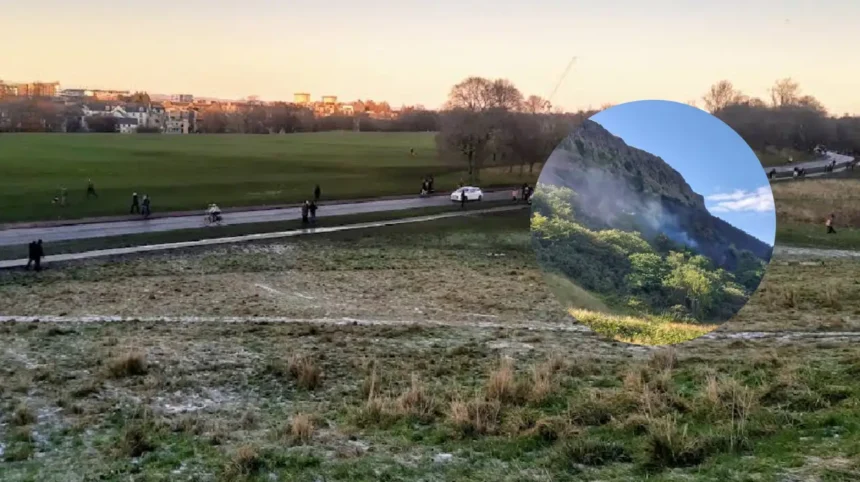
- Fire crews from the Scottish Fire and Rescue Service (SFRS) are continuing to battle a blaze at Arthur’s Seat in Edinburgh after being alerted at 6.38pm on Sunday, 19 July 2026.
- Six fire appliances were at the Arthur’s Seat scene at around 6.30am on Monday, with operations described as ongoing and crews still active.
- An SFRS spokesperson has confirmed there are no reported casualties linked to the Arthur’s Seat fire so far.
- The Arthur’s Seat incident comes as SFRS continues work on a separate large-scale wildfire in the Cairngorms, near Glenmore, which has been burning since Wednesday.
- Cairngorms National Park Authority officials say the wildfire there is now “largely surrounded” and “largely under control”, though it remains a live situation.
- Around 4 square kilometres of land were burned at the peak of the Cairngorms fire, according to park bosses.
- Evacuated residents and campers in the Cairngorms exclusion zone are expected to be able to return home “later today”, subject to conditions remaining safe.
- The Ski Road and surrounding areas near Glenmore are likely to remain off-limits for some time due to ongoing operations and the amount of machinery and personnel on site.
- Park bosses have highlighted the importance of helicopter support and other resources in tackling hard-to-reach areas of the Cairngorms blaze.
- Gavin Miles, director of planning and place at the Cairngorms National Park Authority, has praised the efforts of SFRS crews and the cooperation of local residents, visitors and businesses during the wildfire response.
Edinburgh (Edinburgh Daily) July 20, 2026 – Scottish Fire and Rescue Service crews tackling the Arthur’s Seat blaze while managing a separate large-scale wildfire in the Cairngorms.
- Key Points
- What is the current situation with the Cairngorms wildfire and how has it been brought under control?
- How have residents, visitors and businesses in the Cairngorms been affected?
- How is SFRS balancing resources between Arthur’s Seat and the Cairngorms wildfire?
- What safety messages and access restrictions are in place for the public?
- Background to the Arthur’s Seat and Cairngorms fire incidents
- Prediction: How might these developments affect local residents, visitors and businesses?
The blaze at Arthur’s Seat in Edinburgh was first reported to the Scottish Fire and Rescue Service (SFRS) at 6.38pm on Sunday, 19 July 2026, prompting an immediate mobilisation of crews to the popular hill and surrounding open land. As confirmed by an SFRS spokesperson, Operations Control initially dispatched four fire appliances to the scene in response to reports of a fire “in the open” at Arthur’s Seat, reflecting the service’s standard approach to potentially fast‑moving grass and scrub fires in urban-adjacent parkland. The spokesperson stated that “crews are still at the scene” and emphasised that, at this stage, “there are no reported casualties,” indicating that while the incident remains serious, there have been no confirmed injuries linked to the blaze so far.
By around 6.30am on Monday, SFRS had increased its presence at Arthur’s Seat to six appliances, underlining the scale of the response and the need for sustained firefighting operations overnight and into the morning. The deployment of additional appliances suggests that the fire either remained active across multiple fronts or that crews were rotating while ensuring sufficient cover to prevent any further spread. In line with standard incident management protocols, SFRS has continued to monitor conditions closely, with Operations Control remaining engaged to support crews on the ground as they work to contain and extinguish the flames.
Arthur’s Seat, a prominent landmark within Holyrood Park and a well-known vantage point overlooking Edinburgh, contains areas of grassland, gorse and heath that can become particularly vulnerable to fire during dry spells. While there has been no formal attribution of cause at this stage, open land fires in such locations often involve a combination of environmental conditions and human activity, and investigators are likely to assess these factors once the incident is fully under control. SFRS has not announced any restrictions or evacuations specific to nearby residential areas at the time of reporting but continues to urge the public to avoid the immediate vicinity of the firefighting operation to allow crews to work safely.
What is the current situation with the Cairngorms wildfire and how has it been brought under control?
The Arthur’s Seat incident coincides with an ongoing large-scale wildfire in the Cairngorms, which has been burning since Wednesday and has demanded extensive resources from SFRS and partner agencies. Earlier on Sunday, officials from the Cairngorms National Park Authority issued an update indicating that the wildfire affecting the Glenmore area is now “largely surrounded”, marking a significant milestone in efforts to contain the blaze. Park bosses reported that the fire, which at its peak burned around 4 square kilometres of land, is now “largely under control”, though they stressed that the incident remains live and requires continued vigilance from crews on the ground.
As outlined by Gavin Miles, director of planning and place at the park authority, “News from Glenmore this morning is very encouraging, with colleagues from SFRS indicating that the fire is now largely surrounded.” Miles’ statement reflects cautious optimism, balancing positive progress with a reminder that “teams are still very active on the ground, so we are taking nothing for granted at this stage.” This approach is consistent with wildfire management practice, where an apparently contained perimeter can still present risks of re-ignition or spot fires, particularly in areas of rough terrain and variable wind conditions.
The response in the Cairngorms has involved close coordination between SFRS, park officials and other partners, with a focus on both frontline firefighting and community safety. The park authority confirmed that the incident remains ongoing, with fire crews and partner organisations “tackling the blaze together”, underlining the joint nature of the operation. Helicopter support has been described as integral in battling the fire in tougher‑to‑reach areas, reflecting the challenges posed by steep slopes, forested sections and remote ground where conventional appliances and personnel may struggle to gain access.
How have residents, visitors and businesses in the Cairngorms been affected?
The wildfire in the Cairngorms prompted evacuations in parts of Glenmore and surrounding areas, with some residents, campers and businesses directly impacted by the establishment of an exclusion zone and road closures. In their Sunday afternoon update, park bosses indicated that the fire is “largely under control”, and officials now expect evacuated residents to be able to return home “later today”, subject to ongoing assessments of fire behaviour and safety conditions. This expectation marks a significant step towards normality for those who have spent several days away from their properties, campsites or businesses due to the risk posed by the wildfire.
Gavin Miles has highlighted the role of community cooperation during the incident, stating, “We’re really grateful for the continued efforts of everyone helping fight the fire in Glenmore, and for the cooperation of local residents, visitors and businesses at what I know is a very difficult time.” His comments acknowledge not only the work of fire crews and partner agencies but also the patience and understanding shown by those affected by the disruption. The park authority has stressed that even as access begins to be restored, this remains a “live situation” and that people returning to the area should expect ongoing operational activity, including the presence of firefighting equipment and personnel.
The Ski Road and surrounding areas are likely to be “off-limits for some time to come”, according to the park authority, due to “the sheer number of people and machinery on-site” as crews continue to secure the area and carry out essential work. This continued restriction underscores the scale of the response and the need to prioritise safety over immediate reopening. Businesses that rely on access via the Ski Road, including those connected to outdoor tourism and recreation, may face short-term disruption, but the emphasis from officials has been on ensuring that the fire is fully controlled before lifting remaining restrictions.
How is SFRS balancing resources between Arthur’s Seat and the Cairngorms wildfire?
The simultaneous management of a blaze at Arthur’s Seat in Edinburgh and a large-scale wildfire in the Cairngorms presents a notable operational challenge for the Scottish Fire and Rescue Service, which must deploy sufficient resources to both incidents while maintaining overall cover across Scotland. In the Arthur’s Seat case, SFRS Operations Control mobilised four appliances at first alert and later increased that number to six by early Monday morning, reflecting an escalation in response tailored to the evolving conditions on the ground. This level of deployment, sustained overnight, suggests that SFRS has been able to allocate targeted resources to the urban-adjacent fire without compromising efforts in the Cairngorms.
In the Cairngorms, the involvement of multiple partners and specialist resources, including helicopter support, has allowed SFRS to focus its frontline teams on key sectors of the wildfire perimeter while using air support to reach difficult terrain. The description of the fire as “largely surrounded” indicates that strategic containment lines have been established, likely with the assistance of both ground crews and aerial operations. This containment makes it possible for SFRS to maintain progress in the Cairngorms while responding dynamically to new incidents, such as the Arthur’s Seat blaze.
Coordination between incident command teams in Edinburgh and the Cairngorms is central to ensuring that both fires are managed safely and effectively. The park authority’s acknowledgement that “fire crews and other partners” are tackling the Cairngorms blaze together points to a multi‑agency approach, which can help distribute responsibilities and make more efficient use of specialist capabilities. As operations continue, SFRS will be expected to review resource allocations on a regular basis, adjusting appliance numbers and support units as conditions change and as either fire moves towards full extinguishment.
What safety messages and access restrictions are in place for the public?
While there have been no reported casualties in relation to the Arthur’s Seat fire, SFRS and local authorities are likely to reinforce messages urging the public to stay away from active firefighting areas and to follow any temporary closures or diversions. Arthur’s Seat and Holyrood Park attract significant numbers of walkers, runners and tourists, and managing public access during a fire incident is critical to ensuring both safety and operational efficiency. The presence of six appliances and multiple crews at the site indicates that parts of the park may be temporarily restricted, and visitors are expected to comply with any instructions from emergency services.
In the Cairngorms, the continuation of an exclusion zone for certain locations reflects the need to protect both residents and responders while the wildfire is brought fully under control. The Ski Road and its surrounding areas, which are “likely to be off-limits for some time to come”, form a key access route for recreation and tourism, and its closure underscores the seriousness of the incident even as the fire is described as “largely surrounded” and “largely under control”. Residents and campers directly affected by the exclusion zone are being kept informed by the park authority and SFRS, with expectations of access “later today” dependent on final safety checks.
Officials have also highlighted the role of helicopter support and other resources in tackling the more remote sections of the Cairngorms fire, and the presence of such assets may mean aircraft movements over the area continue even after some ground access is restored. Public guidance is likely to emphasise staying clear of active work zones, respecting any cordons or signage, and remaining alert to updated information provided by authorities. These messages aim to reduce the risk of accidents, avoid interference with operations, and support a controlled return to normal use of affected landscapes.
Background to the Arthur’s Seat and Cairngorms fire incidents
The fire at Arthur’s Seat and the wildfire in the Cairngorms form part of a broader pattern in which open-land and wildfires have increasingly drawn attention in Scotland during periods of dry weather and heightened outdoor activity. Arthur’s Seat, located within Holyrood Park and managed by Historic Environment Scotland, is a volcanic hill that combines steep slopes with areas of grass and gorse, creating conditions that can facilitate the spread of fire once ignition occurs. The site’s popularity adds a layer of complexity, as emergency services must balance fire suppression with the need to manage access and ensure the safety of visitors and nearby residents.
In the Cairngorms, the Glenmore area sits within the Cairngorms National Park, a region known for its forested slopes, moorland and outdoor tourism. Wildfires in such landscapes can have significant ecological and economic impacts, affecting habitats, wildlife and the operations of businesses linked to tourism and recreation. The description of the recent wildfire as burning around 4 square kilometres at its peak illustrates the scale of the incident and the challenges faced by SFRS and partners in containing it. Helicopter support has become an important tool in these scenarios, allowing water drops and surveillance in areas where ground access is difficult or dangerous.
Officials from the Cairngorms National Park Authority and SFRS have repeatedly stressed the importance of community cooperation and adherence to safety advice during wildfire events. Evacuations and exclusion zones, while disruptive, are implemented to prevent injury and to provide space for crews to work effectively. As the fire is brought under control and residents begin returning home, attention is likely to turn to assessing environmental damage, reviewing response strategies and considering any further measures required to reduce future risk, such as public awareness campaigns on fire safety in open countryside and high‑risk areas.
Prediction: How might these developments affect local residents, visitors and businesses?
The continued firefighting operations at Arthur’s Seat and the recent containment of the Cairngorms wildfire are likely to have short- to medium‑term impacts on local residents, visitors and businesses in both areas. In Edinburgh, temporary restrictions around Holyrood Park and Arthur’s Seat may affect access for walkers, tourists and local communities who regularly use the hill for recreation. If further safety assessments identify damaged vegetation or unstable ground, authorities may introduce phased reopening, which could limit certain routes or viewpoints for a period. This would encourage people to adapt their routines while the landscape recovers and ensure that any residual risks from the fire are managed.
In the Cairngorms, the closure of the Ski Road and surrounding areas “for some time to come” suggests that businesses dependent on visitor traffic, including accommodation providers, outdoor activity centres and hospitality venues, may experience ongoing disruption. As residents and campers return to the area “later today”, they may find that certain trails, facilities or sectors remain closed while firefighting and recovery work continues. Over time, however, the successful containment of the fire and the visible presence of coordinated response efforts may help restore confidence among visitors, supporting a gradual return to normal levels of tourism and associated economic activity.
For both residents and visitors, the twin incidents at Arthur’s Seat and in the Cairngorms may sharpen awareness of wildfire risk in Scotland’s open spaces, prompting greater attention to guidance on activities such as barbecues, campfires and smoking in high‑risk areas. Businesses involved in outdoor recreation and tourism may respond by reinforcing their own safety messaging and contingency planning, aiming to minimise disruption in any future events. In the longer term, these developments could contribute to an evolving approach to land management and emergency planning, with local communities, park authorities and SFRS working together to balance access, enjoyment and safety across Scotland’s urban and rural landscapes.