Key Points
- The City of Edinburgh Council is expected to publish a timetable this week for reopening Princes Street “within weeks not months” after the former Debenhams blaze.
- Strong winds have delayed demolition and stabilisation work on the fire‑damaged building, prolonging road closures and bus diversions.
- Lothian Buses has warned some services are running over capacity due to long diversions away from Princes Street, with passengers facing crowded buses.
- Tram services remain part‑route between Edinburgh Airport and the West End, with ticket acceptance on some rail and bus services.
- The fire broke out in the early hours of 9 July 2026 at 109 Princes Street; no injuries were reported but the building remains unsafe to enter.
- A joint police and fire investigation is ongoing into the cause, while the council assesses structural stability and plans to make the site safe.
- Councillors have urged more urgency to reopen the city centre, citing public pressure and economic disruption during the festival season.
- Separate coverage has highlighted the complex ownership and short‑lived operators behind the “tat” shops that occupied parts of the building before the fire.
Edinburgh (Edinburgh Daily) July 27, 2026 – Lothian Buses are preparing to publish a more detailed timetable this week for reopening uk/local/princes-street/">Princes Street following the major fire at the former Debenhams building, with officials signalling the road could be back in use “within weeks not months” rather than over many months. The council has indicated that work to stabilise the structure and safely remove debris is being held up by strong winds, which have repeatedly delayed demolition and high‑risk operations on the damaged upper floors.
- Key Points
- How are buses and trams affected by Princes Street closures?
- Why has reopening taken longer than expected?
- What are councillors and officials saying about urgency?
- Who occupied the building before the fire and why does it matter?
- What is the background to this development?
- What are the predictions for the impact on audiences?
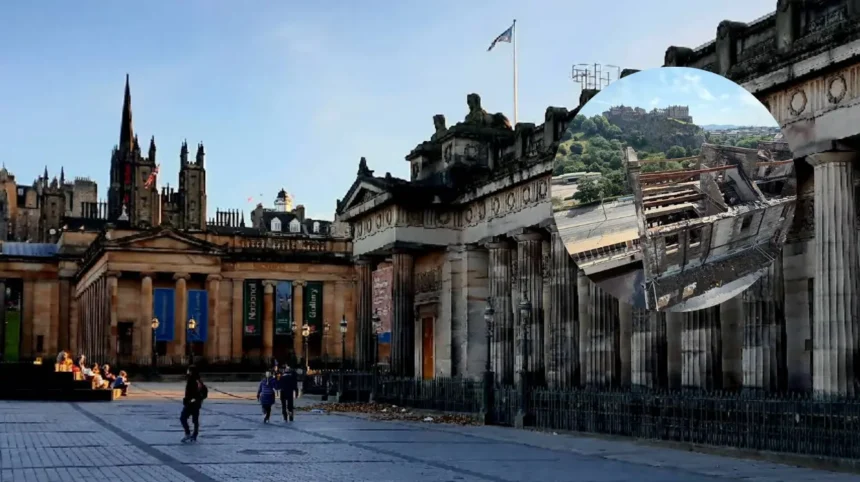
As reported by journalists covering the story for local and national outlets, the blaze erupted at 109 Princes Street in the early hours of Thursday, 9 July 2026, with emergency services called at 2.52am and seven fire engines plus three specialist appliances on scene by 6.45am. Police Scotland said officers were called to assist the Scottish Fire and Rescue Service around 3.05am, and while no injuries have been reported, the building has been deemed unsafe to enter, prompting extended closures of Princes Street, Rose Street and Rose Street South Lane.
How are buses and trams affected by Princes Street closures?
Transport disruption has been a central feature of coverage since the fire. Lothian Buses diverted many services off Princes Street onto George Street, South Charlotte Street and South St David Street, affecting dozens of routes including 1, 3, 4, 10, 11, 15, 16, 19, 24, 25, 26, 29, 30, 31, 33, 34, 37, 43, 44, 47, 100, 106, 113, 124 and several night services. A Lothian Buses spokesperson described the situation as “fluid” and said there was no fixed timeline for a full return to normal operations, with some services now reported as “over capacity” due to longer diversion routes and concentrated demand on George Street corridors.
Edinburgh Trams has been running a part‑route between Edinburgh Airport and the West End only, with ticket acceptance arranged with ScotRail between Edinburgh Gateway and Edinburgh Waverley (St Andrew Square) and on Lothian Buses between the West End and Newhaven. The tram line remains closed along Princes Street towards Leith and Newhaven while the incident area is secured, a situation that has continued into the start of the Edinburgh Festival season.
Why has reopening taken longer than expected?
Council updates and media reporting have pointed to wind delays as a key factor slowing demolition and stabilisation works on the B‑listed former Debenhams building. Scottish Fire and Rescue Service (SFRS) crews completely extinguished the fire and left the scene around 08:15 on Friday, 10 July, but warned that the building remained structurally unsafe and required detailed assessment before any major works could proceed. The City of Edinburgh Council has said it is working with SFRS and Police Scotland to evaluate the stability of the structure and to plan safe removal of hazardous materials and debris.
As reported by local journalists, the presence of heritage architectural elements has added complexity, with the council indicating that efforts to secure and protect historic features are expected to take “several weeks”. This has contributed to the decision to keep Princes Street partially closed at least through August, coinciding with the arrival of hundreds of thousands of visitors for the International Festival and the Fringe.
What are councillors and officials saying about urgency?
Political pressure to reopen the city centre has mounted in recent days. As reported by Jason Rust, a senior Tory councillor, there is a “strong public desire to get the city moving again” and he has called for more urgency in the reopening process. The transport convener has gone further, telling reporters that if it were up to him he would knock down the fire‑hit former Debenhams building to get Princes Street reopened as soon as possible, though any such move would need to balance safety, structural assessment and heritage considerations.
The City of Edinburgh Council has published frequent updates and FAQs on the fire, public safety, road closures, public transport, and impacts on events, businesses and residents, emphasising its role in coordinating the multi‑agency response. Council communications have stressed that pedestrian access has been rerouted via West Princes Street Gardens while key side streets such as Frederick Street, Castle Street and Rose Street North Lane were reopened on the evening of 9 July.
Who occupied the building before the fire and why does it matter?
Investigative coverage has examined the background of the retail units that were operating in parts of the building before the blaze. As reported by The Herald Scotland, the shops had gone by several different names over the last two years and were operated by a series of short‑lived companies, forming what journalists described as a “web of secrecy” around tax‑evading “tat” outlets. While these reports do not allege any link to the cause of the fire, they have fed into broader questions about building management, oversight and the mix of temporary uses in a prominent city‑centre site.
Police Scotland and SFRS have said a joint investigation is ongoing to establish the cause of the fire, and neither force has suggested any criminality at this stage. Authorities continue to advise members of the public to avoid the area where possible and to keep windows and doors closed during active operations, although some surrounding roads have now reopened.
What is the background to this development?
The former Debenhams building on Princes Street has been vacant and in transition for several years, with various proposals including conversion to a hotel and other mixed uses. The structure is B‑listed, reflecting its 19th‑century architectural significance on Edinburgh’s principal shopping street. In the period before the fire, parts of the ground floor were occupied by transient retail operators selling low‑cost souvenirs, a pattern that drew criticism from some local stakeholders and media. The fire on 9 July 2026 caused extensive damage, destroying the roof and gutting upper floors, and triggered immediate road closures, bus diversions and tram restrictions that have persisted into late July.
What are the predictions for the impact on audiences?
For commuters, festival‑goers and city‑centre businesses, the expected “weeks not months” reopening timetable suggests that significant disruption will continue through the peak of the summer festival season, with bus crowding and longer journey times likely to persist until Princes Street is fully reopened. Residents and students, including those relying on buses along George Street and surrounding corridors, may face continued delays and overcrowding, particularly on high‑demand routes and during evening events.
If wind conditions improve and stabilisation work proceeds without further setbacks, a phased reopening could begin to ease pressure on alternative routes by late summer, but full restoration of tram and bus services along Princes Street will depend on the pace of demolition, structural works and heritage protections. For the council and transport operators, the situation underlines the need to communicate clear timelines and manage capacity on diverted services, while for businesses the duration of closures will remain a key factor in footfall and revenue during one of the city’s busiest periods.