Key Points
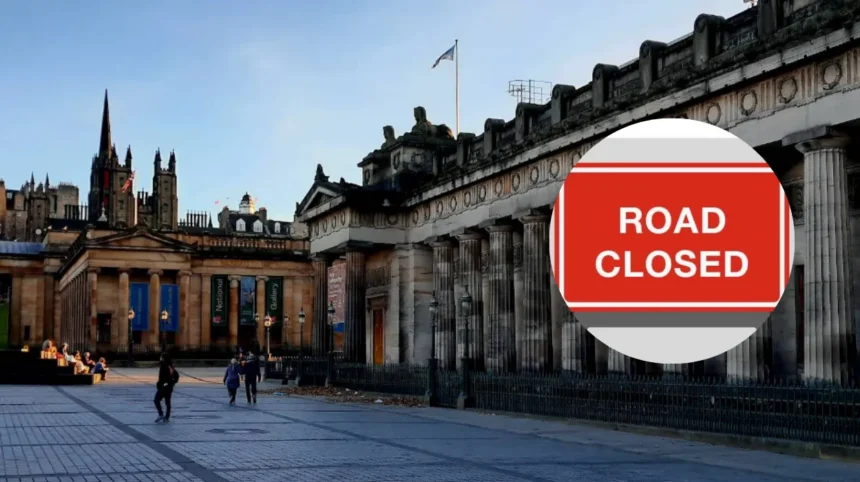
- West Princes Street will remain closed to all vehicles until at least mid‑August 2026 after a fire at the former Debenhams building on 9 July.
- The closure covers the section between Frederick Street and South Charlotte Street, with fencing and diversions in place.
- Bus services are being diverted via George Street and Queen Street; trams are not running along Princes Street to Leith and Newhaven.
- The City of Edinburgh Council says “complex and time‑consuming” work is under way to make the B‑listed building safe and preserve historic features.
- George Street will not be closed for the festival as usual, and outdoor extensions for bars and Fringe venues into the road will not be permitted this year.
- Council leader Jane Meagher says the street should reopen in “weeks, not months”, but no precise timetable has been given.
- Police Scotland and the Scottish Fire and Rescue Service are conducting a joint investigation into the cause of the blaze.
Edinburgh Fire (Edinburgh Daily) July 30, 2026 — West Princes Street and the former Debenhams site remain at the centre of major transport disruption as the City of Edinburgh Council confirmed the road will stay closed to vehicles until at least mid‑August following the early‑hours fire on 9 July. The decision extends closures into the peak period for the Edinburgh International Festival and the Fringe, with bus and tram services already rerouted and pedestrians advised to allow extra time for journeys.
- Key Points
- Ongoing closure and transport diversions on West Princes Street
- What work is being done to make the Debenhams building safe?
- Festival impact: why George Street will stay open and what it means for venues
- Business and community response to the Princes Street fire disruption
- Investigation into the cause of the Debenhams fire
- Background: how the Debenhams fire developed and led to extended closures
- Prediction: how this development could affect festival visitors, commuters and local traders
As reported by Phoebe Davies of The Edinburgh Tab, the council confirmed that restrictions around the site will remain in place while work continues to make the building safe, with disruption expected to continue into the Fringe. Council leader Jane Meagher described the situation as “ever changing” and said the focus is on making the building safe while retaining as many historic features as possible, acknowledging that this is a “painstaking process” that will take time.
Ongoing closure and transport diversions on West Princes Street
The section of West Princes Street affected runs from Frederick Street to South Charlotte Street and is fenced off, with all vehicles prohibited from using the closed stretch. According to City of Edinburgh Council updates, buses that would normally travel along Princes Street are being diverted via George Street and Queen Street, while the Mound remains open.
Tram services have been particularly affected. As noted in coverage by NewsHub, tram operations between the city centre and Newhaven have been suspended, with trams only running between Edinburgh Airport and the West End (Shandwick Place). Edinburgh Trams has stated that all tram vehicles were in the Gogar depot at the time of the fire, making it unsafe to operate even an empty tram past the damaged building, contributing to the suspension of services along Princes Street.
Pedestrians can still access most of Princes Street, but the area between Boots and the former Debenhams building (addresses 101–109 Princes Street) remains closed to foot traffic, with diversions in place. Rose Street and Princes Street Gardens remain open for pedestrians, while Rose Street and Rose Street South Lane were initially closed but have since reopened in parts, according to earlier police and fire service updates.
What work is being done to make the Debenhams building safe?
The former Debenhams store is a B‑listed historic building owned by Criterion Capital and had been earmarked for conversion into a 300‑bed hotel before the fire. Structural engineers continue to assess the damaged structure, and multi‑agency work is under way to stabilise the site and preserve architectural features.
The City of Edinburgh Council has described the engineering work as “complex and time‑consuming”, reflecting the need to balance safety with heritage conservation. Council leader Jane Meagher said in statements reported by Project Scotland that a huge response from council teams and partners has been required to secure the building, protect its heritage and keep the city moving.
Meagher has also written to the Scottish Government’s first minister to discuss what additional support may be available, echoing the level of response seen after the Union Street fire in Glasgow. Officials have stressed that the council does not own the building, which adds layers of coordination with the owner and heritage bodies.
Festival impact: why George Street will stay open and what it means for venues
The closure of West Princes Street is expected to have a significant impact during August, when Edinburgh welcomes hundreds of thousands of visitors for the Fringe and other festivals. To accommodate increased bus traffic, the council has confirmed that the usual closure of George Street during the festival will not take place this year.
As reported by Phoebe Davies of The Edinburgh Tab, this decision means bars, restaurants and Fringe venues will be unable to extend into the roadway as they have in previous years, a change some businesses fear could affect footfall and create a more challenging trading environment during one of the busiest periods of the year. The council has advised people travelling into the city centre during the coming weeks to expect disruption and allow extra time for their journeys.
Local political pressure has grown over the handling of the disruption. As reported by The Herald, the Fringe Society has urged the city council and Lothian Buses to “take a more proactive and coordinated approach” to the closure, after the council warned festival performers, workers and audiences to prepare for potential disruption and consider walking or cycling where possible. The council has said it is unable to provide a precise timetable for the full reopening of Princes Street to public transport.
Business and community response to the Princes Street fire disruption
The fire has had a mixed impact on local businesses. According to reporting by NewsHub, some traders, such as the Mor Bakehouse on Princes Street, have reported a significant drop in trade, while others, like the Day‑Today Express store, have seen increased footfall due to diversions. The council has sent out a message that the city centre is “open for business”, encouraging residents and visitors to support local establishments.
In Leith, the suspension of tram services has been linked to a decline in visitor numbers. As reported by The Scotsman, a bar owner in Leith said the suspended tram line and disruption is driving customers away from the area, with establishments in Edinburgh’s port area experiencing a significant drop in trade. The City of Edinburgh Council has indicated that work at the site is expected to persist for at least an additional three weeks.
To ease pressure on public transport, the council is increasing the number of e‑bikes available for hire through the Voi on‑street scheme, with an additional 200 e‑bikes being made available by the end of the week, alongside extra bike parking for cyclists travelling from Leith and Newhaven.
Investigation into the cause of the Debenhams fire
The exact cause of the fire has not yet been confirmed. A joint investigation by Police Scotland and the Scottish Fire and Rescue Service is ongoing, with authorities stating that access to the site remains unsafe in places.
As reported by BBC News, police and fire investigators launched a joint probe into the blaze that decimated the historic building, with around 50 firefighters at the scene at the height of the incident. Videos of the fire at its height showed large flames emerging from the two top floors and smoke billowing into the street, prompting road closures on Princes Street, Frederick Street and Castle Street, some of which were reopened later that evening.
Background: how the Debenhams fire developed and led to extended closures
The fire at the former Debenhams building broke out in the early hours of Thursday, 9 July 2026, with emergency services called to Princes Street just after 3 am. Firefighters worked through the morning to tackle the blaze and continued damping down hotspots and securing the building over subsequent days.
Initial road closures covered Princes Street, Rose Street and Rose Street South Lane, with Frederick Street, Castle Street and Rose Street North Lane closed temporarily before reopening later that evening. Within days, the City of Edinburgh Council warned that Princes Street could remain closed “into August”, citing the need for complex safety and heritage work.
Over the following weeks, updates confirmed that the closure between Frederick Street and South Charlotte Street would continue, with tram services suspended along Princes Street and buses diverted via George Street. By late July, the council indicated that work would last at least three more weeks, pushing the earliest possible reopening into mid‑August, during the peak festival period.
Prediction: how this development could affect festival visitors, commuters and local traders
If West Princes Street remains closed until at least mid‑August, festival visitors can expect longer journey times and more crowded alternative routes, particularly on George Street and Queen Street where buses are being diverted. Commuters travelling from Leith and Newhaven are likely to face continued tram suspensions and reliance on buses, with potential knock‑on delays across the city centre network.
Local traders on and around Princes Street may see sustained changes in footfall patterns, with some businesses benefiting from diverted pedestrians while others, especially those dependent on through‑traffic and tram access, risk further losses during the high‑season. The Fringe Society’s call for a more coordinated approach suggests that, unless transport and crowd management are tightened, audience movement between venues could become more congested, potentially affecting attendance and spending.
For longer‑term planning, the emphasis on preserving the B‑listed building’s heritage while making it safe implies that even after vehicles return, there may be phased reopenings or temporary restrictions as engineering work continues. This could shape how promoters, venue operators and transport authorities design festival logistics in future years, with greater emphasis on contingency routing and alternative transport modes such as cycling, given the council’s expansion of e‑bike provision.