Key Points
- Volunteer RNLI lifeboat crews from Dunbar spent an entire night at sea responding to a vessel in distress off the East Lothian coast.
- HM Coastguard alerted and tasked the Dunbar station after receiving an emergency signal from the stranded boat.
- Volunteers navigated through darkness to locate the craft, secure it, and assist those on board.
- The operation was carried out jointly by HM Coastguard and Dunbar RNLI personnel.
- The crew safely towed the vessel back to port after the overnight rescue.
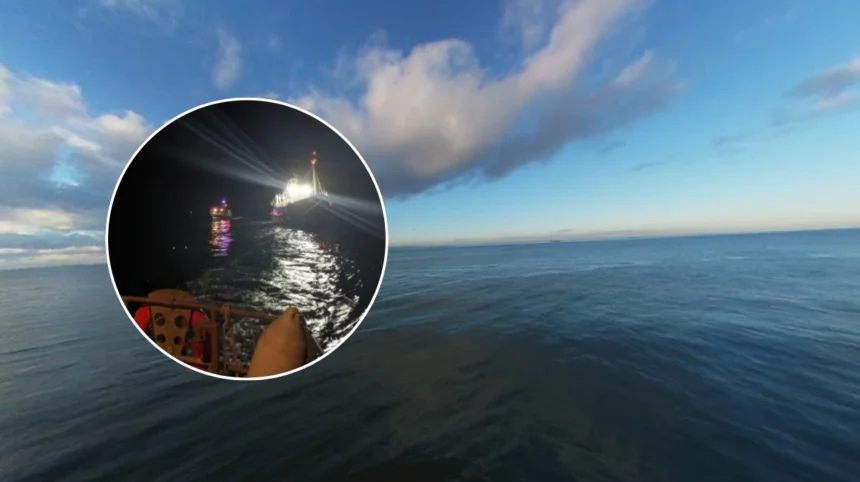
East Lothian (Edinburgh Daily) September 18, 2026 – Volunteer lifeboat crews from East Lothian spent the entirety of the night at sea following an urgent emergency signal transmitted from a stranded vessel off the Scottish coast. As reported by Jacob Farr of Edinburgh Live, HM Coastguard alerted Dunbar’s RNLI volunteers during the night after a vessel triggered a distress call requiring immediate maritime assistance. The crew launched from Dunbar Lifeboat Station to locate the vessel in darkness, remaining on scene overnight to ensure the safety of those aboard before bringing the craft back to harbour.
Why did the East Lothian RNLI crew spend all night at sea?
As reported by Jacob Farr of Edinburgh Live, the overnight deployment was triggered when emergency maritime authorities received an urgent distress transmission from a boat operating in waters off the East Lothian coastline. HM Coastguard dispatched the Dunbar RNLI lifeboat crew following the signal to assess the situation and deliver immediate aid.
Navigating through low-visibility night conditions, the volunteer crew located the vessel and rendered aid. Due to the precise nature of the breakdown and the maritime conditions at the time, the crew remained at sea throughout the night to secure the vessel and oversee the safety of its passengers before conducting a slow tow back to land.
What role did Dunbar RNLI play in the overnight operation?
As detailed by Jacob Farr of Edinburgh Live, Dunbar’s RNLI volunteers served as the primary offshore responders to the distress transmission. Upon receiving tasking orders from HM Coastguard, the volunteer crew readied their vessel and launched into the Forth approach.
The operation required continuous radio contact, radar tracking, and visual checks in darkness to establish a towline and stabilize the casualty boat. The prolonged nature of the rescue meant crew members maintained a continuous watch until first light, ensuring all safety protocols were met prior to docking.
Background of the particular development
The coastline of East Lothian, situated along the outer Firth of Forth, represents one of eastern Scotland’s busiest stretches of water for commercial fishing, leisure craft, and coastal passage-making. Stations such as Dunbar and North Berwick operate under the management of the RNLI, a registered charity relying on volunteer crews to maintain a 24-hour search and rescue capability.
Maritime distress signals in UK waters are managed by HM Coastguard. Modern vessels use various alert technologies, including Digital Selective Calling (DSC) via VHF radio, Personal Locator Beacons (PLBs), and Emergency Position Indicating Radio Beacons (EPIRBs). These systems transmit automated positional data to satellite networks and Coastguard operations centres, triggering immediate tasking of local lifeboat units regardless of the time of day.
Operations extending through the night present distinct operational risks, including reduced visibility, changing tidal currents, and temperature drops, requiring extensive technical training from volunteer crews.
Prediction: How will this development affect coastal water users and local communities?
This incident highlights the operational demands placed upon volunteer search and rescue services along the East Lothian coastline. For the local community and water users—including commercial mariners, recreational boaters, and leisure anglers—the successful overnight resolution reinforces the availability of round-the-clock emergency cover.
However, extended overnight missions place substantial operational demands on volunteer personnel, many of whom balance RNLI duties alongside full-time employment. Increased reliance on emergency signals may prompt local harbour authorities and maritime safety bodies to increase advisory campaigns regarding vessel maintenance, engine checks, and proper communication equipment ahead of overnight trips. Additionally, operations of this length underline the continuous funding requirements of the RNLI, which relies on public donations to maintain all-weather rescue craft and specialized night-vision equipment.