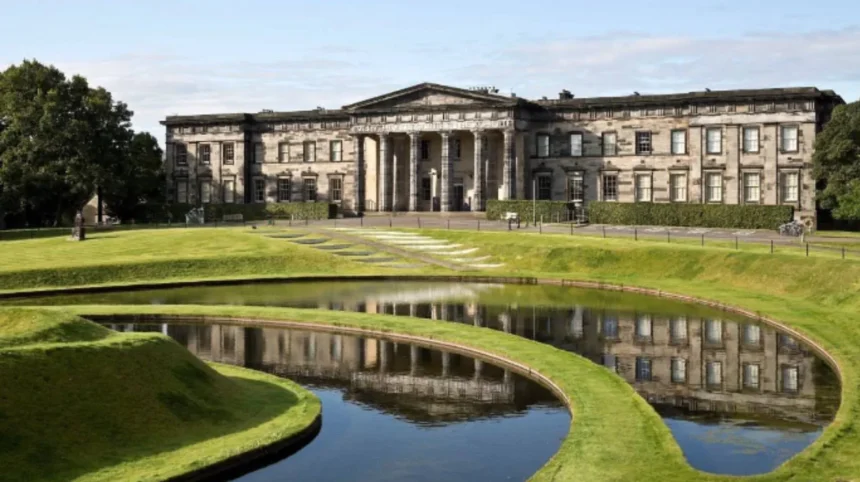
The Edinburgh Enlightenment was an eighteenth-century intellectual movement in Scotland that transformed philosophy, economics, geology, and medicine through empirical reasoning, systematic observation, academic rigor, and civic improvement without relying on religious dogma or unverified traditional assumptions.
- Why Did the Enlightenment Flourish in Edinburgh After 1707?
- Who Were the Main Key Figures of the Scottish Enlightenment?
- What Major Ideas and Inventions Originated in Edinburgh?
- How Did Debating Clubs and Universities Drive Intellectual Progress?
- What Is the Lasting Global Impact of the Edinburgh Enlightenment?
The Scottish Enlightenment emerged in Edinburgh during the early 1700s, reaching its peak between 1740 and 1790. The historical movement transformed the capital city into a global center for scientific inquiry, humanities, and economic theory. Scholars, scientists, and lawyers met regularly in urban clubs, taverns, and university lecture halls to debate human nature and society.
The intellectual period was characterized by a fundamental belief in human reason and practical progress. Intellectuals sought to improve everyday life through legal reforms, medical advances, and financial systems. The movement generated major foundational texts in economics, sociology, and geology. Key publications from this era include The Wealth of Nations and A Treatise of Human Nature.
Edinburgh earned the nickname Athens of the North due to its booming publishing industry and classical architecture. The Acts of Union 1707 dissolved the Scottish Parliament, shifting political power to London while leaving local legal, educational, and religious institutions intact. This unique political structure allowed Edinburgh professionals to focus on academic research and urban development.
The physical transformation of the city accompanied its intellectual rise. The construction of the Edinburgh New Town began in 1767 under architect James Craig. The neoclassical street layout reflected Enlightenment principles of order, symmetry, and civic planning.
The legacy of the period established modern scientific methods and university structures. Scottish thinkers rejected speculative metaphysics in favor of observable evidence and comparative analysis. The movement formally concluded in the early decades of the nineteenth century as romanticism gained cultural dominance across Western Europe.
Why Did the Enlightenment Flourish in Edinburgh After 1707?

The Enlightenment flourished in Edinburgh after 1707 because the Acts of Union preserved independent Scottish legal, church, and university systems while opening English colonial trade routes that generated substantial financial capital for public works and higher education.
The Acts of Union 1707 merged the kingdoms of Scotland and England into Great Britain. The political union removed domestic trade barriers and granted Scottish merchants access to Atlantic commercial markets. Economic expansion provided funding for civic projects, publishing houses, and academic chairs at the University of Edinburgh.
Scotland maintained four distinct national institutions following the political merger. These institutions included the Church of Scotland, the Scottish court system, the banking network, and five universities. England possessed only two universities at Oxford and Cambridge during the same historical period. The preservation of autonomous governance allowed local intellectuals to direct institutional funding toward civic improvements and practical research.
The Education Act 1696 established a parish school system across Scotland prior to the union. The legislation required every rural parish to maintain a schoolmaster and schoolhouse funded by local landowners. This educational framework created high literacy rates across Scotland compared to neighboring European nations during the eighteenth century.
The physical geography of Edinburgh’s Old Town forced diverse social classes into close daily contact. Judges, professors, physicians, and craftsmen lived in multi-story tenement buildings along the Royal Mile. This urban density facilitated daily debate in coffeehouses and drinking taverns around the Mercat Cross.
The University of Edinburgh abolished teaching in Latin in 1729, adopting English for university lectures. This linguistic transition democratized access to higher learning and simplified the publication of research papers. The university introduced specialized academic chairs in chemistry, medicine, and rhetoric to replace medieval scholastic teaching methods.
Who Were the Main Key Figures of the Scottish Enlightenment?
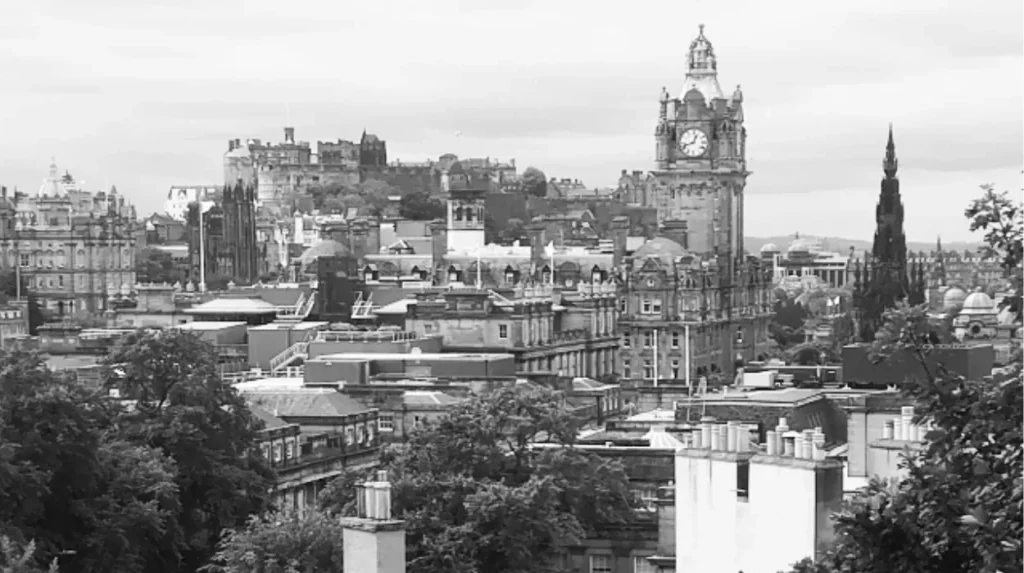
The main key figures were philosopher David Hume, economist Adam Smith, geologist James Hutton, chemist Joseph Black, historian William Robertson, sociologist Adam Ferguson, and architect Robert Adam, who pioneered breakthroughs across humanities, physical sciences, and design.
David Hume was a central philosopher born in Edinburgh in 1711. He published A Treatise of Human Nature in 1739, arguing that human knowledge stems exclusively from sensory experience rather than innate ideas. Hume served as librarian to the Faculty of Advocates, utilizing the library collection to research his six-volume History of England.
Adam Smith was a moral philosopher and political economist born in Kirkcaldy in 1723. He studied at the University of Glasgow and held lectures in Edinburgh on rhetoric and economics. Smith published The Wealth of Nations in 1776, establishing modern free-market economic theory, division of labor concepts, and gross domestic product measurements.
James Hutton was an Edinburgh physician and agriculturalist born in 1726. He published Theory of the Earth in 1788, introducing deep time concepts and uniformitarian geological processes. Hutton proved that sedimentary rocks formed continuously over millions of years through subterranean heat and erosion rather than biblical flood catastrophes.
Joseph Black was a professor of medicine and chemistry at the University of Edinburgh born in 1728. He discovered carbon dioxide gas, which he called fixed air, in 1754. Black formulated the scientific principles of latent heat and specific heat capacity, providing thermodynamic data essential for James Watt to improve steam engine efficiency.
William Robertson was a historian and Principal of the University of Edinburgh born in 1721. He published History of Scotland in 1759 and served as Moderator of the General Assembly of the Church of Scotland. Robertson turned the university into an international research center for medicine and natural history.
Adam Ferguson was a professor of moral philosophy born in 1723. He published An Essay on the History of Civil Society in 1767, establishing early sociological theories regarding human social development and industrialization risks. Robert Adam designed public buildings using classical Roman principles, transforming Edinburgh’s architectural landscape.
What Major Ideas and Inventions Originated in Edinburgh?
Major ideas and inventions originating in Edinburgh included free-market capitalism, empirical philosophy, deep time geology, carbon dioxide discovery, latent heat theory, sociopolitical sociology, and the systematic compilation of the Encyclopaedia Britannica in 1768.
The concept of the free-market economy transformed global commercial practices during the eighteenth century. Adam Smith introduced the invisible hand metaphor to explain how individual self-interest drives market efficiency, pricing stability, and wealth distribution. Smith advocated for reduced trade tariffs and government deregulation in international commerce.
Empirical philosophy redefined scientific methodology across Europe. Philosophical skepticism challenged traditional assumptions regarding cause and effect, requiring observable empirical evidence for physical and psychological claims. This philosophical framework influenced political documents including the United States Declaration of Independence.
Modern geological science emerged through field research conducted across Scotland. James Hutton demonstrated that geological formations result from ongoing physical processes of volcanic uplift and water erosion. His observations at Siccar Point proved that Earth was millions of years old rather than thousands of years old.
Chemical sciences expanded rapidly inside university laboratories in the city. Joseph Black isolated carbon dioxide by heating magnesium carbonate, proving that air was a mixture of distinct gases rather than a single element. His measurements of latent heat explained phase changes in liquids and gases.
Publishing innovations democratized public access to structured scientific knowledge. Bookseller Colin Macfarquhar and engraver Andrew Bell published the first edition of the Encyclopaedia Britannica in Edinburgh between 1768 and 1771. The three-volume reference set compiled technical data on arts, sciences, and trade skills.
Medical diagnostic techniques improved through systematic anatomical dissection and clinical research at the Edinburgh Royal Infirmary, founded in 1729. Medical professors Alexander Monro Primus, Alexander Monro Secundus, and William Cullen established standardized clinical teaching protocols for medical students worldwide.
How Did Debating Clubs and Universities Drive Intellectual Progress?
Debating clubs and universities drove progress by organizing structured weekly discussions, funding academic research, printing scientific journals, and bringing professors, lawyers, and merchants together to solve civic and economic problems.
The Select Society was founded in Edinburgh in 1754 by portrait painter Allan Ramsay, David Hume, and Adam Smith. The club limited its membership to fifty prominent citizens, including advocates, professors, and landowners. Members met weekly in the Advocates Library to debate economic policies, farming improvements, and legal reforms.
The Poker Club was established in 1762 by Adam Ferguson to agitate for a Scottish militia and discuss national security concerns. The club name reflected its goal to poke up debate on contentious political issues. Meetings took place in Thomas Nicholson’s tavern in the Old Town, fostering informal professional networking.
The Philosophical Society of Edinburgh was reorganized in 1737 by mathematician Colin Maclaurin. The society published research papers on medicine, mathematics, and natural philosophy. King George III granted the organization a royal charter in 1783, establishing the Royal Society of Edinburgh as Scotland’s national academy of science.
The University of Edinburgh operated as an open intellectual center without religious tests for student enrollment. English universities restricted entry to members of the Church of England, whereas Scottish universities admitted dissenters, international students, and foreign researchers. Student enrolment at the university doubled between 1720 and 1800.
The University Senate established specialized faculties in medicine, law, arts, and divinity. Medical professors required students to complete clinical bedside training alongside theoretical chemistry lectures. The university operated four primary teaching museums to store botanical specimens, geological rocks, and anatomical models.
The Easy Club and the Political Economy Club provided additional urban discussion venues. These informal societies reviewed foreign literature, debated moral philosophy, and financed local printing presses. The integration of academic institutions with civic debating societies created a self-sustaining ecosystem for publishing ideas.
What Is the Lasting Global Impact of the Edinburgh Enlightenment?
The lasting global impact includes the development of modern economic policies, democratic political frameworks, modern geological science, clinical medical education standards, and classical urban architectural design across North America and Europe.
The economic theories developed in Edinburgh provided the blueprint for global industrial expansion. Free-market principles outlined in The Wealth of Nations shaped trade policies, central banking operations, and tax frameworks across Western nations during the nineteenth and twentieth centuries. International financial bodies continue using Smithian concepts of supply, demand, and comparative advantage.
The political philosophy of the era directly influenced the creation of modern democratic constitutions. Founding Fathers of the United States, including Thomas Jefferson and James Madison, studied Scottish philosophy at Princeton University under Scottish educator John Witherspoon. Ideas regarding human liberty, checks and balances, and legal protection drew heavily from Hume and Hutcheson.
Modern geological science relies on uniformitarian principles formulated during this period. James Hutton’s deep time concept laid the groundwork for Charles Darwin’s evolutionary biology theories in the nineteenth century. Environmental geologists continue utilizing Huttonian principles to analyze rock strata, seismic faults, and soil erosion dynamics.
The medical curriculum established at the University of Edinburgh served as the foundational model for North American medical schools. Physicians trained in Edinburgh founded the University of Pennsylvania School of Medicine in 1765 and the Columbia University Vagelos College of Physicians and Surgeons in 1767. Standardized clinical rotations remain standard in global medical training.
The architectural design of Edinburgh’s New Town established global standards for neoclassical urban planning. The gridiron layout, central parks, and residential squares influenced street planning in Washington D.C., Philadelphia, and London. UNESCO designated Edinburgh’s Old and New Towns as a World Heritage Site in 1995, citing Enlightenment architectural achievements.
The empirical scientific approach transformed industrial engineering. The collaboration between chemist Joseph Black and inventor James Watt directly led to commercial steam engine efficiency, accelerating the Industrial Revolution. Modern scientific research institutes maintain the collaborative, empirical frameworks established in eighteenth-century Scotland.
What caused the Scottish Enlightenment in Edinburgh?
The Scottish Enlightenment was caused by high national literacy rates, university administrative reforms, the preservation of autonomous Scottish courts, and economic stability following the Acts of Union 1707.
Who was the father of the Scottish Enlightenment?
Francis Hutcheson, a professor of moral philosophy who taught David Hume and Adam Smith, is widely recognized as the father of the Scottish Enlightenment.
How did the Edinburgh Enlightenment shape modern science?
It established the empirical method, deep time geology, carbon dioxide identification, and clinical medical training standards that underpin modern scientific disciplines.
What was the difference between the French and Scottish Enlightenments?
The French Enlightenment focused heavily on anti-clerical political radicalism, whereas the Scottish Enlightenment emphasized empirical science, civic improvement, and practical social cohesion.
Where did Enlightenment thinkers meet in Edinburgh?
Thinkers gathered at the University of Edinburgh, the Advocates Library, and local taverns hosting societies like the Select Society and the Poker Club.