Edinburgh serves as a pivotal center for Scottish political, cultural, and military history. The city features intact medieval architecture, prominent national monuments, and extensive archives documenting human activity across two millennia from ancient times to the modern era.
- Why is Edinburgh Castle the core fortress of Scottish history?
- What historical landmarks line the Royal Mile?
- How does the Palace of Holyroodhouse represent royal Scottish heritage?
- What underground history is preserved at The Real Mary King’s Close?
- Why is Greyfriars Kirkyard historically significant to Scotland?
- What artifacts at the National Museum of Scotland define Scottish history?
- How much time should a history enthusiast spend visiting Edinburgh Castle?
- Can you walk the entire Royal Mile in a single day while visiting sites?
- What is the historic difference between Edinburgh’s Old Town and New Town?
- Is the Real Mary King’s Close authentic or a modern reconstruction?
- Are there free historic sites to visit in Edinburgh?
The capital city of Scotland developed around a natural defensive fortress on Castle Rock, a volcanic plug formed over 300 million years ago. Archeological investigations confirm human habitation on Castle Rock dating back to the Bronze Age in 900 BCE.
During the Roman Empire, local Brythonic tribes established a stronghold known as Din Eidyn in the 6th century. The settlement transitioned into an royal burgh under King David I in 1130 CE.
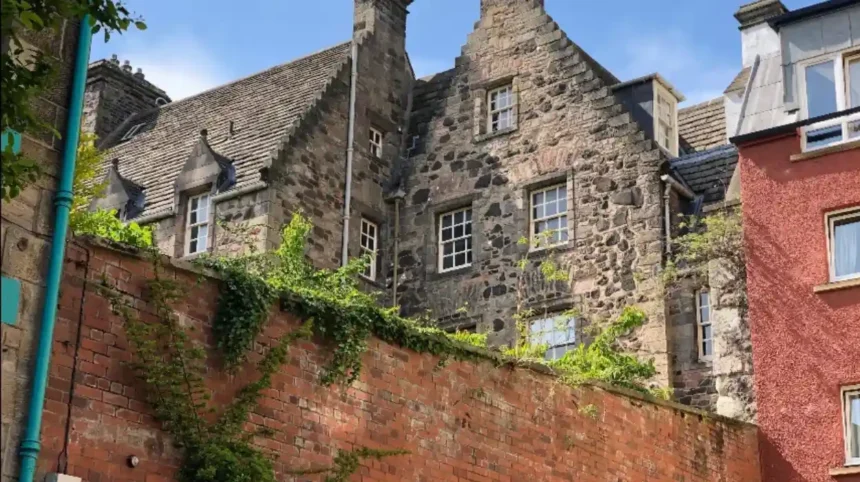
This status established Edinburgh as the primary commercial and legal hub of the Kingdom of Scotland. The layout of the Old Town retains its medieval urban plan, characterized by a central spine street with narrow side alleys called closes.
The city expanded rapidly in the 18th century with the construction of the Georgian New Town, designed by architect James Craig in 1767. This urban expansion reflected the economic growth of the Scottish Enlightenment.
Today, both the Old and New Towns hold UNESCO World Heritage status, granted in 1995. The physical landscape contains over 4500 listed buildings that illustrate distinct periods of architectural evolution.
Edinburgh houses national archives, historic battle sites, and major museums that record key events in British history. These preserved structures allow researchers and visitors to observe real physical evidence of past political changes, religious transformations, and military events.
Why is Edinburgh Castle the core fortress of Scottish history?
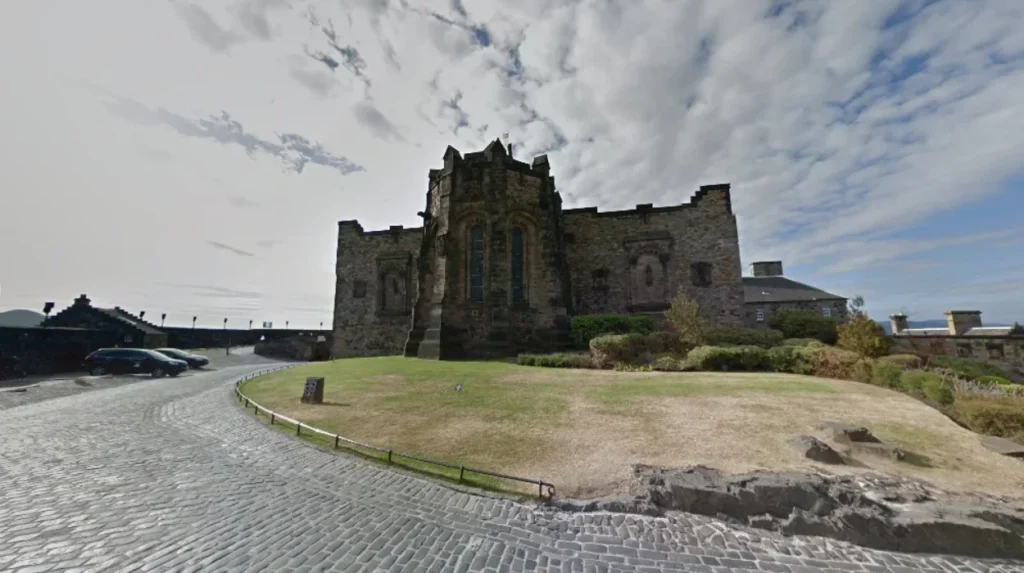
Edinburgh Castle stands atop Castle Rock, serving as a royal fortress, residence, and military stronghold. It contains Scotland’s oldest surviving building, the Crown Jewels of Scotland, and physical evidence of numerous historic sieges.
Edinburgh Castle has functioned as a central fortress in military conflict for over nine centuries. The site experienced 26 major sieges during its operational history, making it one of the most besieged places in Great Britain.
King David I constructed the earliest permanent stone structures on the site around 1130 CE. Within the complex, Saint Margaret’s Chapel remains the oldest intact building in Edinburgh, constructed in 1130 CE in honor of Queen Margaret.
The castle served as the official royal residence for Scottish monarchs until the Union of the Crowns in 1603 CE. King James VI of Scotland, who later became James I of England, was born inside the Royal Palace section of the castle in 1566 CE.
The fortress houses the Honours of Scotland, which are the oldest crown jewels in the United Kingdom, dating from the early 16th century. These regalia include the Crown of Scotland, the Sceptre, and the Sword of State.
The castle also displays the Stone of Destiny, an ancient seat used in the inauguration of Scottish monarchs. The site shifted primarily to a military garrison during the 17th century and contained prisoner-of-war facilities through the 18th and 19th centuries.
Today, the complex functions as a historic monument and active military base housing the Royal Scots Dragoon Guards Museum and the Scottish National War Memorial.
What historical landmarks line the Royal Mile?
The Royal Mile forms the historical artery of Old Town Edinburgh, connecting Edinburgh Castle to the Palace of Holyroodhouse. It features significant administrative buildings, historic churches, and preserved 17th-century residential closes.
The Royal Mile spans a distance of one Scots mile, which measures approximately 1.8 kilometers or 1.12 English miles. The thoroughfare consists of five distinct streets running west to east: Castlehill, Lawnmarket, High Street, Canongate, and Abbey Strand.
At the upper end sits the Castle Esplanade, an open parade ground constructed in 1753 CE that served as an execution site for accused witches between 1479 and 1722 CE. Further down stands Saint Giles’ Cathedral, founded in 1124 CE by King David I.
Saint Giles’ Cathedral became the focal point of the Scottish Reformation in 1560 CE under the leadership of preacher John Knox. Parliament House sits adjacent to Saint Giles and served as the meeting site of the Parliament of Scotland from 1639 CE until the Act of Union in 1707 CE.
The Royal Mile contains traditional stone tenement buildings that reached heights of up to fourteen stories in the 17th century due to spatial constraints within the city defensive walls. Notable preserved residential structures include John Knox House, built in 1470 CE, and Gladstone’s Land, built in 1528 CE.
The street concludes at Abbey Strand, adjacent to the ruins of Holyrood Abbey, founded by Augustinian canons in 1128 CE. This route represents the primary administrative axis of medieval Scotland.
How does the Palace of Holyroodhouse represent royal Scottish heritage?
The Palace of Holyroodhouse serves as the official residence of the British monarch in Scotland. The palace contains 16th-century historic apartments, extensive royal art collections, and structural remnants of the medieval Holyrood Abbey.
King James IV initiated the construction of a Renaissance palace adjacent to Holyrood Abbey between 1501 and 1505 CE. The site expanded under King James V, who constructed the formidable northwest tower between 1528 and 1532 CE.
This tower contains the historic apartments of Mary, Queen of Scots, who resided at the palace between 1561 and 1567 CE. These rooms witnessed significant historic political events, including the murder of Mary’s private secretary, David Rizzio, in 1566 CE.
King Charles II commissioned a major rebuilding of the palace between 1671 and 1679 CE under the direction of architect Sir William Bruce. This reconstruction created the classical quadrangle design visible today, characterized by symmetrical stone facades and classical colonnades.
The palace interior features the Great Gallery, which measures 44 meters in length and holds 110 portraits of Scottish monarchs painted by Jacob de Wet II between 1684 and 1686 CE. The palace hosted Prince Charles Edward Stuart, known as Bonnie Prince Charlie, during the Jacobite Rising of 1745 CE.
Today, the palace hosts official state ceremonies and royal functions. The physical property includes 10 acres of cultivated royal gardens and the open ruins of the 12th-century Augustinian nave.
What underground history is preserved at The Real Mary King’s Close?

The Real Mary King’s Close is a preserved 17th-century underground street buried beneath the Edinburgh City Chambers. It displays the intact lower levels of historical tenement houses and reveals early modern living conditions.
During the 17th century, Mary King’s Close was a narrow, open-air commercial alley named after Mary King, a prominent merchant and burgess who operated businesses there in the 1630s. The close contained densely populated stone tenements that housed residents across various socio-economic classes.
In 1645 CE, the street suffered a severe outbreak of bubonic plague, which infected a large portion of the local population. In 1753 CE, the Edinburgh Town Council ordered the partial demolition of the upper floors of the buildings on the close to construct the Royal Exchange, now known as the City Chambers.
The construction team used the lower floors of the existing buildings as foundational support for the new superstructure above. This engineering decision effectively sealed the lower portions of Mary King’s Close beneath a stone ceiling, preserving the street layout, original walls, and ground-floor rooms.
The site lay isolated from modern urban development for over two centuries. Today, archaeological surveys and physical artifacts within the underground complex show exact architectural methods, sanitation systems, and spatial conditions of 17th-century Edinburgh life.
The site operates as a regulated heritage site that offers guided physical access to original 1600s street levels.
Why is Greyfriars Kirkyard historically significant to Scotland?
Greyfriars Kirkyard is a historic graveyard established in 1562 CE that contains the graves of notable historical figures and served as the signing site for the National Covenant of 1638.
Mary, Queen of Scots, granted the land of the former Franciscan friary to the town of Edinburgh in 1562 CE to serve as a central burial ground. The site contains a high density of late 16th-century and 17th-century mural monuments featuring detailed stonemasonry, skull motifs, and heraldic symbols.
In February 1638 CE, the graveyard hosted the public reading and signing of the National Covenant inside Greyfriars Kirk. This document rejected King Charles I’s attempts to impose Anglican liturgical practices on the Church of Scotland, sparking the Bishops’ Wars and contributing to the War of the Three Kingdoms.
In 1679 CE, an enclosed section in the southern area of the Kirkyard served as an open-air prison for over 1200 Covenanters captured after the Battle of Bothwell Bridge. The prisoners were held for five months under harsh physical conditions with minimal shelter or food.
The Kirkyard contains the tombs of prominent Enlightenment thinkers, including philosopher Adam Ferguson, historian William Robertson, and poet Allan Ramsay. The grounds also contain the grave of John Gray, associated with the 19th-century story of Greyfriars Bobby, a Skye Terrier who guarded his master’s grave for 14 years.
What artifacts at the National Museum of Scotland define Scottish history?
The National Museum of Scotland holds over 12 million items, detailing the geological, archaeological, and cultural development of Scotland from prehistory through the modern industrial era.
The museum complex consists of two adjoining structures: the Victorian Royal Museum building, opened in 1866 CE, and the modern Museum of Scotland building, completed in 1998 CE. The Scottish History and Archaeology galleries cover six floors, organized in a chronological progression from early geological formations to contemporary developments.
Key historical artifacts include the Galloway Hoard, a collection of Viking-age silver, gold, and Anglo-Saxon metalwork buried around 900 CE. The museum displays the Lewis Chessmen, a set of 12th-century gaming pieces carved from walrus ivory and whale teeth, discovered in the Outer Hebrides in 1831 CE.
Military history exhibits feature the Monymusk Reliquary, an 8th-century wooden box encrusted with silver and bronze that carried Christian relics into early battle conflicts. The collection includes personal possessions of historic monarchs, such as the silver casket belonging to Mary, Queen of Scots, and the traveling canteen of Bonnie Prince Charlie from 1745 CE.
Industrial exhibits highlight Scotland’s contribution to modern engineering, including original steam engines built by James Watt and early telecommunication technology. These objects provide concrete material evidence of Scotland’s technological and social transformations.
How much time should a history enthusiast spend visiting Edinburgh Castle?
A thorough visit to Edinburgh Castle requires approximately two to three hours. This duration allows visitors to tour the Honours of Scotland, Saint Margaret’s Chapel, the Royal Palace, and the National War Museum. Purchasing tickets in advance prevents delays at entry points during peak visiting hours.
Can you walk the entire Royal Mile in a single day while visiting sites?
Walking the physical length of the Royal Mile takes 30 minutes without stopping. However, exploring the key historic stops along the route requires a full day. Budgeting six to eight hours permits adequate time to tour Saint Giles’ Cathedral, Gladstone’s Land, and the Palace of Holyroodhouse.
What is the historic difference between Edinburgh’s Old Town and New Town?
The Old Town reflects medieval urban design, featuring narrow streets, tall tenements, and irregular street layouts built for defensive density. The New Town displays 18th-century Georgian neoclassicism, characterized by grid iron street patterns, broad avenues, symmetrical townhouses, and private park squares.
Is the Real Mary King’s Close authentic or a modern reconstruction?
The Real Mary King’s Close consists of original 17th-century stone structures. The lower floors of these historic tenements were sealed beneath the City Chambers in 1753 CE and preserved intact. Guided tours take visitors through genuine historic rooms and preserved street surfaces.
Are there free historic sites to visit in Edinburgh?
Edinburgh contains numerous free historic sites and museums. Entry is free at the National Museum of Scotland, Saint Giles’ Cathedral, Greyfriars Kirkyard, and the People’s Story Museum. The city also offers free access to public historic walking routes across the Old Town.