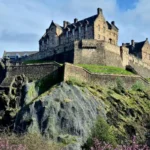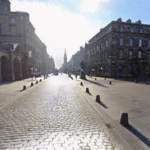
Edinburgh secured its UNESCO City of Literature status in 2004 due to its high density of historic publishers, world-class libraries, and literary heritage. The Scottish capital served as the birthplace and inspiration for global icons including Sir Walter Scott, Robert Louis Stevenson, Arthur Conan Doyle, Muriel Spark, and J.K. Rowling.
- How did Sir Walter Scott shape Scottish national identity through literature?
- How did Robert Louis Stevenson draw inspiration from Edinburgh’s dual nature?
- Which major writers defined Edinburgh’s historic and modern literary eras?
- Why was Edinburgh designated as the first UNESCO City of Literature?
- Did J.K. Rowling write Harry Potter in Edinburgh cafés?
- Why is Waverley Station in Edinburgh named after a book?
- What is the connection between Deacon Brodie and Dr Jekyll and Mr Hyde?
- Where can I see original manuscripts of famous Scottish authors in Edinburgh?
- Which top locations should book lovers visit in Edinburgh?
Edinburgh functions as a foundational pillar of global publishing and narrative art. The city developed its print culture during the eighteenth century throughout the Scottish Enlightenment.
Printers along the Royal Mile produced broadsides, academic treatises, and international editions that established Scotland as a primary intellectual center. The urban geography of Edinburgh directly reflects its narrative legacy.
The contrast between the medieval Old Town and the Georgian New Town provided writers with a physical environment structured on dualities. Old Town alleys hosted overcrowded tenements and dark vaults, whereas New Town featured symmetrical stone squares.
Authors used this structural divide to explore themes of hypocrisy, crime, and morality. Institutions like the National Library of Scotland preserve over 14 million printed items, consolidating Edinburgh’s position as a global research node.
Modern publishing houses, international literary festivals, and academic departments continue to sustain the city’s literary economy.
How did Sir Walter Scott shape Scottish national identity through literature?
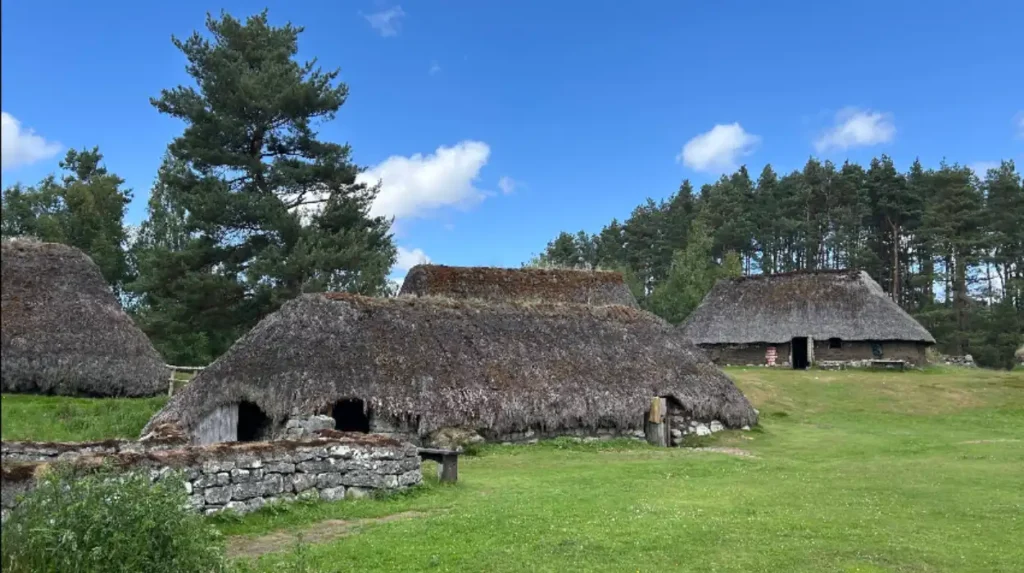
Sir Walter Scott revolutionized historical fiction by combining verified archival history with narrative romance, single-handedly re-establishing Scottish Highland cultural heritage on an international stage. Scott popularized the historical novel genre globally through his Waverley novels, establishing modern conventions for historical prose fiction.
Sir Walter Scott was born in Edinburgh in 1771 and practiced as a legal advocate before focusing on creative writing. His 1814 publication of Waverley transformed European narrative prose by placing fictional characters inside accurately detailed historical events.
Scott authored works including Rob Roy, Ivanhoe, and The Heart of Midlothian, setting his stories across real Scottish locations. His writings changed public perceptions of Scottish identity, transforming Highland traditions into respected cultural assets.
In 1822, Scott managed the visit of King George IV to Edinburgh, orchestrating ceremonial tartan displays that redefined Scottish national symbols. Economic impact followed his literary success, driving early forms of cultural tourism to Edinburgh and the Scottish Borders.
Edinburgh named its central railway terminal, Waverley Station, after Scott’s first novel, making it the only major train station named after a work of fiction. The Scott Monument on Princes Street stands 200 feet tall and represents the largest monument dedicated to any writer worldwide.
How did Robert Louis Stevenson draw inspiration from Edinburgh’s dual nature?
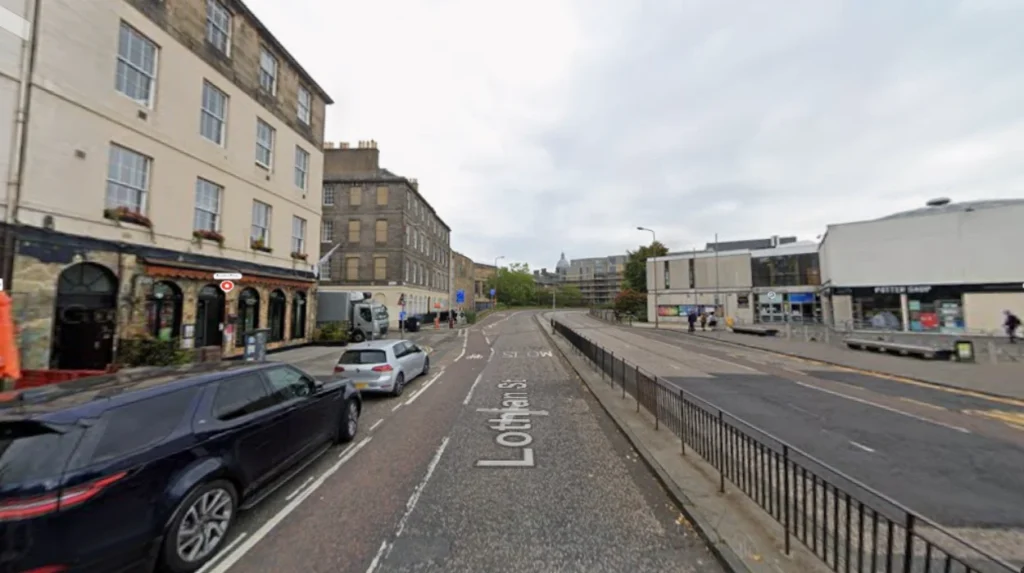
Robert Louis Stevenson used Edinburgh’s architectural divide and infamous historical figures to invent modern gothic literature, directly utilizing the contrast between Old Town and New Town. Stevenson translated the city’s social divisions into psychological themes, creating stories focused on hidden identities and moral duality.
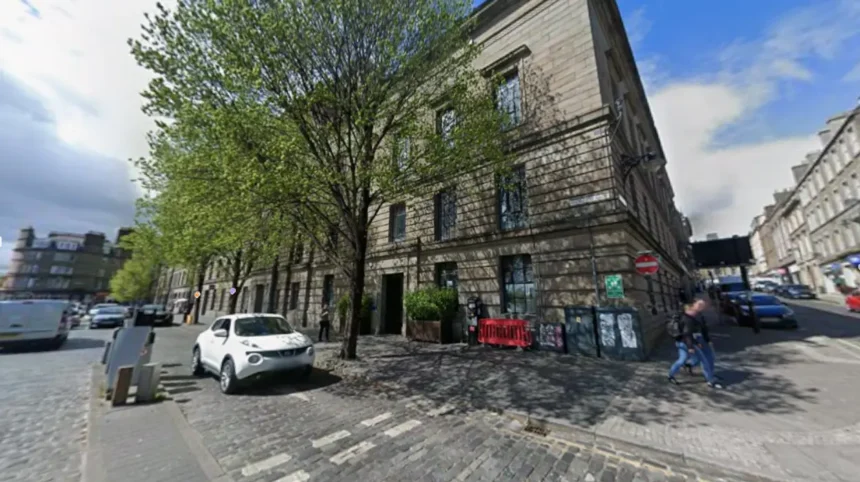
Robert Louis Stevenson was born at 17 Heriot Row in Edinburgh’s New Town in 1850. Raised in middle-class respectability, Stevenson explored the dark alleyways and taverns of the Old Town at night.
This personal experience with urban dualities informed his 1886 masterpiece, Strange Case of Dr Jekyll and Mr Hyde. Stevenson modeled the character of Jekyll and Hyde on Deacon William Brodie, an eighteenth-century Edinburgh cabinetmaker by day and burglar by night.
Brodie’s double life exposed the hidden hypocrisy of Edinburgh’s ruling class, providing a real historical blueprint for Stevenson’s psychological gothic fiction. Stevenson also authored Kidnapped and Catriona, incorporating local Lothian geography into his historical adventure novels.
Although chronic respiratory illness forced Stevenson to relocate overseas, his writings returned constantly to his native city. The Writers’ Museum in Lady Stair’s Close currently preserves Stevenson’s personal wardrobe, original manuscripts, and travel equipment. His structural use of urban geography established lasting conventions for urban crime and psychological fiction.
Which major writers defined Edinburgh’s historic and modern literary eras?
Edinburgh served as the primary residence for foundational literary figures including Robert Burns, Arthur Conan Doyle, Muriel Spark, Ian Rankin, Irvine Welsh, and J.K. Rowling. Each writer used Edinburgh’s specific institutions, medical advances, and social conditions to create new literary subgenres.
Robert Burns arrived in Edinburgh in 1786 to print his second poetry collection, securing patronage from the city’s intellectual elite at Makars’ Court. Sir Arthur Conan Doyle studied medicine at the University of Edinburgh in the 1870s under Dr. Joseph Bell.
Dr. Bell’s clinical diagnostic observation served as the direct real-world model for Sherlock Holmes. In 1961, Muriel Spark published The Prime of Miss Jean Brodie, setting the narrative in 1930s Edinburgh and basing the central character on her high school teacher at James Gillespie’s School.
Contemporary crime fiction developed through Ian Rankin’s Inspector Rebus series, which details local police proceedings inside real locations such as the Oxford Bar on Young Street.
Irvine Welsh documented working-class urban realities in Trainspotting, employing local Edinburgh dialect to explore post-industrial Leith. J.K. Rowling composed early Harry Potter manuscripts in Old Town cafés, incorporating Greyfriars Kirkyard names and local school architecture into her fictional world.
Why was Edinburgh designated as the first UNESCO City of Literature?
UNESCO selected Edinburgh as the inaugural City of Literature in 2004 based on its integrated publishing network, public libraries, historic archives, and continuous literary output. The designation recognised the city’s civic commitment to promoting reading, writing, and international literary heritage.
The UNESCO Creative Cities Network created the City of Literature title in 2004, selecting Edinburgh to launch the global initiative. Edinburgh demonstrated an unparalleled concentration of literary infrastructure, including the National Library of Scotland, the Poetry Library, and the Scottish Storytelling Centre.
The city hosts the annual Edinburgh International Book Festival, founded in 1983, which stands as one of the largest public celebrations of the written word. Over 40 independent and specialist bookstores operate within the city center, including historic establishments around the West Port and Royal Mile.
The city maintains dedicated literary memorials, such as Makars’ Court outside the Writers’ Museum, where carved stones quote Scottish poets across eight centuries. Edinburgh’s university programs continue to produce academic research in text editing and creative writing, securing the city’s status as a working literary capital. The 2004 designation established a global model, prompting UNESCO to add secondary creative cities across international jurisdictions.
Did J.K. Rowling write Harry Potter in Edinburgh cafés?
J.K. Rowling wrote early Harry Potter chapters in several Edinburgh establishments, including The Elephant House and Spoon (formerly Nicholson’s Café). She drew direct visual inspiration from local landmarks, including Greyfriars Kirkyard and George Heriot’s School.
Why is Waverley Station in Edinburgh named after a book?
Edinburgh Waverley Station was named after Sir Walter Scott’s 1814 debut novel, Waverley. Opened in the nineteenth century, it remains the only primary international railway station in the world named after a work of fiction, demonstrating Scott’s massive cultural influence.
What is the connection between Deacon Brodie and Dr Jekyll and Mr Hyde?
Deacon William Brodie was a respected Edinburgh councilor and craftsman who executed secret night burglaries to cover gambling debts. Robert Louis Stevenson was fascinated by Brodie’s double life, using his real history as the primary blueprint for the dual personality in Strange Case of Dr Jekyll and Mr Hyde.
Where can I see original manuscripts of famous Scottish authors in Edinburgh?
Original manuscripts, personal letters, and rare first editions are preserved at the National Library of Scotland on George IV Bridge. Additional personal archives and items from Walter Scott, Robert Burns, and Robert Louis Stevenson are displayed publicly at the Writers’ Museum in Lady Stair’s Close.
Which top locations should book lovers visit in Edinburgh?
Visitors should prioritize the Writers’ Museum off the Lawnmarket, which houses artifacts from Scott, Burns, and Stevenson. You should also visit the Scott Monument on Princes Street, explore the National Library of Scotland, and walk through Makars’ Court to see carved literary quotes built into the stone paving.