Jacobite Edinburgh represents the central urban stage of the 1745 Stuart restoration campaign led by Prince Charles Edward Stuart. The occupation of Scotland’s capital in September 1745 transformed civic administration, military posture, and Scottish royal governance.
- What is the Historical Context of the 1745 Jacobite Occupation of Edinburgh?
- How Did the Palace of Holyroodhouse Function as the Jacobite Court?
- What Role Did Edinburgh Castle Play During the Jacobite Blockade?
- What Historical Events Occurred at the Mercat Cross in 1745?
- Which Closes and Historic Buildings in Edinburgh Hold Jacobite Connections?
- How Does the National Museum of Scotland Preserve Jacobite Material Culture?
The Jacobite movement emerged after the Glorious Revolution of 1688 deposed King James II and VII. The British Parliament replaced the Catholic monarch with his Protestant daughter Mary II and her husband William III.
The Act of Settlement 1701 and the Act of Union 1707 consolidated Hanoverian succession under King George I in 1714. Supporters of the deposed House of Stuart launched armed uprisings in 1708, 1715, 1719, and 1745. The term Jacobite derives from Jacobus, the Latin translation for James.
In September 1745, the Jacobite army marched from the Scottish Highlands toward Edinburgh. Lord Provost Archibald Stewart managed city defenses while local volunteers attempted to secure the perimeter walls.
On September 17, 1745, Jacobite forces under Cameron of Lochiel breached Netherbow Port without armed resistance. Prince Charles Edward Stuart established his headquarters at the Palace of Holyroodhouse. The Jacobites controlled the city for six weeks while the British government held Edinburgh Castle.
The Jacobite occupation established administrative control over civil institutions, taxation, and military logistics. Prince Charles issued royal proclamations at the Mercat Cross, invalidating the Act of Union 1707.
The Jacobite court hosted state balls, military councils, and public receptions at Holyroodhouse. Forces engaged British troops at the Battle of Prestonpans on September 21, 1745, securing a tactical victory. The army departed Edinburgh on October 31, 1745, to invade England.
Edinburgh contains physical structures and historical artifacts associated with the 1745 campaign. Key locations include the Palace of Holyroodhouse, Edinburgh Castle, the Mercat Cross, Cannonball House, and the West Port.
Physical artifacts reside within the National Museum of Scotland on Chambers Street. The 1745 occupation remains a pivotal transformation in eighteenth-century Scottish political history.
What is the Historical Context of the 1745 Jacobite Occupation of Edinburgh?
The 1745 Jacobite occupation of Edinburgh resulted from decades of dynastic conflict between the Catholic Stuart lineage and the Protestant Hanoverian monarchy. Prince Charles Edward Stuart landed at Eriskay on July 23, 1745, to reclaim the British throne for his father, James Francis Edward Stuart.
The Glorious Revolution of 1688 altered the constitutional structure of the British Isles. Parliament removed King James II and VII, establishing parliamentary supremacy over royal succession. The Act of Union 1707 merged the Kingdom of Scotland and the Kingdom of England into the Kingdom of Great Britain. Opponents of the political union joined royalists supporting the exiled Stuart dynasty.
Prince Charles raised the royal standard at Glenfinnan on August 19, 1745. Highland clan leaders pledged military forces, including clan regiments from Cameron, MacDonnell, and Stewart families. The Jacobite army bypassed Hanoverian forces commanded by General Sir John Cope in the Highlands. The army advanced through Perth before moving south toward the Scottish capital.
Edinburgh in 1745 remained enclosed within the Flodden Wall and the Telfer Wall. The city population totaled approximately 40000 residents living inside the Old Town. Civil defense depended on the Town Guard and the Edinburgh Regiment. The defensive perimeter lacked sufficient artillery to stop an organized military assault.
On September 16, 1745, Jacobite advance units reached Coltbridge, triggering the retreat of Hanoverian dragoons known as the Coltbridge Canter. Lord Provost Archibald Stewart convened a public meeting to negotiate surrender terms. The city officials sought to prevent armed plunder and civilian casualties.
At 5:00 AM on September 17, 1745, Jacobite soldiers entered through the Netherbow Port gate. The troops secured public buildings, disarmed the Town Guard, and occupied the main street. Prince Charles entered the city later that afternoon, establishing control over Scotland’s capital without bloodshed.
How Did the Palace of Holyroodhouse Function as the Jacobite Court?
The Palace of Holyroodhouse served as the executive headquarters, administrative hub, and official royal court of Prince Charles Edward Stuart during the six-week Jacobite occupation. The prince restored royal ceremonies inside the historic residence of his Stuart ancestors.
The Palace of Holyroodhouse was constructed between 1671 and 1679 under the direction of architect Sir William Bruce. The palace stood at the eastern terminus of the Royal Mile. Prince Charles established his private apartments in the Duke of Hamilton’s rooms within the south wing.
Prince Charles held daily meetings with the Prince’s Council inside Holyroodhouse. The council included Lord George Murray, the Duke of Perth, Secretary John Murray of Broughton, and Highland clan chiefs. The council determined military strategy, logistics, taxation, and recruitment policies.
The Jacobite administration issued military orders and civil declarations from the palace. Prince Charles required Edinburgh merchants to supply shoes, tents, and uniforms for 5000 soldiers. The administration collected land tax and customs revenues to fund military operations.
Holyroodhouse hosted public receptions, dinners, and evening balls to cultivate political support. Female aristocrats, including Lady Anne Mackintosh and Lady Margaret Ogilvy, attended court events. The events project a image of legitimate royal authority to Scottish society.
Following the Jacobite departure on October 31, 1745, Hanoverian forces under Prince William, Duke of Cumberland, occupied Holyroodhouse. The Duke of Cumberland used the same bed chamber previously occupied by Prince Charles. The palace remains the official Scottish residence of the British monarch.
What Role Did Edinburgh Castle Play During the Jacobite Blockade?
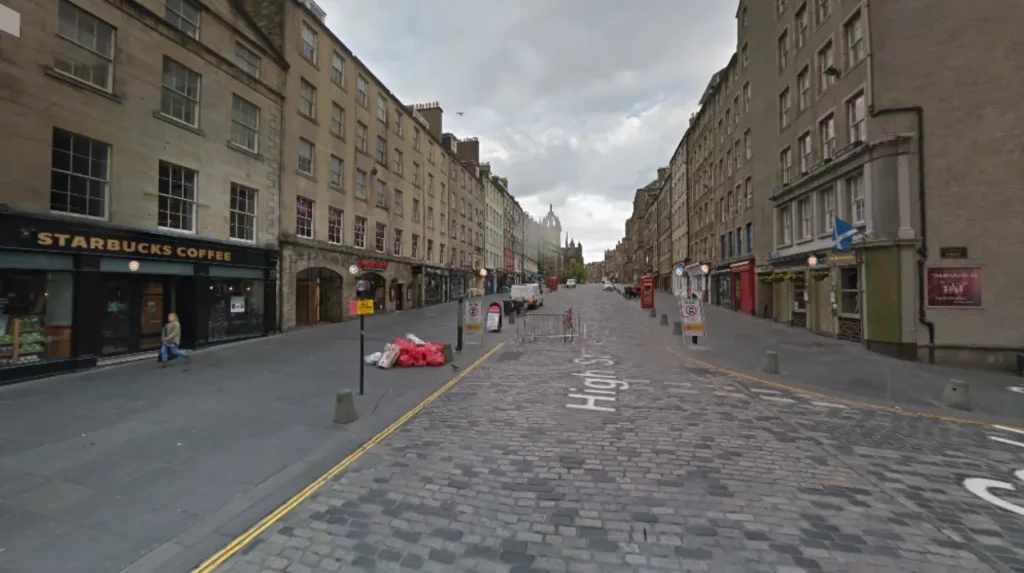
Edinburgh Castle served as the main Hanoverian military stronghold that resisted Jacobite control and maintained strategic artillery dominance over the Scottish capital throughout 1745. British garrison forces under Lieutenant General Joshua Guest held the fortress.
Edinburgh Castle occupies Castle Rock, a volcanic crag rising 130 meters above sea level. The fortress contained a garrison of 600 soldiers from the 47th Regiment of Foot and the 44th Regiment of Foot. The defensive works included the Half Moon Battery and Argyle Battery.
General Joshua Guest refused demands to surrender the fortress to Jacobite authorities. The garrison stored provisions, ammunition, and small arms inside the castle vaults. Hanoverian gunners maintained target sightlines over the Royal Mile and Castlehill.
On September 29, 1745, Lord George Murray implemented a military blockade to cut off castle supplies. Jacobite sentries posted guard at the Weigh House on Castlehill. The blockade prevented civilians from carrying food or water to the garrison.
General Guest retaliated on October 1, 1745, by ordering heavy artillery bombardment of the Old Town. Castle cannon fire damaged residential tenements, ignited fires, and killed several civilian residents. The bombardment threatened the physical destruction of the historic city center.
Prince Charles lifted the blockade on October 5, 1745, to protect civilian lives and city property. Hanoverian forces retained control of Edinburgh Castle throughout the uprising. The failed siege highlighted the Jacobite army’s lack of siege artillery capabilities.
What Historical Events Occurred at the Mercat Cross in 1745?
The Mercat Cross served as the civic site where the Jacobite army formally proclaimed James Francis Edward Stuart as King James VIII and III. The public ceremony established the legal justification for the Stuart restoration campaign.
The Mercat Cross stood on the High Street near St Giles’ Cathedral. The stone structure served as the traditional location for royal proclamations, public declarations, and civic executions. The cross represented royal authority within the royal burgh of Edinburgh.
At 1:00 PM on September 17, 1745, Jacobite heralds and trumpeters gathered at the Mercat Cross. Highland soldiers lined the High Street to maintain crowd control. Members of the Edinburgh public assembled to witness the official proceedings.
Herald officers read the Rome Manifesto of 1743 and the Royal Commission of Regency. The declarations named James Francis Edward Stuart rightful king and appointed Prince Charles Edward Stuart as Prince Regent. The document promised to repeal the Act of Union 1707.
Jacobite supporters, led by Mrs. Jean Cameron of Glendessary, toasted the royal family from adjacent balconies. The crowd cheered as Jacobite officers distributed wine and commemorative favors. Opponents of the movement observed the ceremony from private residences along the street.
The Mercat Cross remained a symbol of Jacobite political authority until Hanoverian forces reoccupied the city. In 1746, British authorities burned captured Jacobite standards at the Mercat Cross. The current cross structure was rebuilt in 1885 near its original location.
Which Closes and Historic Buildings in Edinburgh Hold Jacobite Connections?
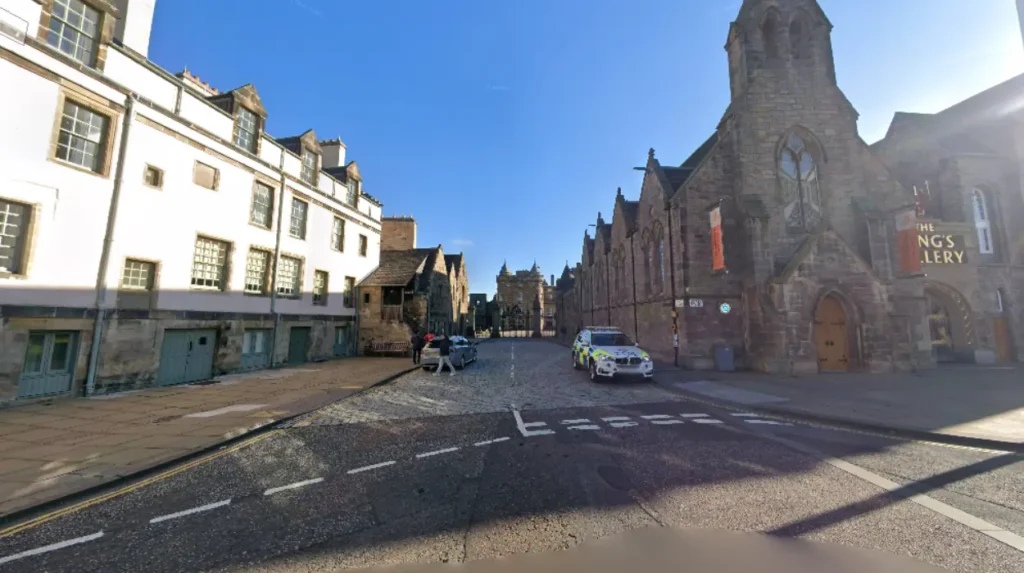
Numerous closes, public buildings, and private residences across Edinburgh’s Old Town retain direct physical connections to the people and events of the 1745 Jacobite uprising. These sites preserved the architectural fabric of eighteenth-century Scotland.
Cannonball House sits at the top of Castlehill near the castle esplanade. The wall contains an iron cannonball embedded in the masonry. Historical consensus attributes the cannonball to Hanoverian artillery fire directed at Jacobite positions during the 1745 siege.
Lady Stair’s Close contains Lady Stair’s House, constructed in 1698 for Sir Archibald Primrose. The building housed Elizabeth, Dowager Countess of Stair, a prominent Hanoverian supporter during the occupation. The building now houses The Writers’ Museum.
Riddle’s Court on the Lawnmarket served as a meeting place for civic officials and political figures. The court hosted banquets and administrative gatherings during the eighteenth century. Architect Thomas Hamilton later renovated elements of the courtyard complex.
The Canongate Tolbooth, built in 1591, served as a courthouse, council chamber, and prison. Hanoverian authorities imprisoned suspected Jacobite sympathizers within its cells following the Battle of Culloden in 1746. The building currently operates as The People’s Story Museum.
The Magdalen Chapel on Cowgate contains intact Reformation-era stained glass and historic furnishings. Incorporations of Edinburgh trades met inside the chapel to discuss civic defense during the September 1745 crisis. The building remains preserved under the Scottish Reformation Society.
How Does the National Museum of Scotland Preserve Jacobite Material Culture?
The National Museum of Scotland holds the world’s most comprehensive public collection of physical artifacts, weapons, portraits, and personal effects related to the Jacobite movement. The collection documents the military history and social culture of the era.
The National Museum of Scotland is located on Chambers Street in Edinburgh. The Scottish Galleries house dedicated exhibitions detailing the Stuart dynasty, the Act of Union, and the Jacobite risings. The items range from high-status silver to military equipment.
The museum displays the silver travelling canteen used by Prince Charles Edward Stuart during the 1745 campaign. Crafted by Edinburgh silversmith Ebenezer Oliphant, the set includes silver cups, cutlery, and spices. French forces captured the set at Culloden before its eventual return to Scotland.
The weapons collection includes broadswords, target shields, steel pistols, and musket arms. Highlights include double-edged basket-hilted broadswords engraved with Stuart monarchist slogans. Firearms produced by Scottish gunsmiths in Doune showcase eighteenth-century craftsmanship.
Portraiture exhibits feature oil paintings of Prince Charles Edward Stuart, James Francis Edward Stuart, and key military leaders. Works by artists Allan Ramsay and Antonio David provide visual documentation of Jacobite figures. The portraits served as visual propaganda for the Stuart cause.
The collection includes secretive Jacobite symbols used by loyalists to signal allegiance. Displayed items feature white cockades, glass goblets engraved with white roses, and oak leaf motifs. These artifacts demonstrate the covert networks operating within British society.
What caused the Jacobite Uprising in Edinburgh in 1745?
The Jacobite Uprising of 1745 was driven by the desire to restore the exiled Stuart monarchy to the British throne. Followers supported Prince Charles Edward Stuart after the 1688 deposition of King James II. Discontent with the Act of Union 1707 further fueled Scottish support. Jacobite forces occupied Edinburgh to establish political control over Scotland.
Did Bonnie Prince Charlie attack Edinburgh Castle in 1745?
Prince Charles Edward Stuart attempted a blockade of Edinburgh Castle in September 1745 to starve out the Hanoverian garrison. The castle garrison responded by firing heavy artillery into the Old Town, causing civilian casualties and structural damage. Prince Charles lifted the blockade on October 5, 1745, to protect the city and its residents.
Can you visit the Jacobite locations in Edinburgh today?
Visitors can tour multiple preserved Jacobite sites along the Royal Mile in Edinburgh. Key accessible locations include the Palace of Holyroodhouse, Edinburgh Castle, the Mercat Cross, and Cannonball House. The National Museum of Scotland on Chambers Street also displays authentic Jacobite weapons, clothing, and personal items.
What is the cannonball in Cannonball House in Edinburgh?
Cannonball House features an iron cannonball embedded in its high stone wall near Edinburgh Castle. Historical consensus states the cannonball was fired by Hanoverian forces inside the castle during the 1745 Jacobite blockade. The garrison aimed at Jacobite positions on Castlehill, leaving the shot permanently lodged in the masonry.
How long did Prince Charles stay in Edinburgh during 1745?
Prince Charles Edward Stuart stayed in Edinburgh for six weeks, from September 17 to October 31, 1745. He established his royal court at the Palace of Holyroodhouse while his army prepared for the invasion of England. The Jacobite forces departed the capital to march south toward Carlisle.