

Key Points
- A crash near Clovenstone has closed the A720 Edinburgh City Bypass in both directions between Dreghorn junction and Hermiston Gait.
- Emergency services responded to the scene around 8.55pm on Wednesday, 11 November 2026, and remained on site for more than 14 hours into Thursday.
- The City of Edinburgh Council urged drivers to postpone their journeys, warning that gridlock in west and south-west Edinburgh could be the worst the capital has ever seen.
- Motorists face delays of up to 90 minutes on the A720, while tailbacks on the M8 stretch back to Junction 3 at Livingston.
- Edinburgh Airport advised travellers to allow extra time to reach the terminal, and Lothian Buses reported disruption across 26 local and express routes.
- Traffic Scotland set up westbound and eastbound diversions via Calder Road and the Dreghorn Link, warning drivers to expect longer journey times.
Edinburgh (Edinburgh Daily) November 12, 2026 – Motorists and public transport passengers across the Scottish capital are facing unprecedented gridlock after a serious overnight crash forced the closure of the A720 Edinburgh City Bypass in both directions for over 14 hours.
- Key Points
- What happened on the Edinburgh City Bypass?
- Why are Edinburgh officials calling these the worst delays ever seen?
- How are Edinburgh Airport and local buses affected?
- Which diversion routes are open for Edinburgh drivers?
- Background of the A720 Edinburgh City Bypass
- Prediction: How This Development Will Affect Edinburgh Commuters and Businesses
What happened on the Edinburgh City Bypass?
Emergency services were first alerted to a collision on the A720 near Clovenstone at approximately 8.55pm on Wednesday, 11 November 2026.
Police Scotland officers immediately shut down the dual carriageway between the Dreghorn junction and Hermiston Gait in both directions while paramedics and specialist crash investigators attended the scene.
As reported by Jacob Farr, Senior Reporter at Edinburgh Live, police confirmed that officers remained at the scene throughout Thursday morning as investigations continued into the circumstances surrounding the collision.
In an official statement released on Thursday, a Police Scotland spokesperson said: “Emergency services remain in attendance following a crash on the A720 Edinburgh City Bypass near Clovenstone, which was reported to police around 8.55pm on Wednesday, 11 November, 2026. The road is closed in both directions between Dreghorn junction and Hermiston Gait and is expected to remain closed for a number of hours. Motorists are advised to continue to use alternative routes.”
Authorities have not yet confirmed the exact number of vehicles involved in the incident or whether any individuals sustained injuries during the collision.
Why are Edinburgh officials calling these the worst delays ever seen?
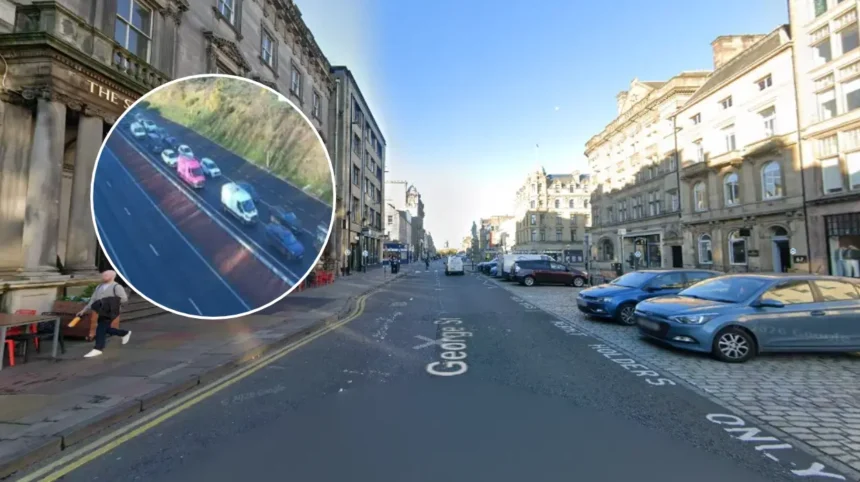
The prolonged shutdown of one of Scotland’s busiest arterial routes caused severe congestion to spill over into surrounding residential neighbourhoods and major city arteries during the Thursday morning rush hour.
As reported by Heather Carrick, PA Reporter for NationalWorld, the closure triggered delays of nearly 90 minutes on the A720 itself, alongside heavy knock-on tailbacks along the M8 motorway.
Traffic monitoring service Inrix confirmed that queues stretched back along the M8 to Junction 3 at Livingston, whilst city-bound routes including the A80 through Cramond, Lanark Road, and Calder Road past Heriot-Watt University experienced heavy gridlock.
Local neighbourhoods bearing the brunt of the displaced traffic include Fairmilehead, Oxgangs, Redford, Craiglockhart, Longstone, Clovenstone, and Wester Hailes.
Addressing the scale of the disruption on social media platform X, the City of Edinburgh Council stated: “Severe traffic delays across all of the west side of Edinburgh due to ongoing closure of the City Bypass between Dreghorn and Hermiston Gait. We’d advise postponing your journey if you have the option – these may be the worst delays we’ve ever seen.”
How are Edinburgh Airport and local buses affected?
The widespread road congestion has heavily impacted both aviation travellers and daily public transport commuters across the region.
As reported by Cara Blackhall of Edinburgh Live, Edinburgh Airport issued an urgent travel advisory on Thursday morning urging departing passengers to allow substantial extra time to reach the terminal.
Meanwhile, as reported by Douglas Dickie, Content Editor at the Scottish Daily Express, commuters across the capital faced chaotic rush-hour conditions as drivers were repeatedly urged to avoid the western approaches of the city.
Public transport operator Lothian Buses warned passengers to expect significant delays across 26 of its services, including routes 2, 3, 4, 10, 16, 17, 18, 20, 21, 22, 25, 30, 32, 33, 34, 35, 36, 44, 45, 70, 71, and 100, alongside express services X19, X27, X28, and X40.
Which diversion routes are open for Edinburgh drivers?
Traffic Scotland has established formal diversion routes to manage the flow of vehicles around the closed section of the bypass, warning drivers of expected delays of 17 minutes westbound and 13 minutes eastbound on the diversions alone.
Westbound Diversion Route
Motorists travelling westbound must exit the A720 at the Dreghorn Junction and take the Dreghorn Link.
Drivers are instructed to proceed straight across Clovenstone Roundabout to the traffic lights at the Murrayburn Road junction, continue straight to Bankhead Roundabout, and turn left onto Calder Road.
From there, vehicles must travel to Calder Junction, turn right onto the M8 on-slip, and head north towards Gogar Roundabout.
Eastbound Diversion Route
Eastbound traffic is being diverted off the A720 at the Hermiston Gait and A71 Calder Road off-slip.
Motorists should take the eastbound slip for the A71 to Calders Roundabout, turn left onto Calder Road, and follow the westbound diversion route in reverse order to rejoin the bypass at Dreghorn.
Background of the A720 Edinburgh City Bypass
Opened in stages between 1981 and 1990, the A720 Edinburgh City Bypass serves as the primary orbital trunk road skirting the southern periphery of the Scottish capital.
Connecting the A1 in the east with the M8 and M9 motorways in the west, the dual carriageway carries tens of thousands of commuters, freight lorries, and regional travellers every day.
Because the route acts as the sole high-speed link bypassing Edinburgh’s historic and congested city centre, any major closure between key interchanges such as Dreghorn and Hermiston Gait immediately forces heavy trunk traffic onto local suburban roads that were not designed to accommodate high-volume freight or commuter flows.
Prediction: How This Development Will Affect Edinburgh Commuters and Businesses
The prolonged closure of the A720 between Dreghorn and Hermiston Gait is expected to cause cascading operational disruptions across Edinburgh and the wider Lothians throughout the remainder of Thursday and potentially into Friday morning if carriageway resurfacing or barrier repairs are required following police investigations.
Local businesses, logistics operators, and delivery networks relying on the M8-A720 corridor will experience delayed supply chains and missed appointments, while air passengers travelling from the south and east of Scotland risk missing flights unless they reroute via the city centre or utilise rail and tram links.
Furthermore, the extreme congestion on suburban roads such as Calder Road and Lanark Road is likely to prompt renewed scrutiny from local councillors and transport planners regarding emergency diversion infrastructure and traffic signal prioritisation during trunk road closures.


