

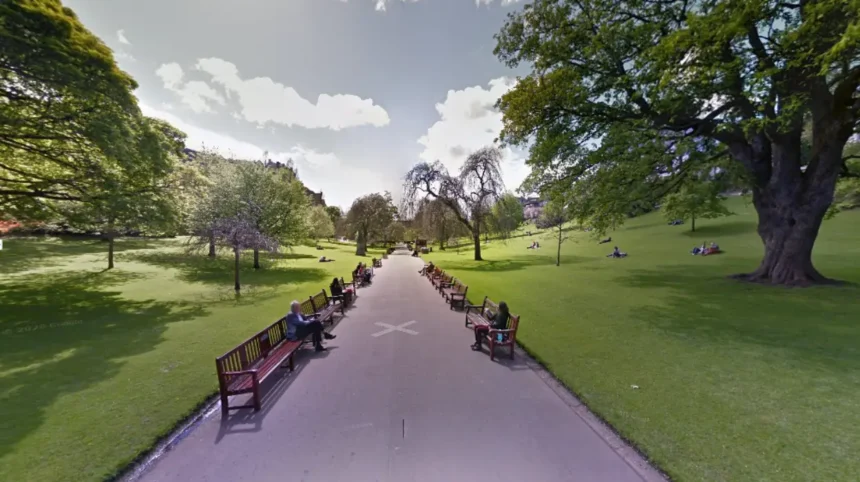
The Nor Loch was an artificial lake constructed in 1460 by King James III to protect Edinburgh from northern invasions. Over three centuries, it became a stagnant dumping ground for raw sewage, household waste, and slaughterhouse runoff from the crowded Old Town.
King James III ordered the flooding of the marshy valley north of Edinburgh Castle in 1460 to strengthen the city’s military defenses. Water from local springs and streams filled the depression, creating a barrier measuring roughly half a mile long and 300 feet wide. Because the lake lacked a natural outflow, waste accumulated rapidly along its southern banks.
Citizens emptied chamber pots, tannery chemicals, and butcher offal directly into the water from the steep closes of the High Street. By the 17th century, the Nor Loch posed a severe public health hazard, spreading waterborne diseases such as cholera and typhus throughout the dense urban population. Historical records from the Edinburgh Town Council confirm that the water also served as a site for witch trials, public executions, and suicides.
Why and How Was the Nor Loch Drained?
Edinburgh Town Council drained the Nor Loch between 1759 and 1820 to eliminate disease and expand the overcrowded city northward. Engineers constructed deep drainage channels and culvert systems to divert spring water toward the Water of Leith, drying the valley floor.
In 1752, Lord Provost George Drummond published proposals to extend Edinburgh beyond its medieval walls to relieve severe overcrowding. The construction of the North Bridge in 1763 provided the physical connection required to access the northern ridge for the new Georgian New Town. Draining the foul-smelling marsh became an immediate engineering priority to make the adjacent land habitable for wealthy residents.
Scottish architect James Craig designed the New Town street grid in 1767, placing Princes Street directly along the northern edge of the drained basin. Workers dug central drainage ditches and installed stone culverts to channel runoff eastward toward Holyrood and the Firth of Forth. The western section dried completely by 1816, while the eastern portion remained marshy until the construction of Waverley Station in the 1840s.
How Were Princes Street Gardens Designed and Divided?
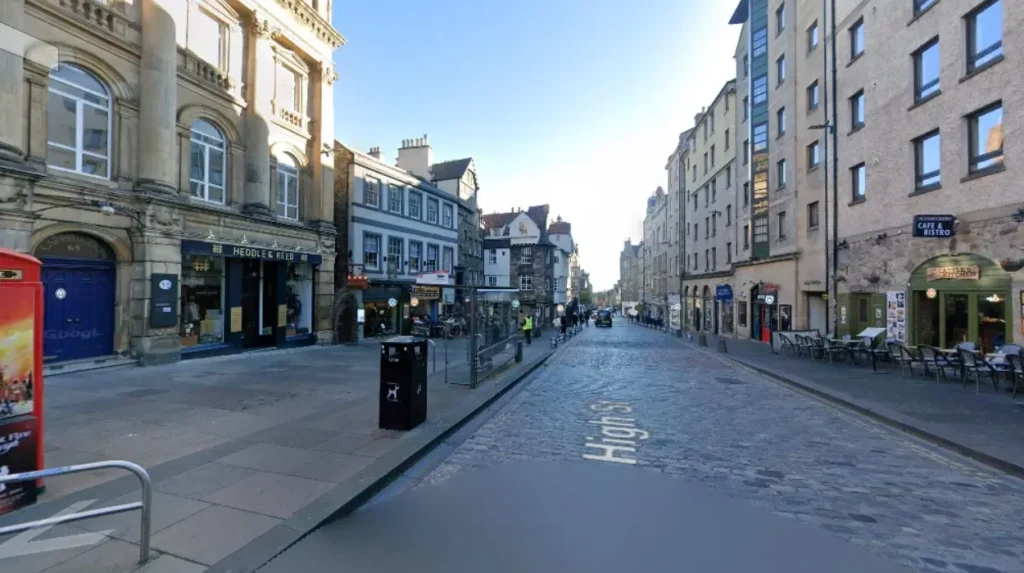
Princes Street Gardens was divided into West and East sections in 1846 when the North British Railway laid tracks through the valley. Landscape architect James Skene designed the private West Gardens in 1820, while the Town Council developed the public East Gardens.
Residents of Princes Street initially leased the drained western land from the city in 1816 to prevent commercial building construction. Landscape designer James Skene of Rubislaw, alongside botanist Patrick Neill, planted over 70,000 trees and shrubs across the sloped terrain between 1820 and 1825. For fifty years, the West Princes Street Gardens remained a locked private enclosure accessible only to paying keyholders from neighboring townhouses.
In 1846, Parliament granted the North British Railway permission to build a rail corridor through the center of the valley, permanently splitting the park at The Mound. The Mound itself was formed from 1.5 million cartloads of earth excavated during the construction of the New Town foundations. Edinburgh Corporation finally purchased the West Gardens in 1876, opening the entire 37-acre green space to the general public free of charge.
What Are the Major Landmarks Inside Princes Street Gardens?
Princes Street Gardens contains over 30 monuments, memorials, and historic structures celebrating Scottish culture, military history, and engineering. Key landmarks include the Scott Monument, the Ross Fountain, the Floral Clock, and the Scots American War Memorial.
The Scott Monument stands 200 feet and 6 inches tall in the East Gardens, making it the largest monument dedicated to a writer in the world. Architect George Meikle Kemp designed the Victorian Gothic spire using Binny sandstone, completing the structure in 1846 with 68 carved figures from Sir Walter Scott’s novels. Visitors climb 287 narrow spiral steps to reach the highest viewing platform overlooking the city skyline.
In the West Gardens, the cast-iron Ross Fountain sits beneath the crags of Edinburgh Castle. Ironmonger Daniel Ross purchased the ornate fountain at the 1862 London International Exhibition and gifted it to the city, where engineers installed it in 1872. Nearby, the Floral Clock—commissioned in 1903 by Parks Superintendent John McHattie—features over 30,000 live bedding plants arranged around the world’s first mechanical flower timepiece.
What Ecological and Civic Role Does the Park Play Today?
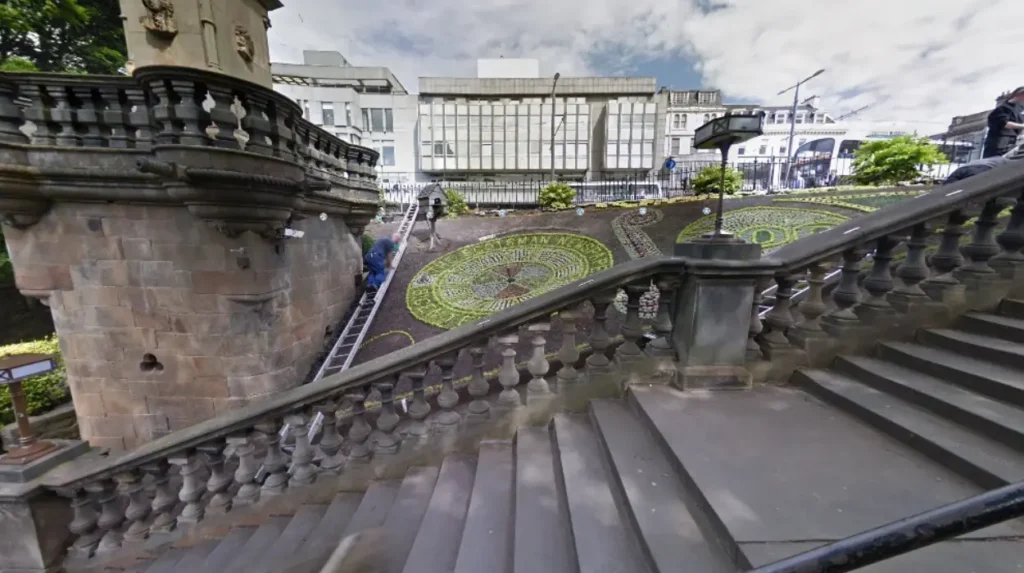
Princes Street Gardens functions as a vital urban biodiversity corridor, UNESCO World Heritage centerpiece, and primary venue for Edinburgh’s annual festivals. The City of Edinburgh Council manages its horticultural displays, mature tree canopy, and public event infrastructure.
The park falls within the Old and New Towns of Edinburgh UNESCO World Heritage Site, designated in 1995 for its dramatic juxtaposition of medieval and neoclassical architecture. Horticultural teams maintain diverse habitats that support urban wildlife, including tawny owls, sparrowhawks, pipistrelle bats, and red admirals. Over 1,200 mature trees, including elm, sycamore, and cherry varieties, absorb urban carbon emissions and reduce the city center heat island effect.
Each year, the Ross Bandstand in the West Gardens hosts major civic gatherings, including the Edinburgh International Festival fireworks concert and Hogmanay celebrations. During December, the East Gardens transform into the Edinburgh Christmas market, drawing millions of domestic and international tourists. Strict conservation guidelines govern these commercial events to protect turf health, tree root zones, and historic stonework.
What was the Nor Loch used for before it became a park?
The Nor Loch served as a defensive moat on the northern side of Edinburgh Castle starting in 1460. Over the next three centuries, residents used the stagnant lake as a dumping ground for raw sewage, household garbage, and slaughterhouse waste, turning it into a severe public health hazard.
Why is there a railway running through Princes Street Gardens?
The North British Railway obtained parliamentary approval in 1846 to lay tracks through the valley floor to connect Waverley Station with western Scotland. This rail corridor permanently divided the park into the East Princes Street Gardens and West Princes Street Gardens, separated centrally by The Mound.
Was Princes Street Gardens always open to the public?
No, West Princes Street Gardens operated as a private, fenced park from 1820 until 1876. Only wealthy property owners living on Princes Street who paid an annual fee received keys to enter the grounds, until the Edinburgh Corporation bought the land and opened it to everyone.
How tall is the Scott Monument in Princes Street Gardens?
The Scott Monument measures 200 feet and 6 inches (61.11 meters) in height. Constructed between 1840 and 1846, it features four viewing galleries accessible via 287 spiral steps and remains the largest monument to a writer anywhere in the world.
Are there human remains buried under Princes Street Gardens?
Yes, archaeological excavations and historical records confirm that human remains from medieval plagues, executions, and suicides lie beneath the former bed of the Nor Loch. Most remains were left undisturbed in the silt when engineers drained the water and covered the basin with soil.


