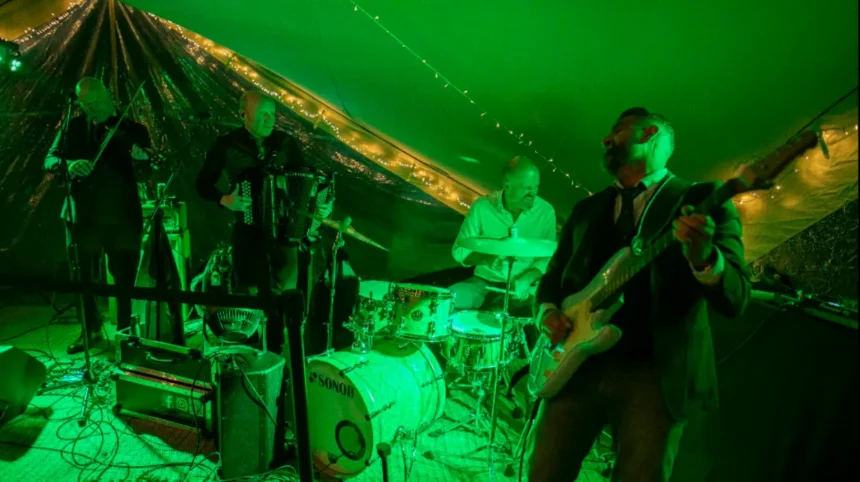
A Scottish ceilidh is a traditional social gathering involving Gaelic folk music, structured couples dancing, and community celebration. Beginners should attend in Edinburgh because expert caller instructions, historic city centre venues, and welcoming social atmospheres make participation accessible to everyone.
- What Happens During a Traditional Ceilidh Dance Event in Edinburgh?
- What Are the Essential Ceilidh Dances Beginners Must Learn First?
- Where Are the Best Venues to Experience a Ceilidh in Edinburgh?
- What Should Beginners Wear to a Ceilidh in Edinburgh?
- What Is the Proper Ceilidh Etiquette for First-Time Dancers?
- How Much Does It Cost and How Should You Book a Ceilidh in Edinburgh?
- Do I need to bring a partner to attend a ceilidh in Edinburgh?
- Can children and elderly family members participate in a Scottish ceilidh?
- How long does a standard ceilidh event last in Edinburgh?
- Is it necessary to know Gaelic to understand a Scottish ceilidh?
- Are ceilidhs in Edinburgh suitable for people with zero dance experience?
A Scottish ceilidh represents a centuries-old traditional social gathering that combines energetic Gaelic folk music, structured set dancing, and collective community celebration. The word ceilidh originates from the Gaelic language, where it historically referred to an informal literary or musical social meeting inside a residential home.
In contemporary Scotland, a ceilidh has evolved into a structured social dance event held inside dedicated halls, historic venues, and pub function rooms. Attending a ceilidh in Edinburgh provides beginners with an authentic cultural experience because the capital city hosts nightly events specifically tailored for novice dancers.
Professional bands in Edinburgh employ live callers who demonstrate every step before the music begins, eliminating any need for prior dance experience. The inclusive nature of Scottish social dancing ensures that individuals, couples, and group visitors can participate without feeling self-conscious.
Edinburgh offers distinct venue options ranging from 19th-century church conversions to historic assembly rooms, providing a high density of accessible dance events throughout the calendar year.
Beginners gain physical fitness benefits, cultural insights, and immediate social connection with local residents and international visitors. Attending an Edinburgh ceilidh allows tourists to experience living Scottish heritage rather than observing static historical exhibits inside traditional museum settings.
What Happens During a Traditional Ceilidh Dance Event in Edinburgh?
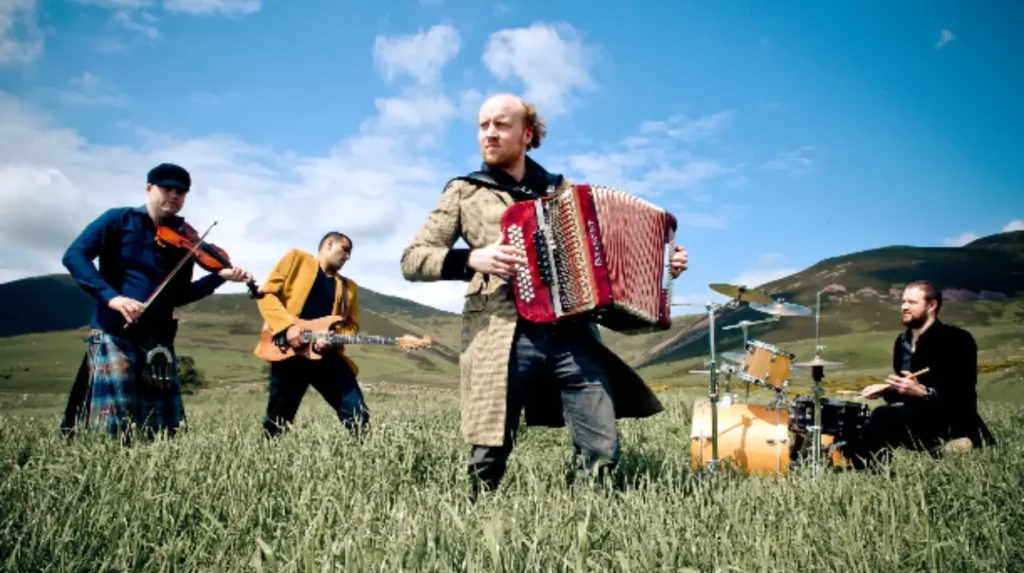
A traditional ceilidh event features a live musical ensemble, an expert caller who demonstrates dance steps, sequential group dances, and periodic intervals for refreshments. The structured progression ensures that absolute beginners learn every step before joining the main dance floor.
A traditional ceilidh event follows a predictable structural progression designed to build participant confidence and maintain high energy throughout the evening. Upon entering the venue, guests register, secure personal belongings, and observe the setup of the live musical ensemble, which typically features a fiddle, accordion, acoustic guitar, and drums.
The event begins when the designated dance caller steps to the microphone to announce the opening dance formation. A dance caller functions as the central instructor and coordinator who breaks down complex footwork into simple physical movements for the audience.
The caller demonstrates the specific steps on the main floor alongside experienced dancers while explaining the timing, directional turns, and partner transitions. Participants form specific spatial arrangements on the floor, including progressive lines, circular sets of four couples, and quadrilles consisting of eight dancers.
Once the caller verifies that all participants understand the basic pattern, the live band initiates the tempo, and the set dance commences. Dances usually last between five and eight minutes, after which the band brings the music to a temporary halt to allow recovery time.
The evening continues through a curated setlist of three to four active dances, followed by a twenty-minute intermission for hydration and social interaction. A second half of advanced or faster dances completes the evening, finishing with a collective rendition of Auld Lang Syne.
What Are the Essential Ceilidh Dances Beginners Must Learn First?
The essential ceilidh dances for beginners include the Gay Gordons, the Dashing White Sergeant, the Strip the Willow, and the Canadian Barn Dance. These specific dances rely on simple repetitive movements, clear spatial patterns, and constant partner changes.
The Gay Gordons serves as the standard opening dance for almost every Scottish ceilidh due to its straightforward march tempo and simple spatial movement. Dancers form a large outer circle facing counter-clockwise, with partners standing side-by-side while holding hands in a traditional handhold position behind the shoulders.
The couples walk forward four steps, pivot in unison without releasing hands, walk backward four steps, and then execute a series of underarm spins before marching forward again. The second fundamental dance is the Dashing White Sergeant, which requires progressive sets composed of three dancers facing another group of three dancers.
This dance introduces the concept of reeling, where individuals weave in and out of a figure-eight pattern by alternating right and left hand turns with adjacent partners. The third critical routine is the Strip the Willow, recognized as one of the most energetic and physical dances in the Scottish tradition. Dancers form two parallel lines facing their respective partners, with the top couple executing a series of continuous central spins and line passes down the entire length of the hall.
The fourth essential dance is the Canadian Barn Dance, a two-couple routine featuring forward walks, lateral sidesteps, and a full rotational polka turn around the perimeter of the room. Mastering these four foundational dances gives beginners complete confidence to participate in over eighty percent of all social ceilidh repertoire performed in Edinburgh.
Where Are the Best Venues to Experience a Ceilidh in Edinburgh?

The best venues to experience a ceilidh in Edinburgh include Ghillie Dhu, Assembly Roxy, Stramash, and the Edinburgh Ceilidh Club at Summerhall. These locations offer nightly or weekly public events featuring professional callers and historical architecture.
Selecting an appropriate venue directly influences the overall experience for a first-time ceilidh participant in the city of Edinburgh. Ghillie Dhu is a prominent converted 19th-century Episcopal church located at the West End of Princes Street that hosts formal weekly ceilidh dinners and dances. Its vaulted ceilings, mahogany woodwork, and expansive central timber floor create an impressive backdrop for traditional Scottish social dancing.
Stramash is a massive live music hall situated on Cowgate in the historic Old Town district, offering free or low-cost late-night ceilidhs in a high-energy environment. The multi-level venue accommodates large student and tourist crowds, making it ideal for casual visitors seeking an informal atmosphere without strict dress codes.
The Edinburgh Ceilidh Club operates structured weekly social dances inside Summerhall, a multi-arts complex located near the Meadows public park. Summerhall features traditional sprung wooden floors that reduce joint impact during high-intensity jumping and spinning routines, making it a favorite among experienced local dancers.
Assembly Roxy, positioned in the Southside area, provides a atmospheric converted church setting that hosts regular public ceilidhs run by top-tier Scottish folk bands. Each venue maintains fully licensed bars, professional security personnel, clear accessibility infrastructure, and structured ticketing systems that allow advance online booking. Beginners should evaluate venue location, ticket prices, dance floor dimensions, and start times when selecting where to attend their first event.
What Should Beginners Wear to a Ceilidh in Edinburgh?
Beginners should wear lightweight, breathable clothing and flat, soft-soled footwear with secure fastenings. Traditional Scottish attire like kilts is welcomed but entirely optional, while high heels and heavy boots should be strictly avoided.
Appropriate attire selection is critical for safety, comfort, and physical endurance during a high-energy Scottish ceilidh event. Ceilidh dancing generates significant body heat, causing indoor venue temperatures to rise rapidly within the first fifteen minutes of collective movement.
Participants should choose lightweight, breathable fabrics such as cotton or moisture-wicking synthetic materials rather than heavy wool or synthetic knits. Flat shoes featuring smooth leather or rubber soles provide the optimal combination of traction and slide required for rapid spins and directional turns.
High-heeled shoes present a severe risk of ankle sprains and foot injuries, while heavy steel-toed boots can injure other dancers on a crowded floor. Men and women may wear traditional Scottish highland dress, such as a tartan kilt accompanied by a sporran, kilt hose, and Ghillie Brogues. However, full traditional dress remains entirely optional for standard public events, and smart-casual civilian clothing is widely accepted across all major Edinburgh venues.
Trousers should allow for a full range of leg motion, while skirts should reach knee-length or lower to maintain comfort during fast rotational spinning movements. Dancers should avoid wearing heavy jewelry, long scarves, or unsecured accessories that could catch on other participants during close-contact handholds. Bringing a small personal bag that can be securely stored or worn across the body keeps personal valuables safe without restricting upper-body motion.
What Is the Proper Ceilidh Etiquette for First-Time Dancers?
Proper ceilidh etiquette requires active listening to the dance caller, accepting invitations to dance from different partners, respecting personal physical boundaries, and maintaining continuous safety awareness on the crowded floor.
Understanding basic social etiquette ensures a safe, respectful, and enjoyable evening for everyone participating on the dance floor. The paramount rule of ceilidh etiquette is to render complete silence and attention whenever the live dance caller steps up to give verbal instructions. Talking during caller explanations delays the event, confuses adjacent dancers, and compromises the spatial organization of complex set formations. Social tradition encourages individuals to ask different people to dance throughout the evening rather than remaining exclusively with one partner for all routines. It is considered courteous to accept dance invitations gracefully, regardless of the age, background, or physical skill level of the person making the request. When executing fast spinning maneuvers, such as those found in Strip the Willow, dancers must maintain a balanced grip without squeezing partners’ fingers or pulling wrists forcefully. Dancers must adapt their velocity and spatial movement to match the density of the floor, preventing accidental collisions with neighboring sets. If a mistake occurs during a dance pattern, participants should smile, reset their physical position, and rejoin the movement on the next musical phrase. Thanking your partner at the conclusion of each set dance is a standard social custom observed across all Scottish ceilidh events. Hydrating frequently between sets and stepping off the main floor when fatigued prevents physical exhaustion and maintains a safe environment for active dancers.
How Much Does It Cost and How Should You Book a Ceilidh in Edinburgh?
Experiencing a ceilidh in Edinburgh costs between £10 and £65 per person depending on whether the ticket includes a multi-course dinner. Booking online several weeks in advance is mandatory for weekend events.
The financial cost of attending a ceilidh in Edinburgh varies based on the venue type, included catering options, and seasonal demand factors. Basic entry tickets for evening social dances at venues like Summerhall or Assembly Roxy range between £10 and £18 per adult ticket. Late-night casual ceilidhs hosted at live music bars like Stramash frequently offer free admission before a specified hour or charge a low door fee under £10. Premium packages that combine a traditional three-course Scottish dinner with an evening ceilidh, such as those at Ghillie Dhu, cost between £45 and £65 per person. Tickets for major calendar events, including Hogmanay New Year celebrations and St Andrew’s Day dances, demand higher prices ranging from £30 to £125. Beginners should purchase tickets directly from official venue websites or recognized ticket vendors to avoid inflated secondary market prices and counter-espionage ticket scams. Popular Friday and Saturday night ceilidhs in Edinburgh consistently sell out two to four weeks in advance, making advance online booking essential for itinerary planning. Most venues supply digital QR-code tickets sent via email, which can be scanned directly from a smartphone screen upon arrival at the entrance door. Group bookings involving more than eight people often qualify for small promotional discounts or reserved seating tables adjacent to the main wooden dance floor. Checking cancellation policies before purchase ensures refund flexibility in the event of unexpected travel schedule alterations or delays.
Do I need to bring a partner to attend a ceilidh in Edinburgh?
No, you do not need to bring a dance partner to attend a public ceilidh in Edinburgh. Ceilidhs are inherently social events where participants frequently swap partners between different dances throughout the night. Solo travellers and single attendees will easily find partners on the dance floor.
Can children and elderly family members participate in a Scottish ceilidh?
Yes, children and elderly family members can fully participate in Scottish ceilidhs because dances can be performed at various physical intensities. Most daytime and early evening ceilidhs are family-friendly events that accommodate all generational age groups. Callers adapt step instructions to ensure safety and inclusion for every participant.
How long does a standard ceilidh event last in Edinburgh?
A standard evening ceilidh in Edinburgh typically lasts between three and four hours, including a scheduled mid-event intermission. The live musical performance usually begins around 8:00 PM and concludes around 11:00 PM or midnight. Participants are free to dance as many or as few sets as their physical stamina permits.
Is it necessary to know Gaelic to understand a Scottish ceilidh?
No knowledge of the Gaelic language is necessary to attend or enjoy a Scottish ceilidh in Edinburgh. All dance instructions, song descriptions, and venue announcements are delivered entirely in clear English by the live caller. The term ceilidh itself is one of the few Gaelic words used during the event.
Are ceilidhs in Edinburgh suitable for people with zero dance experience?
Yes, ceilidhs in Edinburgh are specifically designed to accommodate people with zero prior dance experience. Every single dance is preceded by a step-by-step walk-through led by an experienced professional caller. The collective group dynamic ensures that beginners are guided safely through every routine by surrounding dancers.