The ghosts and legends of Edinburgh originate from real historical events occurring between the fourteenth and nineteenth centuries. Urban overcrowding, severe disease outbreaks, public executions, and extensive subterranean construction created an environment where historic tragedies transformed into enduring folklore.
- Why Is Mary King’s Close Associated With Ghost Stories and Disease?
- How Did the Underground Vaults of Edinburgh Become Center to Urban Legends?
- What Is the Real History Behind the Ghostly Piper of Edinburgh Castle?
- How Do Burke and Hare Relate to Edinburgh’s Dark Supernatural Lore?
- What Role Did the Scottish Witch Trials Play in Shaping City Legends?
- What is the origin of the ghosts and legends of Edinburgh?
- Did people actually live underground in the South Bridge Vaults?
- Were plague victims really walled up alive in Mary King’s Close?
- Why was Castlehill used for executions in historical Edinburgh?
- How did Burke and Hare impact Scottish history and law?
Edinburgh served as the capital of Scotland and underwent intense urban compression within its medieval defensive walls. The physical layout of the Old Town fostered an environment where disease, crime, and social distress were frequent occurrences.
Overcrowding in tenement buildings reaching up to fourteen stories high forced thousands of residents into unsanitary conditions. These historical realities generated tragic human experiences that later became documented as supernatural encounters.
Modern historical research demonstrates that most supernatural stories correspond directly to recorded social, medical, and architectural changes in the city. Architectural developments during the eighteenth century physically sealed older street levels beneath new municipal infrastructure.
The construction of the South Bridge between 1785 and 1788 created a massive underground vault system beneath the city street. Poorly ventilated stone chambers beneath the arches housed impoverished citizens, illegal businesses, and storage spaces for local merchants.
Dampness, lack of sunlight, and extreme poverty in these vaults produced severe health crises and high mortality rates. When these chambers were rediscovered in the late twentieth century, historical accounts of human suffering merged with ghost narratives.
Legal records from the High Court of Justiciary document numerous public executions and trials that inspired local spectral folklore. Executions conducted at the Grassmarket between 1660 and 1784 provided public spectacles that left deep impressions on collective memory.
Historical figures such as Deacon William Brodie and major criminals became central characters in Edinburgh lore after their deaths. Legal documentation confirms that real economic hardship, judicial severity, and religious conflicts formed the core historical foundation for tales that later acquired ghostly elements.
Modern historical studies analyze Edinburgh legendry through archival research, structural archaeology, and sociology rather than supernatural assumptions. Academic research shows that public health crises like the bubonic plague outbreak of 1645 directly created localized ghost stories.
Urban legends often represent distorted memories of documented historical events preserved through oral transmission before being recorded in Victorian print media. Understanding these legends requires analyzing the specific socio-economic conditions, physical geography, and legal structures of historical Scotland.
Why Is Mary King’s Close Associated With Ghost Stories and Disease?
Mary King’s Close is associated with ghost stories because of the devastating bubonic plague outbreak of 1645 and the subsequent structural sealing of the street beneath the Royal Exchange in 1753, which preserved historical human suffering underground.
Mary King’s Close was a prominent commercial thoroughfare named after Mary King, a wealthy burgess daughter who traded textiles there in the 1630s. The narrow alleyway accommodated hundreds of residents living in tall stone tenements during the seventeenth century.
In 1645, the bubonic plague struck Edinburgh, infecting a massive proportion of the city population living in dense conditions. Municipal authorities designated plague-stricken closes for strict quarantine to prevent the spread of the Yersinia pestis bacterium across the urban area.
Medical care during the 1645 outbreak was managed by Dr. George Rae, the official plague doctor appointed by the Edinburgh Town Council. Dr. Rae wore protective leather clothing and treated patients with basic chemical cleansers while applying heat to buboes.
Reports that authorities walled up living plague victims inside Mary King’s Close are historical exaggerations unsupported by official town council records. Historical evidence confirms that council workers delivered food, water, and basic medical aid to quarantined residents until the epidemic subsided.
The physical enclosure of Mary King’s Close occurred in 1753 during the construction of the Royal Exchange, known today as the City Chambers. Construction workers demolished the upper floors of the tenements and used the lower levels as structural foundations for the new building.
This architectural project trapped the original street level beneath a heavy stone ceiling, isolating it from light and weather. The underground streets remained dark, damp, and vacant for decades, creating an atmosphere that inspired ghost reports among later visitors.
Nineteenth-century urban folklore transformed these historical events into tales of abandoned spirits, such as the widely reported ghost named Annie. Modern historians emphasize that these legends reflect the genuine terror experienced by citizens during seventeenth-century health crises.
Scientific investigations of the site highlight how confined stone environments alter sensory perception, sound acoustics, and light reflection. The preserved street remains an authentic physical artifact of early modern Scottish urban life, architectural modification, and public health management.
How Did the Underground Vaults of Edinburgh Become Center to Urban Legends?
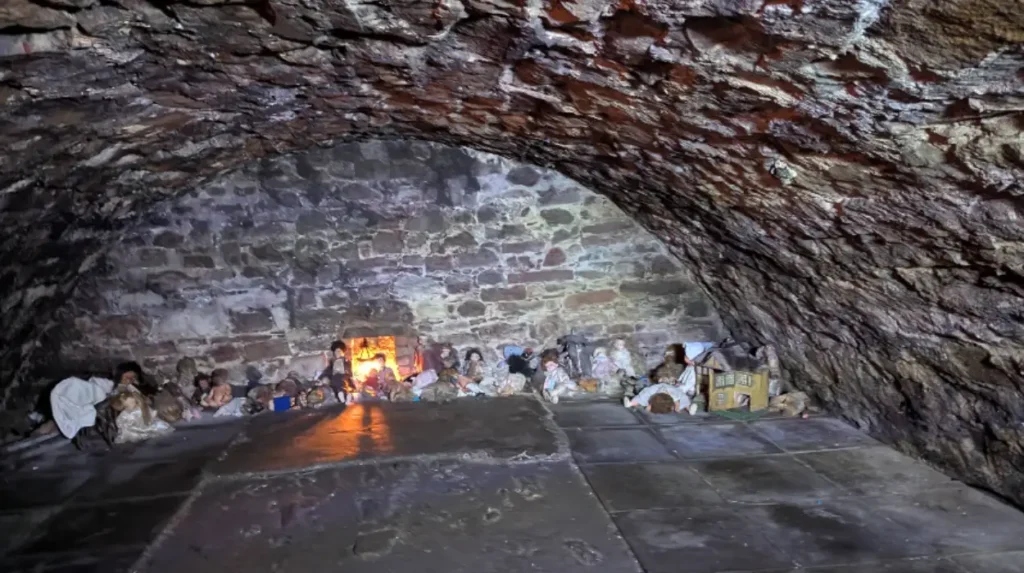
The Underground Vaults became central to urban legends after being abandoned in the nineteenth century, leaving dark nineteen-arch stone chambers beneath South Bridge that fostered tales of bodysnatchers, illegal activities, and spectral hauntings.
The South Bridge was constructed between 1785 and 1788 to span the Cowgate ravine and connect the Old Town to the University area. Engineer Alexander Hunter designed the bridge with nineteen stone arches containing over one hundred enclosed subterranean chambers beneath the road surface.
These vaults opened in 1788 to serve as workshops, storage rooms, and taverns for local merchants, cobblers, and tradesmen operating above. However, the porous red sandstone structure lacked adequate waterproofing, causing water to seep continually into the lower vaults.
By 1795, excessive humidity, severe dampness, and poor air circulation forced legitimate businesses to abandon the lower subterranean chambers completely. The abandoned vaults quickly became occupied by Edinburgh’s poorest populations, homeless citizens, and unregulated clandestine businesses.
Slum conditions deteriorated rapidly, leading to high rates of tuberculosis, cholera, and hypothermia among occupants living without sunlight or sanitation. Crime records indicate that illegal gambling dens, unlicensed distillery operations, and brothels flourished in the unpoliced underground passages.
Popular legends frequently connect the South Bridge Vaults to the notorious nineteenth-century murderers William Burke and William Hare. Burke and Hare murdered sixteen victims in 1828 to sell their corpses to Dr. Robert Knox at the University of Edinburgh anatomy department.
Historical documentation shows that Burke and Hare operated primarily from a lodging house in Tanner’s Close rather than the South Bridge Vaults. However, anatomical body snatchers, known as resurrection men, did use concealed underground spaces throughout Edinburgh to store stolen corpses prior to sale.
The city government ordered the vaults to be filled with rubble and sealed during the 1850s to eradicate crime and urban squalor. The underground spaces remained forgotten until local explorer Norrie Rowan rediscovered an entrance to the complex in 1985.
Subsequent archaeological clearing exposed intact eighteenth-century stone masonry, personal artifacts, and structural arches untouched for over a century. The combination of historical poverty, dark subterranean architecture, and sudden rediscovery established the South Bridge Vaults as a primary location for modern ghost stories.
What Is the Real History Behind the Ghostly Piper of Edinburgh Castle?
The legend of the ghostly piper of Edinburgh Castle stems from the historical exploration of subterranean security tunnels beneath Castle Rock, where a young piper vanished while playing his instrument to guide search teams above.
Edinburgh Castle sits atop Castle Rock, a volcanic plug formed over 350 million years ago and fortified since the Iron Age. Military engineers excavated numerous underground tunnels and defensive passages beneath the fortress walls to detect enemy sappers and permit secret movements.
During an undated historical survey, workers discovered a concealed tunnel leading from the castle foundations down toward the Royal Mile. Authorities instructed a young military piper to enter the narrow tunnel while continuously playing his bagpipes to indicate his underground position.
City officers and engineers walked along the street surface above, tracking the sound of the bagpipes as the piper proceeded downhill. The acoustic vibrations of the pipes travelled clearly through the volcanic rock and upper soil layers toward the Tron Kirk area.
According to historical accounts, the music suddenly stopped when the piper reached a point near the middle of the Royal Mile. Search parties entered the tunnel system to rescue the youth, but they found the passage collapsed and no physical trace of him.
Geological and structural surveys confirm that Castle Rock contains numerous natural fissures, mining shafts, and military tunnels built over several centuries. The dynamic acoustics of these deep stone passages can transmit low-frequency sound waves across substantial distances through solid bedrock.
Acoustic engineers note that subterranean airflow and changing rock density produce ambient wind noises that resemble distant bagpipe music. These natural acoustic phenomena continue to occur inside the castle basements and surrounding underground cellars during high winds.
Military historical records document many soldiers and musicians stationed at Edinburgh Castle since its establishment as a royal garrison. While individual identity records for the legendary piper remain unverified in surviving military rolls, the tunnel infrastructure itself is fully documented.
The narrative reflects the genuine dangers faced by early subterranean miners and military engineers working in unmapped underground excavations. Today, the legend highlights the intersection of military architecture, acoustic science, and traditional Scottish oral storytelling traditions.
How Do Burke and Hare Relate to Edinburgh’s Dark Supernatural Lore?
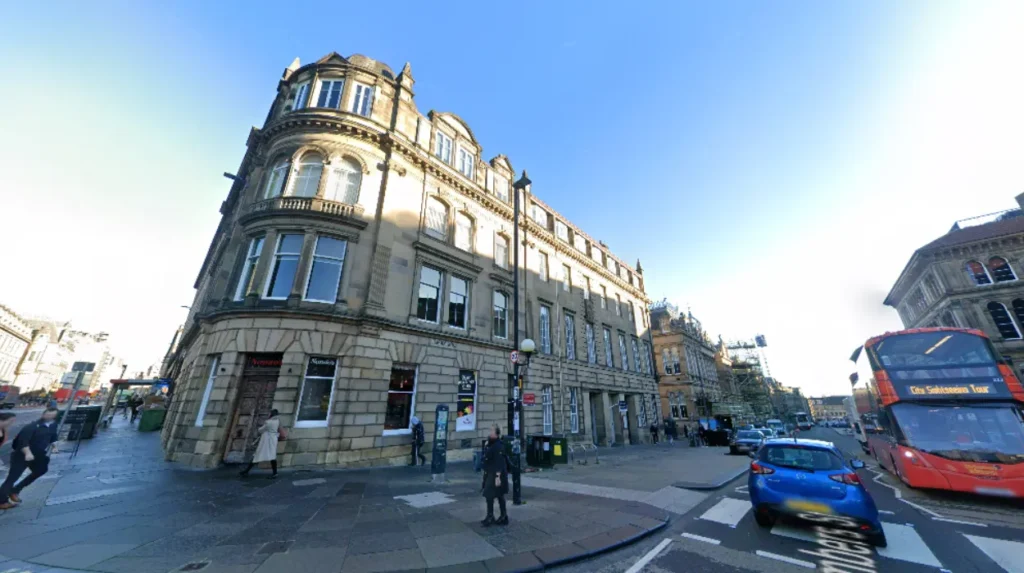
Burke and Hare relate to Edinburgh’s supernatural lore because their 1828 serial murders for anatomical dissection created deep public horror, influencing Scottish gothic literature, urban folklore, and local ghost stories.
William Burke and William Hare were Irish laborers who committed sixteen murders in Edinburgh between November 1827 and October 1828. Rather than robbing graves, they suffocated intoxicated lodgers in West Port to sell their fresh bodies to medical schools.
Dr. Robert Knox, a prominent lecturer at the Barclay Academy of Anatomy, purchased the victims for surgical demonstrations without questioning their origins. The murders exposed severe gaps in British medical laws, which then only permitted the use of executed criminals for anatomical research.
The exposure of the West Port murders in late 1828 caused widespread panic across the city and transformed public perception of medical science. William Hare turned king’s evidence against his partner, securing immunity from prosecution in exchange for testifying against Burke.
William Burke was convicted of murder, sentenced to death, and publicly hanged at the Lawnmarket on January 28, 1829, before 25,000 spectators. Following his execution, Burke’s body was legally dissected at the University of Edinburgh, and his skeleton remains on display at the University Medical School.
The trial and execution of Burke directly catalyzed major legal reform across Great Britain, leading to the passage of the Anatomy Act 1832. This legislation expanded the legal supply of cadavers for medical research to include unclaimed bodies from workhouses and hospitals, effectively ending resurrection crimes.
The psychological impact of the murders inspired famous literary works, including Robert Louis Stevenson’s 1884 short story The Body Snatcher. Stevenson drew directly on real Edinburgh geography and figures to create classic Scottish gothic horror literature.
The tragic locations associated with the West Port murders gradually became central points for local paranormal folklore and walking tours. Stories of lingering spirits in the Grassmarket and Tanner’s Close reflect the intense moral trauma experienced by nineteenth-century citizens.
Modern historians view the Burke and Hare narrative as a crucial study in rapid urbanization, medical ethics, and class vulnerability. The real historical facts of the case remain significantly more detailed and consequential than the ghost stories derived from them.
What Role Did the Scottish Witch Trials Play in Shaping City Legends?
The Scottish witch trials shaped city legends by resulting in the torture and execution of over 300 women at Castlehill, creating historical trauma that evolved into modern ghostly folklore.
Between the sixteenth and eighteenth centuries, Scotland executed a disproportionately high number of people for witchcraft compared to other European nations. The Witchcraft Act of 1563 made practicing witchcraft or consulting witches a capital crime punishable by death across the kingdom.
King James VI contributed significantly to this persecution by writing the treatise Daemonologie in 1597 and encouraging judicial trials. Edinburgh served as the administrative center for the High Court of Justiciary and the Privy Council, which authorized witch prosecutions statewide.
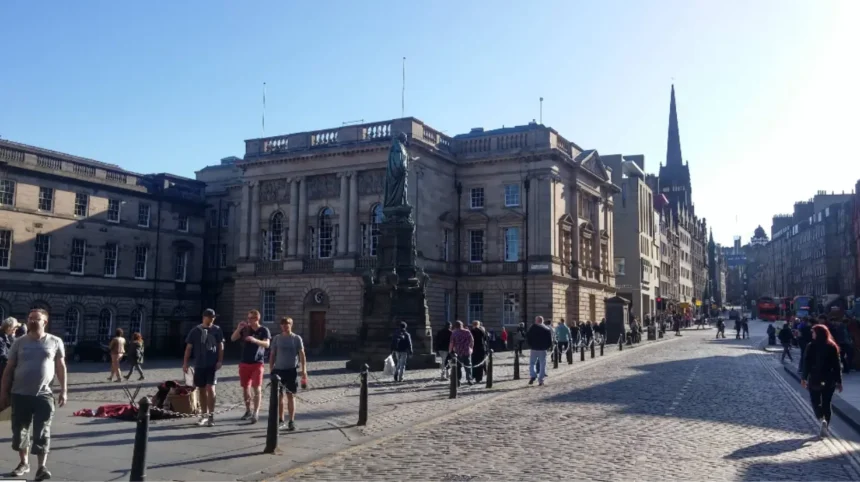
Castlehill, located at the top of the Royal Mile near Edinburgh Castle, was the primary execution site for accused witches. Accused individuals were held in dark, unheated cells at the Edinburgh Tolbooth, where they endured sleep deprivation and physical torture.
Guards used methods such as pricking with iron pins to identify alleged devil’s marks on the bodies of the accused. Once convicted, victims were bound to stakes at Castlehill, strangled by the executioner, and their bodies burned to ashes in public fires.
Historical records confirm that over 300 individuals, predominantly women, were executed for witchcraft at Castlehill between 1563 and 1736. Prominent cases include Agnes Sampson, a midwife accused during the North Berwick witch trials of raising storms against King James VI’s ship.
Major Thomas Weir, a respected Covenanter officer, was executed for witchcraft and incest in 1670 after making a public confession. His nearby home on the West Bow remained abandoned for over a century due to widespread local fear of supernatural occurrences.
The Parliament of Great Britain repealed the Witchcraft Act in 1736, replacing it with penalties for fraudulent claims of magical powers. In 1894, social pioneer Patrick Geddes commissioned the Witches’ Well fountain at Castlehill to commemorate the historical victims of these trials.
Modern historians analyze the witch trials as systemic societal panics driven by religious ideology, economic stress, and gender dynamics. The lingering ghost legends surrounding Castlehill serve as enduring cultural reminders of real judicial violence and historical injustice in early modern Scotland.
What is the origin of the ghosts and legends of Edinburgh?
The ghosts and legends of Edinburgh originate from historical events including plague outbreaks, public executions, overcrowded tenements, and subterranean bridge construction between the fourteenth and nineteenth centuries.
Did people actually live underground in the South Bridge Vaults?
Yes, poor residents, laborers, and illegal businesses occupied the South Bridge Vaults during the late eighteenth and early nineteenth centuries after commercial businesses abandoned the damp stone chambers.
Were plague victims really walled up alive in Mary King’s Close?
No, historical records confirm that plague victims were not walled up alive; the Edinburgh Town Council delivered food, water, and medical care to quarantined residents during the 1645 outbreak.
Why was Castlehill used for executions in historical Edinburgh?
Castlehill served as an execution site due to its open elevated location near Edinburgh Castle, providing a prominent public venue for over 300 witchcraft executions between 1563 and 1736.
How did Burke and Hare impact Scottish history and law?
Burke and Hare murdered sixteen people in 1828 to sell their bodies for medical dissection, directly leading to the passage of the Anatomy Act 1832 to regulate medical cadaver supply.