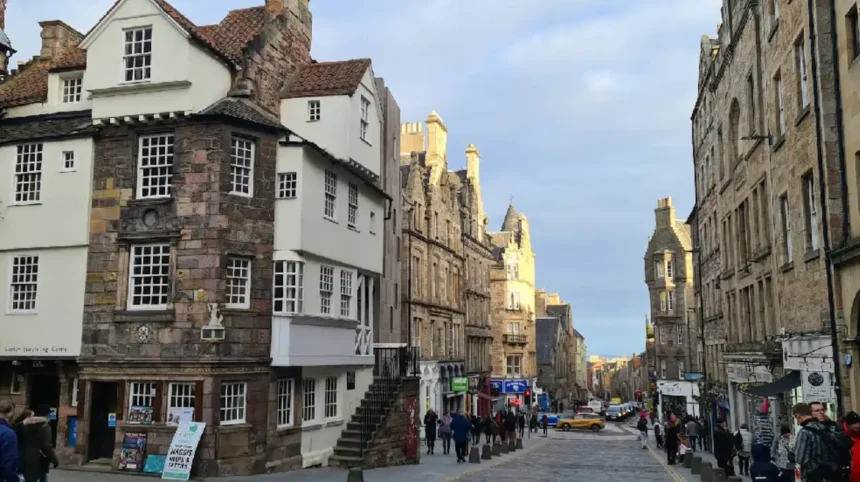
An Edinburgh tourist map is a visual guide essential for planning efficient travel routes between major landmarks like Edinburgh Castle, the Royal Mile, and the Palace of Holyroodhouse, while helping visitors understand the geographical layout of the Old and New Towns.
- Which landmarks are essential for a complete Edinburgh tourist map?
- How do you effectively use a tourist map for walking in Edinburgh?
- Is the city of Edinburgh considered a walkable destination for tourists?
- What should you include in an offline version of a tourist map?
- How can AI and digital tools enhance your map-based travel planning?
- FAQs About Edinburgh Tourist Map
- Are there free tourist maps available for visitors in Edinburgh?
- Which area of Edinburgh is best for a first-time visitor?
- How much time should I allocate for walking the Royal Mile?
- Is the Edinburgh tourist map easy to read for non-English speakers?
- Can I use a map to find hidden gems away from the crowds?
A physical or digital map provides a crucial framework for travelers navigating the complex, multi-level topography of Scotland’s capital. The city features a dense concentration of historical sites that are often separated by steep inclines and medieval passages. By utilizing a map, tourists can identify the most logical sequence for visiting attractions, thereby minimizing travel time and fatigue. Modern maps often distinguish between the medieval Old Town, characterized by narrow closes and cobbles, and the grid-patterned, neoclassical New Town. This distinction allows for better orientation when transitioning between different cultural and architectural zones. Accurate mapping prevents confusion in areas where street names may change abruptly or where pedestrians must navigate multi-level viaducts.
Which landmarks are essential for a complete Edinburgh tourist map?
The most essential landmarks for any Edinburgh tourist map include Edinburgh Castle, the Royal Mile, the Palace of Holyroodhouse, the National Museum of Scotland, Calton Hill, and Princes Street Gardens as these define the city’s primary historical and cultural visitor route.
Edinburgh Castle stands as the city’s most recognizable icon, situated atop Castle Rock at the western end of the Royal Mile. This historic thoroughfare serves as the central artery of the Old Town, connecting the castle down to the Palace of Holyroodhouse, the official royal residence in Scotland. The National Museum of Scotland on Chambers Street offers a comprehensive look at history and science, acting as a vital midpoint for visitors. Calton Hill provides the most famous panoramic viewpoint of the city skyline, featuring significant monuments such as the National Monument and the Nelson Monument. Princes Street Gardens separates the Old Town from the New Town, offering a natural space that serves as a landmark for navigation. The Royal Yacht Britannia, located in the northern district of Leith, represents a critical secondary hub for tourists interested in maritime history.
How do you effectively use a tourist map for walking in Edinburgh?
Effective use of a tourist map in Edinburgh requires identifying topographically flat routes, utilizing major landmarks for orientation, and prioritizing proximity to reduce the physical strain of navigating the city’s steep, hilly, and historic medieval street layouts.

Walking remains the primary method for exploring the city center, as most significant attractions sit within a compact radius. A high-quality map displays the specific entry points for sites like the Royal Mile’s hidden closes, which are narrow alleyways connecting main streets. Travelers should use the map to group visits by neighborhood to avoid unnecessary backtracking between hilly areas. For example, planning a morning for the Royal Mile and an afternoon for the New Town helps manage the shift in elevation and terrain. Public transport hubs such as Waverley Station are marked on all professional maps to serve as reliable central reference points. Users must verify if their chosen map highlights pedestrian-only zones, which are common in the historic center and affect accessibility.
Is the city of Edinburgh considered a walkable destination for tourists?
Edinburgh is widely classified as a highly walkable city because the vast majority of its central tourist attractions are situated within short walking distances, although the city’s unique volcanic landscape creates significant vertical changes that affect route planning.
The city center is divided into two distinct areas, the Old Town and the New Town, which are separated by the sunken Princes Street Gardens. While the horizontal distance between these two districts is minimal, the vertical climb can be steep, necessitating a clear understanding of stairways and wynds. Most tourists find that they can traverse the distance between the castle and the Palace of Holyroodhouse in under thirty minutes at a leisurely pace. Public infrastructure, including well-maintained footpaths and clearly marked pedestrian crossings, supports the heavy foot traffic found throughout the summer festival season. Visitors with limited mobility should utilize maps that explicitly identify accessible routes, elevators, or bus stops to bypass the most challenging inclines. Data consistently confirms that the density of the city’s attractions makes walking the most time-efficient way to experience the local environment.
What should you include in an offline version of a tourist map?
An offline version of an Edinburgh tourist map must include detailed street names, public transport hubs, locations of public toilets, emergency service points, and clearly marked tourist information centers to ensure total independence from mobile connectivity or data roaming.
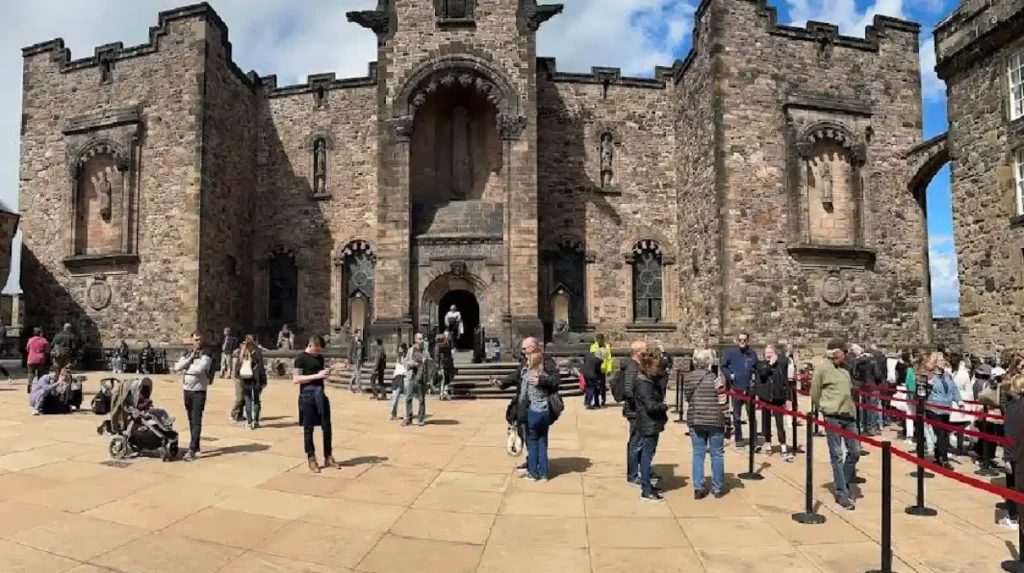
Digital maps often fail when users descend into the deep stone canyons of the Old Town or move between thick-walled historic structures where satellite signals are weak. A reliable physical map should provide an index of major landmarks corresponding to a grid system for quick reference during transit. Including a clear key for symbolssuch as bus stops, train stations, and designated viewpoint locations enables faster decision-making for travelers. Safety information, such as the location of the nearest hospital or police station, provides an added layer of utility for international visitors unfamiliar with local services. Annotating the map with estimated walking times between key nodes helps with itinerary management throughout the day. Ensuring the map is waterproof or laminated is a practical necessity given the frequent, unpredictable nature of local weather patterns.
How can AI and digital tools enhance your map-based travel planning?
AI and digital mapping tools enhance travel planning by integrating real-time data on attraction opening hours, crowd density levels, and personalized routing based on specific visitor interests such as history, photography, or family-friendly activities.
Modern applications allow users to overlay their own preferences onto static maps to create a customized “best-of” itinerary for their visit. AI algorithms can analyze the distance between points of interest and suggest the most efficient path to take, accounting for current road closures or maintenance work. Users can receive notifications as they approach significant historical sites, providing immediate access to historical context without needing a separate guidebook. These tools are particularly effective for identifying secondary attractions that are often left off printed brochures, such as specific viewpoints or quiet gardens. By syncing the map with ticket booking systems, travelers can ensure they arrive at popular locations like the Royal Mile during optimal, lower-crowd periods. This integration of digital precision with physical exploration optimizes the total time spent in the city.
FAQs About Edinburgh Tourist Map
Are there free tourist maps available for visitors in Edinburgh?
Yes, local visitor information centers, major hotels, and various cultural institutions across the city provide free paper maps. You can also download high-quality digital maps from official Scottish tourism websites or through most mobile navigation applications.
Which area of Edinburgh is best for a first-time visitor?
The Old Town is generally considered the best area for first-time visitors due to its high concentration of iconic landmarks like the Royal Mile. The New Town is also an excellent alternative for those who prefer wider streets and neoclassical architecture.
How much time should I allocate for walking the Royal Mile?
While the Royal Mile is only one mile long, you should allocate at least three to four hours to explore it thoroughly. This timeframe allows for visits to St Giles’ Cathedral, the hidden closes, and various shops or museums along the route.
Is the Edinburgh tourist map easy to read for non-English speakers?
Most standard tourist maps use universal icons and symbols for attractions, transport, and facilities to ensure they are accessible. Many maps provided by official organizations are also available in multiple languages to accommodate international travelers.
Can I use a map to find hidden gems away from the crowds?
Yes, using a map to look at areas slightly outside the main tourist hubs—such as Stockbridge or the Water of Leith walkway—will help you find quieter spots. These areas are easily marked on most detailed maps and offer a authentic look at local life.