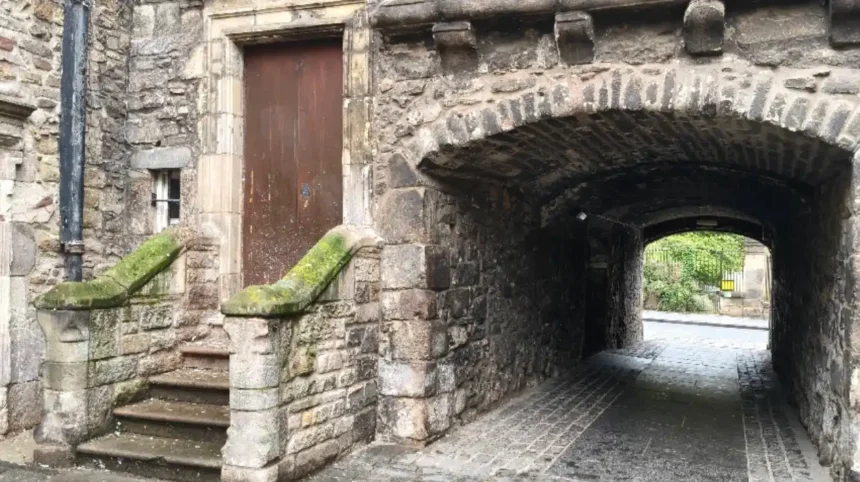
A self-guided Old Town walking tour is an independent route through Edinburgh that allows visitors to explore historic landmarks, narrow closes, and medieval architecture at their own pace without a human guide.
- What is the best route for a first-time Edinburgh walking tour?
- How long does a self-guided Royal Mile tour take?
- What are the top historic stops along the Royal Mile?
- Where can you find hidden closes and secret courtyards?
- How do you explore Greyfriars Kirkyard and Grassmarket safely?
- What is the best time of day to take a self-guided walk?
- Is the self-guided Old Town walking tour accessible for wheelchairs?
- Do I need to purchase tickets in advance for attractions along the route?
- What should I wear on a self-guided walking tour in Edinburgh?
- Are there public toilets available along the Old Town walking route?
- Is the Old Town walking route safe to explore solo at night?
The Old Town of Edinburgh was designated a UNESCO World Heritage Site in 1995 due to its exceptionally preserved medieval street layout and historic stone buildings. Exploring this district independently enables travelers to navigate iconic thoroughfares like the Royal Mile while customizing stops based on personal interest.
Unlike formal group excursions, an independent walk lets you pause for photographs, visit local museums, or stop at traditional pubs without strictly adhering to an external itinerary timetable.
Understanding the unique layout of Edinburgh is essential before beginning your walk across the district. The Old Town is built upon an extinct volcanic crag created over 350 million years ago during the Carboniferous period. Glacial erosion during the last Ice Age scraped away softer rock to form a classic “crag and tail” landform. Edinburgh Castle sits atop the volcanic plug, while the Royal Mile runs down the sloping glacial tail toward the valley below.
Navigating this terrain requires awareness of the spatial structure developed over centuries of dense urban settlement. The main spine of the Old Town consists of a continuous series of four historic streets: Castlehill, Lawnmarket, High Street, and Canongate.
Branching off this central ridge are dozens of narrow medieval alleyways locally known as closes, wynds, and courts. Closes were private passages secured by gates, while wynds were public thoroughfares wide enough for horses and carts.
Modern visitors benefit from clear pedestrian signage, digital mapping applications, and physical information boards installed across the city centre. A standard self-guided excursion covers roughly two miles of terrain from the summit of Castle Hill down to Holyrood. Walking this route directly takes under one hour, but fully exploring the surrounding courtyards, historic churches, and museum collections typically requires three to five hours.
Planning an independent walk requires minimal preparation beyond comfortable footwear and appropriate outerwear for changing Scottish weather. You can begin at any point along the route, though descending from the top of the ridge remains the most popular direction. The structural design of the Old Town ensures that major landmarks remain visible from multiple vantage points, reducing the risk of getting lost.
What is the best route for a first-time Edinburgh walking tour?
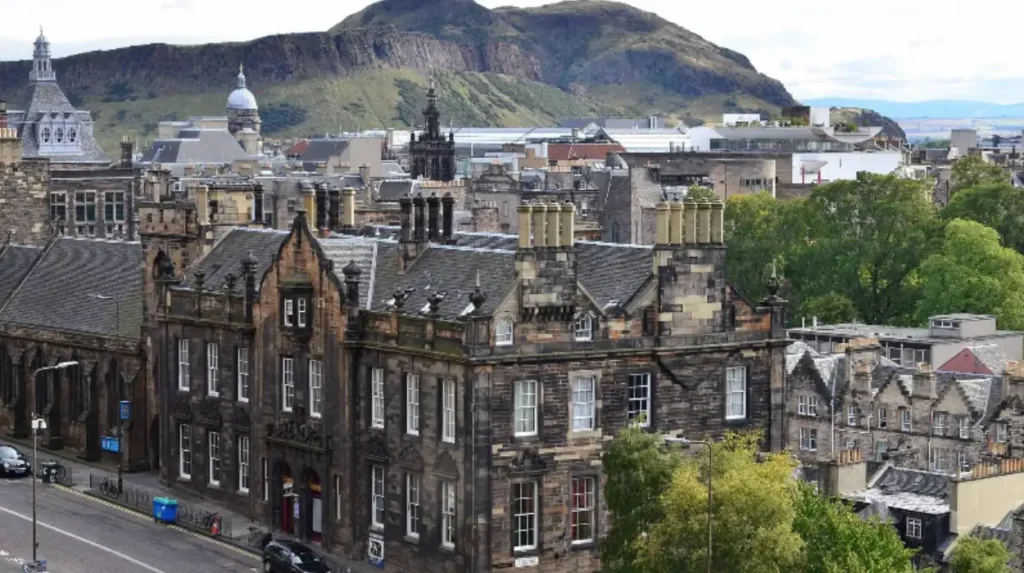
The best route begins at Edinburgh Castle Esplanade, descends along the Royal Mile through Lawnmarket and High Street, loops through Grassmarket, and concludes at Holyrood Palace.
Starting your journey at the Castle Esplanade places you at an elevation of 135 meters above sea level. This broad paved foreshore was constructed in 1753 as a parade ground for military troops and now serves as the site of the Royal Edinburgh Military Tattoo. Standing on the Esplanade provides panoramic views over the New Town, the Firth of Forth, and the surrounding Lothian landscape, establishing immediate geographical context for the city below.
From the Esplanade, descend east down Castlehill, passing historic attractions such as the Outlook Tower and Camera Obscura, established by Maria Theresa Short in 1835. Continue into the Lawnmarket section of the Royal Mile, which historically served as an open-air marketplace for linen merchants during the sixteenth century. Take a short detour through Gladstone’s Land, a preserved 1620 tenement building managed by the National Trust for Scotland, showcasing authentic seventeenth-century merchant living conditions.
Turn south off the Lawnmarket down Upper Bow or Victoria Street to reach the historic Grassmarket district. Victoria Street, designed by architect Thomas Hamilton between 1829 and 1836, features a sweeping curved streetscape lined with colorful independent storefronts built over multi-tiered stone arcades.
The lower Grassmarket area sits in a natural basin beneath the castle cliffs and historically functioned as a livestock market from 1477 until 1911, as well as a public execution site during the Covenanter era.
Rejoin the Royal Mile by ascending Castle Wynd or taking Candlemaker Row toward George IV Bridge and Greyfriars Kirkyard. After exploring the cemetery, return to High Street to examine St Giles Cathedral, founded in 1124 by King David I.
Pass the Mercat Cross, where royal proclamations have been publicly read since the Middle Ages, and continue down High Street into the Canongate district toward the Scottish Parliament building and the Palace of Holyroodhouse.
This continuous downhill trajectory provides an intuitive sequence through eight centuries of Scottish history. The route follows logical pedestrian thoroughfares with abundant street signage, making navigation straightforward even for first-time visitors to Scotland.
How long does a self-guided Royal Mile tour take?
A complete self-guided Royal Mile tour takes between three and five hours to complete, depending on museum stops, photographic breaks, and speed. The core walking distance measures 1.8 kilometers from top to bottom.
The temporal duration of your walk depends heavily on how many internal attraction visits you include along the route. Walking the physical distance from Edinburgh Castle to the Palace of Holyroodhouse without stopping requires approximately 30 minutes of continuous movement.
However, treating the walk as an educational experience involves pausing at structural points of interest, reading historical plaques, and exploring side alleys along the primary thoroughfare.
Allocating appropriate time for major sites along the Royal Mile ensures a balanced itinerary without physical fatigue. Spending one hour inside St Giles Cathedral allows sufficient time to examine the Thistle Chapel, added in 1911 by architect Robert Lorimer, and inspect the central crown steeple. Smaller municipal attractions, such as the Writers’ Museum in Lady Stair’s Close or the Museum of Edinburgh in Huntly House, typically require 30 to 45 minutes each.
Seasonal daylight variations in Scotland significantly impact the ideal start time for a self-guided tour. During winter months in December, daylight hours shrink to roughly seven hours, with sunset occurring around 15:30 GMT. Starting your walking tour by 09:30 AM guarantees ample light for outdoor photography and navigation. In summer months like July, daylight extends past 22:00 BST, allowing for late afternoon or evening self-guided walks when street crowds thin out.
Pacing your walk with structured rest stops prevents physical exertion on Edinburgh’s granite setts and cobbles. The route involves descending a total elevation drop of approximately 60 meters from Castle Hill to Holyrood basin. Incorporating a 30-minute break for lunch or tea at a historic pub along Canongate helps maintain energy levels while allowing you to experience historic internal architecture.
Budgeting total time accurately allows first-time travelers to integrate additional activities into their daily schedule. Completing the main walking route in four hours leaves time in the late afternoon to visit adjacent neighborhoods like the Georgian New Town or climb Calton Hill for panoramic city views.
What are the top historic stops along the Royal Mile?
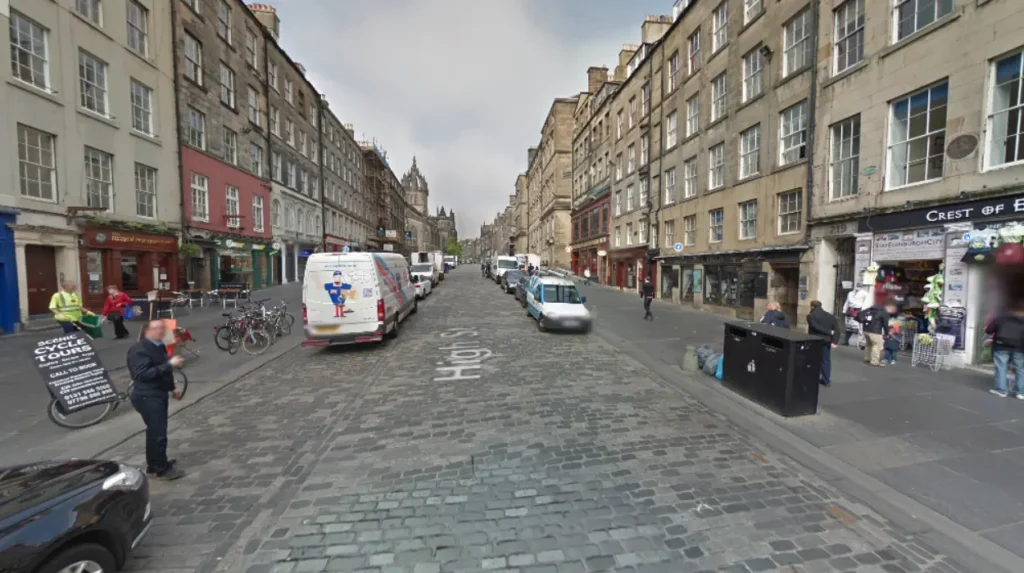
The top historic stops along the Royal Mile include Edinburgh Castle, St Giles Cathedral, the Real Mary King’s Close, Dunbar’s Close Garden, and Holyroodhouse. These landmarks illustrate medieval governance, religious reformation, and civic development.
Edinburgh Castle dominates the skyline from its volcanic perch on Castle Rock, serving as a royal residence and military fortress since at least the twelfth century during the reign of King David I.
The castle complex contains St Margaret’s Chapel, constructed around 1130, which stands as the oldest surviving building in Edinburgh. It also houses the Honors of Scotland, the oldest crown jewels in the British Isles, first used together for the coronation of Mary Queen of Scots in 1543.
St Giles Cathedral serves as the historic high kirk of Edinburgh and played a central role in the Scottish Reformation during the sixteenth century. Protestant reformer John Knox served as minister of St Giles from 1559 until his death in 1572.
Architectural features include four massive central piers dating back to 1120, nineteenth-century stained glass windows, and the elaborate Gothic revival Thistle Chapel, built as the home for the Most Ancient and Most Noble Order of the Thistle.
The Real Mary King’s Close offers insight into seventeenth-century subterranean urban life beneath the modern City Chambers building. When the Royal Exchange was constructed in 1753, city authorities demolished the upper levels of existing tenement closes and capped the lower floors to create a flat foundation foundation. Visitors can explore these preserved lower chambers to see how residents lived during the plague outbreak of 1645.
Dunbar’s Close Garden provides a tranquil example of a re-created seventeenth-century formal walled garden tucked away from High Street.
Maintained by the City of Edinburgh Council, the garden features gravel paths, clipped box hedges, formal topiary, and mature trees laid out in the style of the 1600s. It stands as a peaceful green sanctuary representative of the private burgage plots that originally ran perpendicular to the Royal Mile.
The Palace of Holyroodhouse marks the eastern terminus of the Royal Mile, standing directly adjacent to the ruins of Holyrood Abbey, founded in 1128 by King David I. James IV converted the abbey guesthouse into a royal palace around 1501, and it remains the official Scottish residence of the British monarch.
Key historical spaces inside include the sixteenth-century historic apartments of Mary, Queen of Scots, where her private secretary David Rizzio was murdered in 1566.
Where can you find hidden closes and secret courtyards?
Hidden closes and secret courtyards are located along the north and south sides of the Royal Mile, including Lady Stair’s Close, Tweeddale Court, and Bakehouse Close.
Lady Stair’s Close, situated off the Lawnmarket, opens into Makar’s Court, a public square celebrating Scottish literary history. The court features stone paving slabs inscribed with famous quotations from Scottish authors spanning from the fourteenth century to the present day.
At the center stands Lady Stair’s House, built in 1622 by Sir Archibald Acheson and now housing the Writers’ Museum, which displays personal artifacts belonging to Robert Burns, Sir Walter Scott, and Robert Louis Stevenson.
Tweeddale Court, located off High Street near the Netherbow, preserves a quiet walled courtyard constructed in the late sixteenth century. The court contains Tweeddale House, built in 1576 for Neil Layng, Keeper of the Signet, and later expanded by the Marquess of Tweeddale. It was the site of the unsolved 1806 murder of bank courier William Begbie, who was stabbed while carrying £4,000 in banknotes through the narrow archway.
Bakehouse Close, positioned in the Canongate district, represents one of the best-preserved early modern closes in the city centre. Built during the late sixteenth and seventeenth centuries, the timber-framed and harled stone structures feature historic dormer windows and stone turnpike staircases. Filming for popular historical television series, including Outlander, has utilized Bakehouse Close due to its authentic architectural survival.
Advocate’s Close provides a dramatic visual perspective of the New Town and the Scott Monument framed by steep historic tenement walls. Dating from the fifteenth century, this passage was named after Sir James Stewart of Goodtrees, who served as Lord Advocate for Scotland in the late seventeenth century. Descending the steep flight of stone steps demonstrates the extreme elevation changes characteristic of Old Town urban topography.
Riddles Court, accessed from Lawnmarch, showcases early Scottish renaissance architectural features arranged around two interconnected inner courtyards. Built in 1592 by wealthy merchant John MacMorran, the complex hosted a banquet for King James VI and Queen Anne of Denmark in 1598. Today, the building is restored and managed by the Scottish Historic Buildings Trust as an educational venue.
How do you explore Greyfriars Kirkyard and Grassmarket safely?
Explore Greyfriars Kirkyard and Grassmarket safely by adhering to designated stone pathways, wearing slip-resistant footwear on uneven cobbles, and respecting cemetery conservation rules. Staying on marked routes prevents erosion and personal injury.
Greyfriars Kirkyard was established in 1562 under a charter granted by Mary, Queen of Scots, allocating the land of the former Franciscan friary as a burial ground.
The cemetery contains historic monuments representing seventeenth-century Scottish masonry, including ornate mural tombs and gated mortsafes designed to deter body snatchers during the nineteenth century. Walking through the churchyard requires caution, as aged gravestones can become unstable and flagstones are slick when wet.
Visitors should follow marked gravel and flagstone routes while avoiding walking directly across historic burial turf. The cemetery contains the grave of Greyfriars Bobby, a Skye Terrier who guarded his master’s grave for 14 years until his death in 1872.
Visitors should avoid touching or rubbing the small bronze statue of Bobby outside the cemetery gates at George IV Bridge, as physical friction degrades the metal casting over time.
Grassmarket sits directly below the southern cliffs of Castle Rock and is reached via Victoria Street or the historic Granny’s Green steps. The open pedestrian plaza features dozens of historic outdoor eateries, traditional pubs, and local shops.
Safety in Grassmarket requires awareness of vehicle delivery zones during morning hours, as motor vehicles share designated access paths alongside pedestrian spaces.
Navigating the steep stone staircases connecting Grassmarket to upper streets requires steady footing. Castle Wynd steps and the Vennel steps feature narrow granite risers that demand care during rainy or icy conditions. Taking the Vennel steps upward rewards walkers with a famous framed view of Edinburgh Castle standing above the surviving sixteenth-century Flodden Wall.
Personal security across Grassmarket and Greyfriars remains high due to active civic management and well-lit public corridors. Standard urban safety precautions apply, such as securing personal belongings in busy pedestrian areas and taking care when stepping off raised curbs onto cobbled roadways.
What is the best time of day to take a self-guided walk?
The best time of day to take a self-guided walk is early morning between 07:30 and 09:30 AM before commercial delivery vehicles and large tour groups arrive.
Morning light during early hours highlights the golden sandstone facades and intricate stone carvings of Old Town tenements without heavy pedestrian traffic. Between 07:30 and 09:30 AM, the Royal Mile experiences minimal foot traffic, allowing visitors to walk through narrow closes and photograph landmarks without obstruction. Museums and indoor attractions typically open at 09:30 or 10:00 AM, matching an early start.
Midday hours between 11:00 AM and 15:00 PM see peak pedestrian density along Lawnmarket and High Street. During this window, street performers, tour groups, and shoppers fill the main thoroughfare, creating a vibrant street atmosphere. First-time visitors seeking to experience local culture, street music, and bustling retail activity will find midday ideal for exploring open-air markets and vibrant public squares.
Late afternoon and early evening between 16:30 and 19:00 PM offer another quiet window as commercial sites close and day visitors depart. As dusk approaches, gas-style street lanterns illuminate historic closes, creating a unique atmospheric view of medieval architecture. Evening hours are particularly well-suited for self-guided ghost walks or exploring historic pub interiors along Canongate.
Seasonal variations alter daily timing strategies significantly across Scotland. In summer, long daylight hours permit self-guided walks late into the evening, with pleasant light persisting past 21:00 PM. In winter, planning your main outdoor walking segment between 10:00 AM and 14:30 PM maximizes available daylight and warmer afternoon temperatures.
Is the self-guided Old Town walking tour accessible for wheelchairs?
The Royal Mile is mostly paved with stone setts and smooth flagstones, but steep inclines and historic stone steps in narrow closes pose accessibility challenges. Wheelchair users can navigate the main Royal Mile street from Castlehill to Holyrood downhill, but should avoid steep stairs like Castle Wynd and use modern street ramps along George IV Bridge instead.
Do I need to purchase tickets in advance for attractions along the route?
Yes, purchasing advance entry tickets is strongly recommended for major paid attractions like Edinburgh Castle and the Palace of Holyroodhouse, especially during summer peak months. Free stops like St Giles Cathedral, the Writers’ Museum, and Greyfriars Kirkyard do not require advance tickets, though small voluntary donations are encouraged.
What should I wear on a self-guided walking tour in Edinburgh?
Wear comfortable, broken-in walking shoes with thick rubber soles to absorb impact on hard granite cobbles. Dress in waterproof outer layers regardless of the forecast, as Scottish weather changes quickly, and carry a compact umbrella or rain shell for wind protection.
Are there public toilets available along the Old Town walking route?
Public toilets are available at several points along the route, including inside Edinburgh Castle, the National Museum of Scotland on Chambers Street, and near Holyroodhouse. Many local cafés, pubs, and visitors centers along High Street also offer restroom facilities for paying customers.
Is the Old Town walking route safe to explore solo at night?
Yes, Edinburgh’s Old Town is generally very safe for solo walkers at night due to low crime rates, well-lit primary streets, and active nightlife. However, stick to main thoroughfares like High Street and Grassmarket after dark, and exercise standard caution in unlit narrow closes late at night.