Packing for a first visit to Edinburgh requires a layered clothing system that accounts for volatile Scottish maritime weather. Visitors must prioritize waterproof outer layers, sturdy footwear, thermal base layers, adaptable daypacks, and proper voltage converters to ensure personal comfort.
- Why Is Layered Clothing Essential for the Scottish Climate?
- How Do You Choose Footwear for Edinburgh’s Historic Cobblestones?
- What Outerwear Protects Best Against Scottish Rain and Wind?
- What Electronics and Power Adapters Do You Need in Scotland?
- How Should You Pack for Edinburgh’s Seasonal Weather Changes?
- What Daypack Essentials Are Required for City Sightseeing?
Edinburgh experiences an oceanic climate characterized by cool summers, mild winters, and unpredictable daily precipitation. The city records an average of 124 days of rain annually with mean temperatures ranging from 1 degree Celsius in January to 19 degrees Celsius in July. Equipping yourself with a three-layer clothing system provides necessary insulation and moisture protection against sudden squalls driven by North Sea winds.
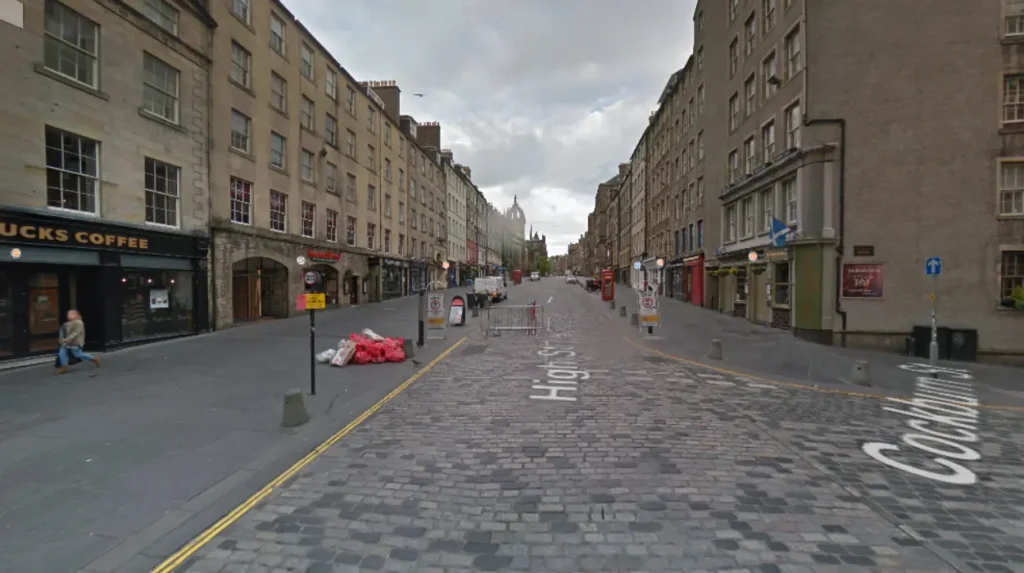
Footwear forms the most critical foundation of your Edinburgh travel inventory due to the city’s ancient volcanic geography and historic architecture. The Royal Mile and surrounding Old Town feature cobblestone streets lined with setts, granite paving, and steep stone staircases known as closes. Standard fashion shoes lack the ankle support and rubber grip required to navigate wet basalt surfaces safely. Selecting waterproof walking boots or cushioned sneakers with slip-resistant outsoles prevents fatigue and injury during daily excursions.
Modern electronic standards require specific power adapters for international travelers arriving in Scotland. The United Kingdom operates on a 230V supply voltage and 50Hz frequency using Type G power plugs with three rectangular pins. Preparing a universal power adapter equipped with built-in surge protection allows continuous charging for smartphones, cameras, and portable power banks.
Why Is Layered Clothing Essential for the Scottish Climate?
Layered clothing allows travelers to regulate body temperature quickly as atmospheric conditions shift rapidly across Scotland. Combining moisture-wicking base layers, insulating mid-layers, and windproof outer shells protects against sudden temperature drops and continuous coastal winds.
The meteorological phenomena in eastern Scotland result from the interaction between Atlantic weather systems and North Sea coastal currents. Microclimates develop rapidly across Edinburgh due to elevation changes between Castle Rock, Arthur’s Seat, and the coastal port of Leith. A sunny morning in the city center can transition into dense sea fog, locally known as haar, within thirty minutes. Carrying adaptable layers in a small daypack ensures you remain dry and comfortable without returning to your hotel accommodation.
Base layers must consist of synthetic fibers or merino wool rather than plant-based materials like cotton. Merino wool regulates body temperature naturally while absorbing up to thirty percent of its weight in moisture without feeling damp to the touch. Cotton fabrics trap moisture against the skin, accelerating evaporative cooling and increasing the risk of hypothermia during prolonged outdoor exposure.
Mid-layers provide crucial thermal insulation by trapping warm air generated by body heat. Lightweight fleece jackets, merino wool sweaters, or packable down vests serve as effective mid-layers that fold compactly into daypacks. Outer shells must feature windproof membranes and a minimum waterproof rating of 10,000 millimeters to resist driving rain and coastal winds reaching up to 30 miles per hour during autumn and winter seasons.
How Do You Choose Footwear for Edinburgh’s Historic Cobblestones?
Selecting footwear for Edinburgh involves choosing shoes with thick rubber outsoles, deep tread patterns, water-resistant membranes, and cushioned insoles. High-traction walking shoes prevent slipping on wet granite setts and absorb impact on steep incline trails.
Edinburgh’s Old Town topography features steep inclines created by glacial erosion over 300 million years ago. Walking routes like the Royal Mile, Victoria Street, and the pathways leading to Edinburgh Castle feature medieval stone paving. Wet weather coats these stones with a slick surface film that reduces traction significantly compared to modern asphalt sidewalks.
Podiatric research indicates that walking on uneven stone surfaces increases lateral stress on ankle joints by up to forty percent compared to flat pavement. Supportive footwear featuring firm heel counters and lateral shank stability minimizes rotational movement and ankle strains. Selecting shoes with EVA or polyurethane midsoles reduces impact forces transmitted through the lower limbs during long walking tours.
Waterproofing is equally vital when selecting travel footwear for Scotland. Footwear incorporating breathable membranes like Gore-Tex prevents water penetration from standing puddles while allowing internal perspiration vapor to escape. Combining waterproof shoes with synthetic or wool-blend moisture-wicking socks eliminates friction points that cause painful blisters during extended urban exploration.
What Outerwear Protects Best Against Scottish Rain and Wind?
Hardshell jackets made with breathable waterproof membranes offer superior protection against Scottish weather compared to traditional umbrellas. Lightweight rain jackets with adjustable hoods, sealed seams, and storm flaps prevent wind penetration and heavy rain saturation.
High winds along the Firth of Forth render standard umbrellas ineffective and frequently broken during coastal gusts. The narrow closes and tall tenement buildings in Edinburgh create wind tunnels that channel air currents at high velocities. A durable rain jacket with a structured, adjustable hood provides reliable head and neck coverage while keeping both hands free for navigation and photography.
Waterproof ratings determine the capacity of outerwear fabric to resist water pressure under laboratory testing conditions. Standard water-resistant jackets rate between 1,500 and 5,000 millimeters, which suits light drizzling rain. True Scottish weather demands garments rated at 10,000 millimeters to 20,000 millimeters, featuring fully taped seams that prevent water leakage through needle holes created during manufacturing.
Breathability ratings measure how many grams of water vapor can pass through a square meter of fabric over twenty-four hours. High-activity sightseeing requires jackets rated at 10,000 grams per square meter or higher to allow body heat to disperse while maintaining a complete waterproof shield against external rain.
What Electronics and Power Adapters Do You Need in Scotland?

Travelers visiting Edinburgh need Type G UK power adapters, portable power banks, dual-voltage charging hubs, and weather-resistant electronic sleeves. Carrying external batteries ensures personal devices remain charged during cold weather outdoor sightseeing.
The electricity infrastructure in the United Kingdom uses three-pin Type G electrical outlets providing power at 230 volts. Electronic devices from North America operate on 120 volts, requiring dual-voltage compatibility rated at 100-240V printed directly on device chargers. Laptops, modern smartphone chargers, and digital camera battery systems generally support dual-voltage inputs naturally without requiring heavy voltage transformers.
Cold atmospheric temperatures accelerate chemical discharge rates inside lithium-ion batteries, reducing operational time for smartphones and cameras. Ambient air temperatures below 5 degrees Celsius can reduce battery efficiency by up to thirty percent during outdoor activities on Arthur’s Seat or Calton Hill. Packing a compact 10,000mAh external power bank inside an insulated pocket maintains reliable power throughout full-day itineraries.
Data connectivity requires unlocked mobile phones compatible with European cellular frequencies, specifically LTE bands 3, 7, and 20. Visitors can acquire local eSIM profiles or physical SIM cards from British telecommunication providers like EE, Vodafone, O2, or Three upon arrival at Edinburgh Airport or Princes Street mobile retail shops.
How Should You Pack for Edinburgh’s Seasonal Weather Changes?
Packing for Edinburgh across seasons requires tailoring fabric weights and thermal accessories to specific seasonal ranges. Summer demands breathable layers and light rain coats, while winter necessitates thermal undergarments, insulated coats, gloves, and woolen hats.
Summer conditions from June through August bring daylight hours lasting up to seventeen hours per day, with average high temperatures reaching 19 degrees Celsius. Lightweight long-sleeve shirts, breathable trousers, and light waterproof jackets form the core summer wardrobe. UV radiation remains moderate, requiring sunscreen and sunglasses despite frequent cloud cover across the Lothian region.
Autumn and spring introduce cooler temperatures ranging between 6 degrees Celsius and 13 degrees Celsius alongside increased rainfall. Transitional seasons necessitate heavier mid-layers such as wool sweaters and insulated vests paired with windproof jackets. Carrying compact thermal accessories like fleece-lined beanie hats and lightweight waterproof gloves prevents rapid body heat loss in high winds.
Winter months from December through February yield brief daylight windows averaging seven hours daily, accompanied by temperatures hovering near freezing. Sub-zero temperatures and occasional snow accumulation require heavy thermal base layers, down or synthetic insulated parkas, thick wool socks, and fleece neck gaiters.
What Daypack Essentials Are Required for City Sightseeing?
A secure, water-resistant 20-liter daypack equipped with RFID protection, hydration bottles, compact rain gear, and personal medication ensures daylong comfort. Organizing essentials efficiently allows effortless transitions between historic landmarks, indoor museums, and rural walking trails.
Navigating crowded historic sites like the National Museum of Scotland or Edinburgh Castle requires a streamlined backpack design. A 20-liter volume provides sufficient storage for extra mid-layers, water bottles, compact umbrellas, and personal items without exceeding size restrictions enforced at public museum cloakrooms. Water-resistant nylon or polyester exterior fabrics protect interior contents during unexpected rain showers.
Security features enhance personal safety in high-traffic tourist centers. Pickpocketing risks remain low across Scotland compared to major European hubs, but crowded urban areas still warrant anti-theft precautions. Backpacks featuring lockable zippers, slash-resistant fabric linings, and interior RFID-blocking pockets protect passports and contactless credit cards from unauthorized digital scanning.
Carrying personal hydration and reusable shopping totes aligns with local sustainability initiatives across Scotland. Tap water throughout Edinburgh is derived from natural upland reservoirs and meets strict drinking water standards. Carrying a refillable stainless steel water bottle reduces single-use plastic waste, while compact tote bags eliminate local charges applied to plastic bags in retail stores.
What is the biggest packing mistake people make when visiting Edinburgh?
The most common packing mistake is bringing heavy cotton clothing and non-waterproof fashion shoes. Cotton traps body moisture and dries very slowly in Scotland’s damp climate, making you feel cold quickly. Additionally, stylish shoes with smooth soles offer no grip on Edinburgh’s wet, uneven cobblestone streets.
Do I really need a heavy coat in Edinburgh during the summer?
Standard American single-voltage hair styling tools will short-circuit or burn out in the UK. The UK uses a 230V power grid, which is double the North American 120V standard. Only bring styling appliances that explicitly list 100-240V dual-voltage compatibility, or use the appliances provided by your hotel.
How strictly do Edinburgh attractions enforce backpack size limits?
Most indoor attractions like Edinburgh Castle and the National Museum of Scotland limit bag sizes to under 30 liters. Bags larger than standard daypacks must go through security checks or be left at luggage storage facilities, so carrying a compact 20-liter backpack is recommended.
Is contactless payment accepted everywhere in Edinburgh or should I pack cash?
Contactless card payments are accepted almost everywhere across Edinburgh, including public buses, taxis, pubs, and shops. Carrying 20 to 50 British Pounds in cash is sufficient for emergencies, as card payments are standard throughout the city.