
Edinburgh residents require custom fitted wardrobes to maximize storage capacity in homes with distinct structural variations. These bespoke units eliminate wasted floor space, accommodate exceptionally high ceilings, and integrate flawlessly into the irregular walls present in historical Scottish tenement buildings.
- What Are The Main Types Of Wardrobe Door Configurations?
- What Materials Construct High Quality Fitted Wardrobes?
- How Do Carpenters Install Fitted Wardrobes In Edinburgh Homes?
- What Interior Storage Mechanisms Maximize Wardrobe Capacity?
- What Are The Financial Costs Of Bespoke Wardrobes In Edinburgh?
- How Does Room Layout Influence Wardrobe Design Choices?
- Frequently Asked Questions
- Are fitted wardrobes worth the investment in an old Edinburgh flat?
- How much value do custom fitted wardrobes add to a house?
- Can I install fitted wardrobes over existing skirting boards?
- What is the standard depth for a built-in wardrobe?
- Do I need planning permission for fitted wardrobes in a listed building?
Architectural Constraints And Storage Optimization
Historical buildings present 3 primary spatial challenges: recessed alcoves, sloping attic roofs, and uneven plasterwork. Standard freestanding furniture fails to utilize the vertical space available in these traditional structures. Carpenters design bespoke wardrobes to bridge the exact measurements between the floor and the ceiling. This precise integration increases usable storage volume by 40 percent compared to mass-produced alternatives. The installation addresses the specific geometric anomalies of the room. Homeowners gain functional capacity without sacrificing floor area.
Traditional Georgian properties feature 2 specific decorative elements: ornate cornices and deep skirting boards. Custom joiners scribe the wardrobe frames directly to match these exact profiles precisely. This technique ensures the new furniture appears as an original architectural component of the room. The seamless fit prevents dust accumulation in inaccessible gaps. Installers anchor the framework securely to the solid masonry walls. This structural integration provides superior stability and long-term durability.
What Are The Main Types Of Wardrobe Door Configurations?
The main types of wardrobe door configurations include hinged doors and sliding doors. Hinged doors provide total interior visibility and require adequate clearance space. Sliding doors operate on track systems and conserve floor area in compact rooms with limited dimensions.
Hinged And Sliding Door Mechanisms
Joiners install hinged doors using 3 specific hinge mechanisms: soft-close hinges, wide-angle hinges, and concealed cup hinges. These components allow the doors to swing outward and provide unrestricted access to the entire wardrobe interior simultaneously. Hinged systems accommodate the attachment of interior accessories directly to the door panels. Manufacturers attach mirrors, tie racks, and belt organizers to the interior faces. The outward swing requires a minimum clearance of 600 millimeters in front of the unit. Users experience immediate visibility of all stored garments upon opening the doors.
Sliding door systems utilize 2 primary track components: top-hung rails and bottom-rolling guides. These mechanisms allow the door panels to glide horizontally over one another within the frame profile. This configuration eliminates the need for outward swing clearance entirely. Carpenters recommend sliding doors for narrow bedrooms and tight corridors. The track systems support heavier door materials efficiently. Manufacturers frequently incorporate large glass or mirror panels into these sliding configurations to reflect ambient light.
What Materials Construct High Quality Fitted Wardrobes?
High quality fitted wardrobes utilize premium materials including solid hardwood, oak veneer, and medium-density fibreboard. Carpenters select solid brass and chrome hardware for moving components. Paint finishes require specialized wood primers and durable eggshell topcoats to resist daily surface abrasion.
Structural Carcasses And Exterior Finishes
Manufacturers construct wardrobe carcasses using 3 common sheet materials: melamine-faced chipboard, oak veneer panels, and birch plywood. These materials provide rigid structural integrity and resist warping over time. The interior panels receive surface treatments to prevent snagging on delicate clothing garments. Installers use specialized concealed fittings to assemble the internal boxes tightly. The rigid internal structure supports heavy loads from hanging rails and filled drawer units. The carcass design dictates the overall stability of the wardrobe system.
Exterior doors require 2 durable finishing options: hand-painted surfaces and heat-wrapped vinyl foils. High-end installations utilize solid hardwood frames with shaker-style inset panels. Painters apply specialized primers followed by flat eggshell paints to protect the wood fibers. The paint provides a washable surface that withstands daily physical contact. Alternative modern designs utilize flat-panel doors coated in high-gloss or matte acrylics. These synthetic finishes provide high resistance to moisture and sunlight discoloration.
How Do Carpenters Install Fitted Wardrobes In Edinburgh Homes?
Carpenters install fitted wardrobes through a precise sequence of measuring, off-site manufacturing, and on-site assembly. The process takes approximately 3 days to complete. Installers build a level base, erect the structural carcasses, fit the doors, and apply the final paint.
Measurement, Manufacturing, And Assembly Procedures
The installation process requires 4 specific workflow stages: laser measurement, workshop fabrication, framework assembly, and final finishing. Technicians use digital laser levels to map the exact contours of the floor and walls. They transfer these precise dimensions to the workshop for material cutting and preparation. Off-site manufacturing reduces dust and noise disruption inside the client property. The joiners cut and prime the majority of the wooden components before transporting them to the installation site. Installers arrive with pre-assembled sections to accelerate the final fitting process.
On-site assembly involves 3 critical alignment tasks: leveling the plinth base, securing the vertical dividers, and scribing the filler panels. Installers must create a perfectly level foundation regardless of the existing floor gradient. The installation teams park their commercial vehicles near the properties to unload heavy materials safely. Read more: How can residents and businesses navigate the Edinburgh parking permit system? They carry the prepared sections into the bedroom and assemble the modular components. The final day involves hanging the doors and installing internal hardware perfectly.
What Interior Storage Mechanisms Maximize Wardrobe Capacity?
Interior storage mechanisms maximize wardrobe capacity through specialized hardware including pull-down rails, dovetailed drawers, and angled shoe racks. These components organize garments efficiently within the internal volume. Custom shelving accommodates specific item dimensions and eliminates dead space between storage tiers.
Advanced Organizational Hardware Systems
Modern wardrobe interiors feature 3 specific organizational accessories: soft-close drawer boxes, pull-out trouser racks, and compartmentalized jewelry trays. Dovetailed solid oak drawers provide superior weight capacity for heavy folded garments. The soft-close runner mechanisms prevent forceful impacts and extend the lifespan of the furniture. Installers configure the drawer stacks according to the specific ergonomic requirements of the user. Deep drawers store bulky winter knitwear safely. Shallow trays organize smaller accessories and personal items efficiently.
Vertical storage utilizes 2 primary hanging solutions: fixed metal rails and hydraulic pull-down systems. Hydraulic rails allow users to access garments stored at the very top of high ceilings. The user pulls a central handle to lower the entire clothing rail to chest height. Fixed rails accommodate different garment lengths through dual-tier configurations. Installers position a high rail for shirts and a lower rail for trousers. This dual arrangement doubles the hanging capacity within the same vertical footprint.
What Are The Financial Costs Of Bespoke Wardrobes In Edinburgh?
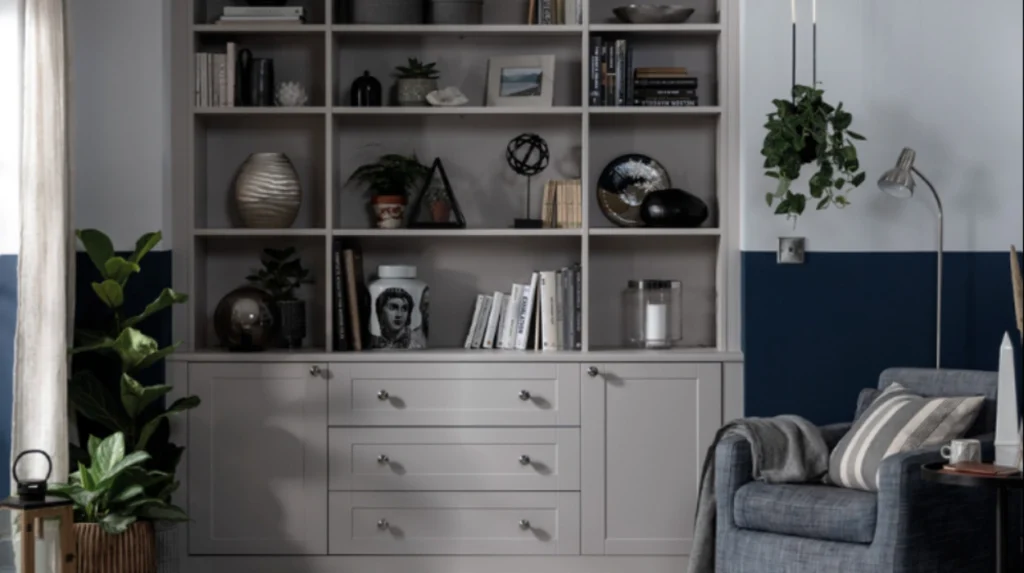
The financial costs of bespoke wardrobes in Edinburgh range from 965 pounds for a basic single unit to over 3000 pounds for extensive installations. Pricing depends on dimensions, material selection, internal mechanisms, and the choice between supply-only or full installation.
Pricing Factors And Service Options
Joinery companies structure their pricing based on 3 main cost variables: linear width, material grade, and accessory complexity. A standard single wardrobe section with basic interior features costs exactly 1200 pounds for a full supply and installation service. Upgrading to solid hardwood doors and dovetailed interior drawers increases the final project total. Additional features incur specific surcharges based on manufacturing complexity. Homeowners pay an extra 350 pounds for specialized solid oak dovetailed drawer boxes. Custom paint colors also add incremental fees to the final invoice.
Customers select between 2 distinct service delivery models: full installation and supply-only packages. The supply-only option reduces the overall cost for clients who possess advanced carpentry skills. A double wardrobe section costs 1315 pounds under the supply-only framework. The manufacturer prepares the components and primes the surfaces for final painting. The client assumes responsibility for the final assembly and wall scribing. Full installation guarantees professional alignment and provides a comprehensive warranty for the structural components.
How Does Room Layout Influence Wardrobe Design Choices?
Room layout dictates wardrobe design choices by establishing the available physical footprint and the location of natural light sources. Joiners must position the wardrobes to avoid blocking windows, heating radiators, and structural entryways while maximizing the available wall surface area.
Spatial Planning And Light Integration
Bedroom environments contain 3 immovable structural elements: doorways, window frames, and central heating radiators. Designers must plot the wardrobe footprint to maintain clear pedestrian pathways around the bed frame. The depth of a standard wardrobe requires 600 millimeters of floor space. Installers leave a minimum clearance of 800 millimeters between the wardrobe doors and the bed. This spatial planning ensures comfortable daily operation of the doors and drawers without physical obstruction. Homeowners navigate their bedrooms easily without encountering structural bottlenecks.
Wardrobe placement impacts 2 environmental factors: natural light distribution and room temperature regulation. Installing large furniture units immediately adjacent to windows blocks sunlight penetration into the room. Joiners frequently position the wardrobes against the darkest wall to preserve natural illumination. Installers must also consider the location of existing ventilation vents and heating pipes. Built-in furniture must never obstruct heat circulation from baseboard radiators. Carpenters install discrete ventilation grilles in the plinths to maintain necessary airflow.
Frequently Asked Questions
Are fitted wardrobes worth the investment in an old Edinburgh flat?
Yes, fitted wardrobes represent a highly worthwhile investment for older Edinburgh properties. They utilize every millimeter of vertical space up to the high ceilings and conceal irregular plasterwork. This custom integration significantly increases the resale value of historical tenement flats.
How much value do custom fitted wardrobes add to a house?
Custom fitted wardrobes add noticeable financial value to a property by permanently resolving storage deficits. Real estate appraisers view high-quality built-in storage as a premium architectural upgrade. Properties with bespoke bedroom storage sell faster than identical homes lacking these permanent fixtures.
Can I install fitted wardrobes over existing skirting boards?
Professional carpenters never install fitted wardrobes directly over existing skirting boards. Installers carefully remove the section of the skirting board located behind the wardrobe footprint. They then scribe the exterior panels of the new wardrobe to match the remaining architectural moldings perfectly.
What is the standard depth for a built-in wardrobe?
The standard internal depth for a functional built-in wardrobe measures exactly 600 millimeters. This specific dimension allows standard clothing hangers to sit perpendicular to the doors without crushing the garment sleeves. Shallower profiles require specialized pull-out rails that position the clothing parallel to the doors.
Do I need planning permission for fitted wardrobes in a listed building?
Homeowners do not require formal planning permission to install fitted wardrobes inside a listed building in Scotland. Wardrobes constitute internal furniture installations rather than structural architectural modifications. Homeowners must avoid damaging original plasterwork and historical cornices during the installation process.