
Edinburgh Crystal was a premier brand of luxury Scottish lead crystal glassware manufactured from the early nineteenth century until production ended in 2006. The enterprise specialized in hand-cut drinking vessels, decanters, bowls, baskets, and ceremonial items celebrated for their light-refracting clarity.
- How Did the Production and Manufacturing Process Evolve?
- What Are the Most Famous Edinburgh Crystal Patterns?
- Why Did Edinburgh Crystal Cease Production in 2006?
- How Can Collectors Identify and Value Authentic Pieces?
- Related Crafts and Scottish Traditions
- Frequently Asked Questions
- How can I distinguish between Edinburgh Crystal and standard glass?
- What is the significance of the thistle pattern on Scottish glassware?
- Is Edinburgh Crystal safe to use for serving alcoholic beverages?
- Why does some authentic glassware feature a Made in Italy label?
- Where can I buy replacement pieces for a discontinued pattern?
The origins of the company trace back to 1867 with the founding of the Edinburgh and Leith Flint Glass Company in Leith, which is a historic port district near Edinburgh. This facility built upon regional glassmaking traditions established in 1773 by James Rankin, who introduced specialized flint glass manufacturing to the area. Alexander Jenkinson acquired the local operations in 1867 and incorporated advanced techniques inspired by Venetian glassblowing styles to enhance clarity and design precision. The firm underwent multiple organizational changes before officially adopting the name The Edinburgh Crystal Glass Company in 1955 to solidify its market brand identity.
The manufacturing process depended entirely on the addition of lead oxide to the molten silica mixture, a technique patented in 1674 by George Ravenscroft in London. Lead oxide increased the density and refractive index of the glass, which produced an exceptional sparkle when cut by skilled artisans. The high clarity made the glassware ideal for complex geometric wheel-cutting and stippling processes that became the signature of Scottish luxury tableware. The company achieved global distribution and became an essential element of formal dining traditions across the United Kingdom, Europe, and North America during the twentieth century.
The brand maintained a dedicated visitor center at the Eastfield Industrial Estate in Penicuik, Midlothian, located approximately 16 kilometers from the city center of Edinburgh. This center attracted an estimated 100,000 visitors annually, allowing the public to witness master craftsmen executing intricate hand-blowing and hand-cutting techniques directly. The facility served as an educational hub and a retail outlet until the economic downturn of the parent organization forced operational closures. Today, vintage pieces remain highly sought after by global antique collectors who value the historical preservation of Scottish manufacturing arts.
How Did the Production and Manufacturing Process Evolve?
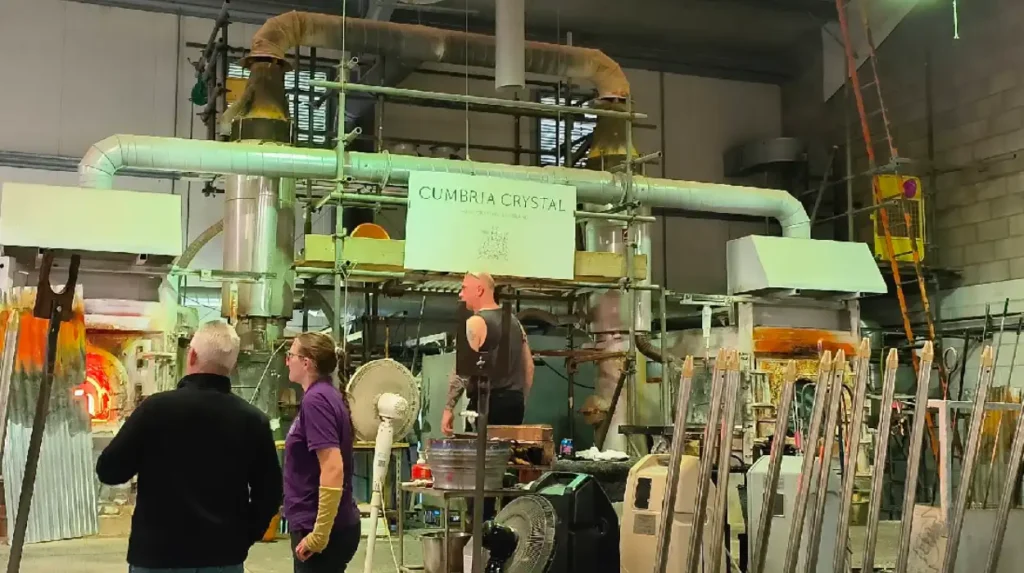
The production process of Edinburgh Crystal combined traditional mouth-blowing techniques with precise mechanical grinding wheels to achieve distinct geometric cuts. Molten lead crystal was extracted from high-temperature furnaces using long iron blowpipes, allowing artisans to shape the initial vessel form through lung power and wooden molds.
As technological advancements emerged during the industrial era, the company transitioned from coal-fired furnaces to highly efficient gas and electric kilns to maintain uniform glass clarity. The introduction of motorized wheels fitted with diamond-edge cutters replaced traditional iron and stone wheels, increasing the depth and precision of the incisions. Master cutters applied the glass vessels against these spinning wheels entirely by hand, relying on spatial memory and physical intuition rather than pre-marked guidelines on the glass surface. Each piece required secondary acid polishing baths or manual felt-wheel buffers to restore complete surface transparency after the abrasive cutting phase.
The company actively modernized its creative pipeline during the late twentieth century by collaborating with academic institutions to introduce contemporary aesthetic concepts. Students from Wolverhampton University and the Edinburgh College of Art joined the design department for annual residencies lasting between 12 and 15 months. This partnership led to the creation of innovative product lines, including the minimalist Edge range, which targeted younger demographics moving away from heavy traditional patterns. This balanced dynamic allowed the firm to preserve historical craftsmanship while adapting to shifting consumer demands for lightweight and functional everyday tableware.
Beyond standard consumer luxury lines, the factory received exclusive commissions to manufacture high-profile commemorative objects and functional components for institutional use. The company produced specialized hand-cut glass panels for the lamps utilized on official British royal carriages, ensuring visibility and aesthetic prestige during state ceremonies. Furthermore, the subsidiary unit Caithness Glass was responsible for producing the hand-engraved trophies awarded to winners of televised events, including the long-running British Broadcasting Corporation television show Mastermind. These institutional relationships cemented the manufacturer as a key cultural contributor to British industrial design history.
What Are the Most Famous Edinburgh Crystal Patterns?
The most famous Edinburgh Crystal patterns include the Thistle, Star of Edinburgh, Lochnagar, King James, Skye, and Lomond collections, each featuring unique cuts and historical inspirations. These distinct designs allowed the company to cater to different eras of consumer taste, ranging from Victorian ornamentation to modern minimalism.
The Thistle range is widely recognized as the most iconic Scottish-themed design produced by the company, with its stylistic origins dating back to circa 1896. The physical structure of these glasses directly mirrors the shape of a thistle bloom, which is the national flower emblem of Scotland. The top section of the glass features fine wheel-cut thistle patterns, while the lower body incorporates a stippled or dotted texture achieved through delicate tool impacts. The design is completed with a distinctive hexagonal stem and a starburst cut on the base foot, making it a highly collectible series globally.
The Star of Edinburgh range represents another highly successful commercial line that remained in continuous production for decades prior to the 2006 factory shutdown. Introduced as a staple for formal dining settings, this pattern is distinguished by a deep starburst motif consisting of radiating lines cut into the clear lead crystal body. The configuration creates high light refraction, causing the tableware to exhibit an intense sparkle when viewed under direct candlelight or modern chandelier lighting. The timeless symmetry of the starburst pattern ensured its popularity as a premium wedding gift and commemorative presentation piece throughout the mid-twentieth century.
Why Did Edinburgh Crystal Cease Production in 2006?
Edinburgh Crystal ceased production in 2006 due to severe financial insolvency driven by high domestic energy costs, changing consumer preferences, and intense competition from foreign mass-production factories. The rising expense of operating high-temperature glass furnaces in Scotland made the traditional hand-crafted business model economically unsustainable.
The luxury crystal market experienced a significant structural decline during the late 1990s as modern households shifted away from formal dining habits. Younger consumers favored lightweight, dishwasher-safe glassware over heavy lead crystal tableware that required specialized hand-washing and delicate storage maintenance. In an effort to reduce operational overhead, the company launched its International range, outsourcing portions of its manufacturing to skilled glassworks located in Italy. These Italian-manufactured pieces retained the traditional patterns and original blue and silver foil branding labels, but the strategic shift failed to offset declining domestic sales.
The broader corporate structure of the British glass industry underwent rapid consolidation as multiple historic brands faced parallel economic pressures. The company was ultimately absorbed by the multinational luxury goods conglomerate Waterford Wedgwood, which sought to streamline its portfolio of premium tabletop brands. In 2006, the mounting debt and lack of profitability forced the historic Penicuik factory into administration, resulting in the immediate termination of the remaining manufacturing staff. The Edinburgh Crystal name transitioned into a secondary brand asset under the new ownership, and by 2009, the usage of the brand logo ceased entirely.

The closure reflected a wider crisis within the heritage crafts sector of the United Kingdom, where traditional glass-cutting skills became critically endangered. Smaller contemporary operations, including Cumbria Crystal and Dartington Crystal, attempted to preserve the remaining artisanal knowledge by targeting niche luxury markets directly. The loss of the Penicuik facility ended over a century of large-scale industrial crystal manufacturing within the borders of Scotland. Today, the physical machinery and historical archives serve as reference materials for industrial historians studying the rise and fall of British manufacturing.
How Can Collectors Identify and Value Authentic Pieces?
Collectors can identify authentic Edinburgh Crystal by examining the base for acid-etched maker marks, analyzing the sharpness and weight of the lead cuts, and verifying pattern details. Genuine vintage items exhibit a high weight profile due to the 24 percent lead oxide content within the crystal formulation.
The primary method of verification involves locating the official corporate stamp, which was typically applied via acid-etching to the center of the underside base. Earlier production pieces display a simple circular mark reading Edinburgh Crystal, while later twentieth-century iterations incorporate a stylized thistle emblem alongside the text. Collectors must use a magnifying lens under angled lighting because these marks frequently fade or experience wear from decades of table contact. The presence of the original blue and silver foil retail labels provides additional confirmation of authenticity, particularly for items preserved in their original dark blue presentation boxes.
The physical resonance and light refraction properties of the glass provide immediate technical clues regarding the material composition. When tapped gently with a fingernail, genuine lead crystal produces a clear, long-lasting ringing tone, whereas standard soda-lime glass outputs a dull, brief thud. The hand-cut facets should feel slightly sharp to the touch, indicating that the geometric patterns were ground into the glass rather than molded. Machine-molded imitations feature rounded edges along the pattern junctions and often display faint vertical seam lines along the sides of the stem.
The financial valuation of vintage pieces depends strictly on the specific pattern type, the structural condition, and the rarity of the individual vessel form. Common tumblers and wine glasses from the Skye or Lomond ranges command modest prices on secondary online auction platforms due to their high production volume. Conversely, intact decanters, covered biscuit barrels, and specialty items from the Thistle or Lochnagar lines command premium valuations from specialized antique dealers. Pieces showing visible surface scratches, cloudy chemical deposits from dishwasher exposure, or small rim chips suffer value reductions exceeding 70 percent.
Related Crafts and Scottish Traditions
For individuals interested in exploring other historic Scottish luxury exports and regional beverage developments, further information is available regarding local production histories. The evolution of regional craftsmanship extends well beyond glassware into the creation of specialized spirits and infused botanical blends. Discover more about the artisanal beverage industry by reviewing the Origin of Edinburgh Rhubarb Ginger Gin or explore how local producers are expanding their modern selections with the Port of Leith Table Whisky Range.
Frequently Asked Questions
How can I distinguish between Edinburgh Crystal and standard glass?
Genuine crystal contains lead oxide, which increases the total weight and creates a high refractive index that splits light into rainbow spectrums. When struck gently, authentic pieces emit a musical ringing sound that persists for several seconds, whereas standard glass produces a short, flat sound.
What is the significance of the thistle pattern on Scottish glassware?
The thistle pattern incorporates the official national floral emblem of Scotland, which has represented Scottish independence and resilience since the thirteenth century. The design features a distinct flared rim resembling a flower bloom combined with intricate stippled texturing across the main body of the vessel.
Is Edinburgh Crystal safe to use for serving alcoholic beverages?
Occasional use for serving wine or spirits during a meal poses no health risks, but storing beverages long-term in lead crystal decanters is discouraged. Lead can gradually leach into liquids over extended periods, meaning spirits should be transferred to standard glass storage if not consumed immediately.
Why does some authentic glassware feature a Made in Italy label?
During the late twentieth century, the company introduced its International range and outsourced a portion of its glass production to specialized factories in Italy to manage rising Scottish manufacturing costs. These items remain authentic brand releases and were designed to match the precise pattern specifications of the original firm.
Where can I buy replacement pieces for a discontinued pattern?
Discontinued patterns can be acquired through specialized secondary crystal replacement services, antique shops, and digital auction platforms. Collectors should verify the dimensions and acid-etched base stamps prior to purchasing to ensure the new items match their existing tableware sets precisely.