Key Points
- Broadcaster Jeremy Clarkson, 66, confirmed he is in remission after receiving a diagnosis for aggressive prostate cancer in May 2025.
- Doctors treated the cancer by removing part of his prostate gland and using High-Intensity Focused Ultrasound (HIFU) therapy to destroy the malignant cells.
- Following emergency heart surgery in late 2024 and his subsequent cancer treatment, Clarkson said he will not stop drinking beer or eating pork chops, stating he wants to keep joy in his old age.
- Prostate Cancer UK reported a 12 per cent increase in website visits after Clarkson spoke publicly about his condition, and the charity thanked him for raising awareness.
- Clarkson spoke lightheartedly about growing older and his end-of-life outlook, saying he prefers to concentrate on enjoying his life despite bodily challenges.
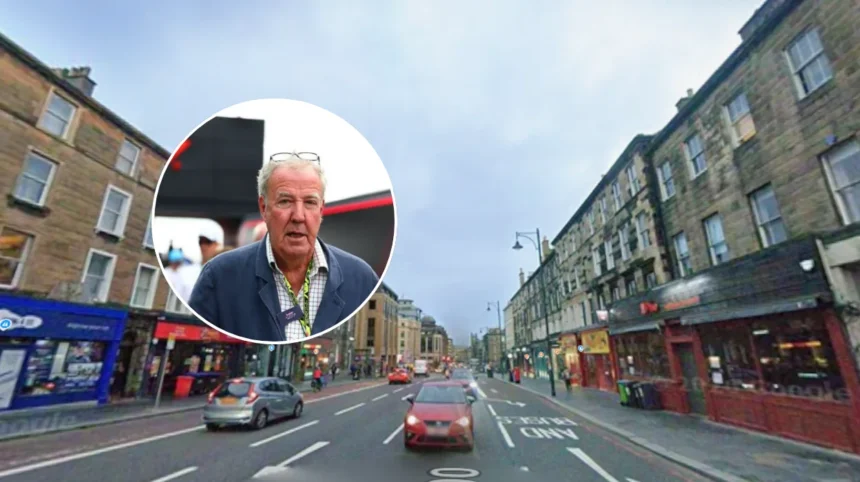
LONDON (Edinburgh Daily) September 10, 2026 – Television presenter and agricultural entrepreneur Jeremy Clarkson has opened up about his health and lightheartedly quipped about his end-of-life outlook following a successful battle with an aggressive form of prostate cancer. As reported by Craig Jones of the Gazette Live, the 66-year-old former Top Gear and The Grand Tour frontman addressed his cancer recovery during recent media interactions, confirming that he remains in remission but is determined not to let strict health routines ruin the joy of his later years.
- Key Points
- Why is Jeremy Clarkson refusing major lifestyle restrictions after his recovery?
- What specific treatments did Jeremy Clarkson undergo for prostate cancer?
- How have health charities and the public responded to his diagnosis?
- Background of the particular development after the news
- Prediction: How this development can affect the general audience and public healthcare
As detailed by Aharon Tsaturyan, MD, of OncoDaily Intelligence Unit, Clarkson was originally diagnosed with an aggressive prostate tumour following a routine medical assessment and subsequent biopsy in May 2025. The broadcaster broke the news to viewers during the fifth season of his Prime Video docuseries Clarkson’s Farm, where he was seen informing farm manager Kaleb Cooper and land agent Charlie Ireland.
As reported by Ella Rayment-Ward of Hello! Magazine, Clarkson disclosed that doctors caught the disease at an early stage, enabling him to undergo High-Intensity Focused Ultrasound (HIFU) treatment alongside surgical intervention to remove part of his prostate gland.
Why is Jeremy Clarkson refusing major lifestyle restrictions after his recovery?
Addressing his current health philosophy, Clarkson made it clear that he has no intention of adopting an overly restrictive lifestyle purely to extend his lifespan. As written by local reporters for the Manchester Evening News, Clarkson explained his perspective on balancing health guidance with personal enjoyment.
As quoted by the Manchester Evening News, Clarkson remarked: “And not drinking and not eating a pork chop means that there is less joy in life — and I haven’t worked my arse off for 40 years to have no joy in my old age. So, I’m having joy in my old age.”
He further described the process of dealing with regular medical check-ups in his characteristic humorously blunt tone: “I get checked every year. And suddenly, oops, there’s a little thing here. And they go, ‘OK, look, it’s a thing. It’s something we need to address’, and then immediately you’re given a menu of opportunities and possibilities.”
Clarkson added: “Basically, it is choosing what sort of thing you want in your bottom. Yes, it is not very nice having to tell your children, ‘I’ve got cancer’, neither is having a catheter fitted. But otherwise, no problem.”
What specific treatments did Jeremy Clarkson undergo for prostate cancer?
As reported by the Bicester Advertiser, Clarkson verified that he received High-Intensity Focused Ultrasound (HIFU) therapy. The procedure uses high-frequency sound waves aimed directly at targeted tissue to heat and destroy cancerous cells without requiring extensive invasive surgery.
Responding to a fan on social media who was also battling cancer, Clarkson offered sympathies and confirmed: “I did indeed have the HIFU treatment, which I’m delighted to say has left no side effects.”
The National Health Service (NHS) notes that HIFU treatment is primarily offered to patients whose prostate cancer is localised and has not spread outside the prostate gland. In addition to HIFU, Clarkson previously shared that roughly 10 per cent of his prostate was surgically removed—specifically the portion containing the malignant cells.
His prostate cancer diagnosis arrived eight months after he underwent emergency heart surgery in October 2024 to clear blocked coronary arteries and fit two stents. Reflecting on his back-to-back medical scares, Clarkson remarked that he felt like “the world’s luckiest man” because both conditions were identified early enough for effective clinical intervention.
How have health charities and the public responded to his diagnosis?
Clarkson’s willingness to share his health journey publicly on Clarkson’s Farm has had a measurable impact on public health awareness across the United Kingdom.
As reported by Craig Jones of the Gazette Live, Prostate Cancer UK observed a 12 per cent surge in new visitors to their official digital channels shortly after Clarkson announced his diagnosis.
In an official statement released by the charity, Chiara De Biase, Director of Health Strategy and Fundraising at Prostate Cancer UK, stated: “We want to thank Jeremy for sharing his prostate cancer diagnosis and treatment in Clarkson’s Farm, raising vital awareness with the millions of men and families watching.”
De Biase added: “Over 10,000 dads, brothers, sons and friends are diagnosed too late for a cure every year, and today the responsibility to know if you’re at higher risk and to act on it rests entirely on men’s shoulders. This must change.”
Following the release of the series, Clarkson posted a video message to his social media followers urging men over 50—or those at higher risk—to seek regular screening. He stated candidly: “You will have noticed that I’m not dead. The reason why I’m fine is because the doctors caught the prostate cancer early, and they caught it early because I got tested.”
Background of the particular development after the news
The disclosure of Clarkson’s cancer fight comes during a transformational period in the presenter’s public career and personal life. After concluding his decade-long run on Amazon Prime Video’s flagship motoring series The Grand Tour, Clarkson shifted his full focus toward managing Diddly Squat Farm in Chipping Norton, Oxfordshire.
His transition into British agriculture was documented in Clarkson’s Farm, which became one of the streaming platform’s most-watched original television shows in the UK. The series was recently awarded the prize for Best Factual Entertainment Series at the National Television Awards, beating out competing programmes such as At Home With The Furys and Mortimer & Whitehouse: Gone Fishing.
During his acceptance speech at the awards ceremony, Clarkson noted that viewers who voted for the show were ultimately showing solidarity with the farming community, acknowledging the severe economic and operational hardships facing agricultural workers across Great Britain.
However, the production of Season 5 in 2025 was severely impacted by Clarkson’s personal health complications. Having dealt with severe cardiac issues requiring stent surgery in late 2024, the subsequent discovery of an aggressive prostate tumour during a May 2025 routine physical exam forced production pauses and required delicate conversations regarding the future of the farm and the show.
Clarkson’s decision to include the raw moments of diagnosis, hospital bed updates, and discussions with his partner Lisa Hogan and farm hands Kaleb Cooper and Charlie Ireland marked a significant departure from his historically comedic and irreverent broadcasting persona.
Prediction: How this development can affect the general audience and public healthcare
Jeremy Clarkson’s public stance on his cancer diagnosis and his refusal to dramatically alter his lifestyle will likely influence both public health behaviours and celebrity health campaigning in several key ways:
1. The “Clarkson Effect” on Prostate Screening Rates
Historically, high-profile public figures sharing health diagnoses—such as Sir Chris Hoy, Stephen Fry, and King Charles III—have driven sharp spikes in public healthcare engagement. Clarkson’s direct, no-nonsense appeal to his predominantly male viewership is anticipated to lead to sustained increases in Prostate-Specific Antigen (PSA) blood test requests across NHS general practices. Because early-stage prostate cancer frequently presents without noticeable symptoms, his emphasis on routine testing rather than waiting for physical illness will likely result in higher rates of early detection among middle-aged and older men.
2. A Shift in Public Discourse Around Ageing and Quality of Life
Clarkson’s refusal to abandon basic pleasures—such as modest alcohol consumption or rich foods—in exchange for incremental increases in longevity highlights an ongoing cultural debate regarding quality of life versus absolute lifespan. For his demographic, his candid attitude offers an alternative narrative to strict post-cancer regimens, encouraging patients to discuss personalized treatment goals with their oncologists that balance medical safety with emotional well-being and personal joy.
3. Increased Medical Interest in Minimally Invasive Treatments
By publicly discussing his positive outcomes with High-Intensity Focused Ultrasound (HIFU) therapy, Clarkson has brought wider consumer awareness to non-surgical and minimally invasive cancer treatments. This increased visibility may lead more newly diagnosed patients to inquire about focal therapies rather than default automatically to radical prostatectomies or extended radiotherapy schedules, driving higher demand for specialized HIFU facilities within both private healthcare networks and the NHS.