Key Points
- Police Scotland launched Operation Moonbeam at Sighthill Fire Station ahead of Bonfire Night to target pyrotechnic misuse and anti-social behaviour.
- The City of Edinburgh Council established 10 additional Firework Control Zones, bringing the total number across the capital to 14.
- Discharging fireworks inside a control zone, including in private gardens, is now a criminal offence punishable by fines or imprisonment, with exemptions applied only to category F1 sparklers.
- Officials from the Crown Office and Procurator Fiscal Service warned that people who target emergency workers or commit violent acts will face criminal prosecution.
- Public order officers, dispersal units, CCTV operators, and trading standards inspectors are patrolling designated hot-spot areas.
Edinburgh (Edinburgh Daily) October 21, 2026 – Police Scotland officers and public prosecutors have issued a firm warning that individuals engaging in anti-social behaviour or targeting emergency workers during the upcoming Bonfire Night period will be identified, arrested, and brought to justice.
- Key Points
- How Are Authorities Preparing to Combat Bonfire Night Disorder Across the Capital?
- What Legal Ramifications Will Offender Face Under Scottish Law?
- Background of Edinburgh’s Firework Legislation and Disorder History
- Prediction: How This Development Can Affect Edinburgh Residents and Local Communities
The stern declaration coincides with the formal implementation of 10 additional Firework Control Zones by The City of Edinburgh Council, bringing the capital’s total to 14 controlled areas where setting off fireworks is strictly illegal.
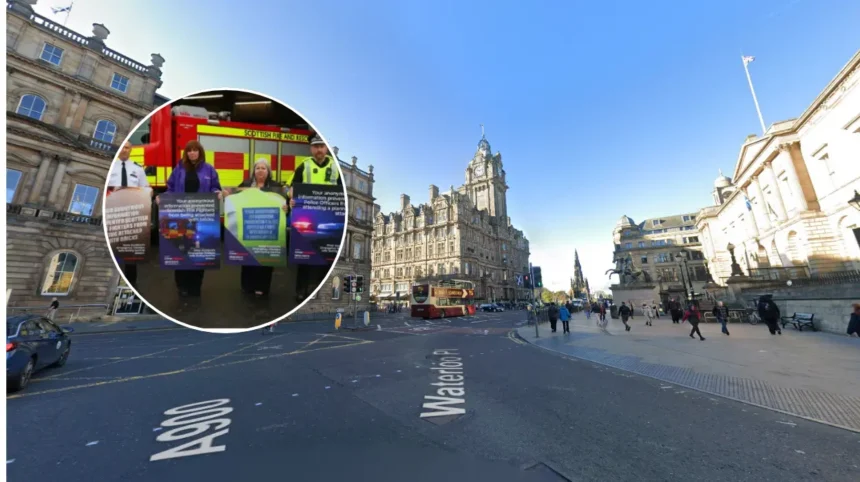
As reported by Edinburgh Evening News, Police Scotland officially launched Operation Moonbeam at Sighthill Fire Station on Wednesday morning, deploying specialized public order resources and heightened patrols across the city ahead of Halloween and Bonfire Night.
As reported by Faith Currie, Procurator Fiscal for Edinburgh, Lothian and Borders, “Bonfire Night should be an opportunity for communities to celebrate safely. Those who choose instead to engage in violent, dangerous or disorderly behaviour can expect a robust response from the criminal justice system. A conviction can have serious and enduring consequences, impacting employment, education, travel and future opportunities for many years to come.”
How Are Authorities Preparing to Combat Bonfire Night Disorder Across the Capital?
The operational response, spearheaded by Police Scotland under Operation Moonbeam, involves deploying specialized officers equipped to respond to pyrotechnic disorder, youth violence, and attacks on emergency personnel. Police units are working alongside the Scottish Fire and Rescue Service, the Scottish Ambulance Service, and local authority community safety teams to maintain order in historically affected neighbourhoods.
The City of Edinburgh Council has established 14 Firework Control Zones following consultations with local residents and community safety partners. Under the Fireworks and Pyrotechnic Articles (Scotland) Act 2022, local councils possess statutory powers to designate control zones where the ignition of private fireworks is prohibited indoors, outdoors, and on private residential property, excluding sparklers.
In addition to public dispersal zones operated by Police Scotland, council officers are checking known fly-tipping sites to prevent the accumulation of flammable materials for unauthorized bonfires. Trading standards and police teams are conducting inspections of retail outlets selling fireworks to enforce regulations banning sales or supply to individuals under the age of 18.
What Legal Ramifications Will Offender Face Under Scottish Law?
Law enforcement and prosecutorial bodies have made clear that attacks directed at emergency service workers will receive zero tolerance. Under Scottish legislation, assaulting, obstructing, or using pyrotechnics as weapons against police officers, firefighters, or paramedics constitutes an aggravating factor that courts must factor into sentencing decisions.
As reported by Community Safety Minister Kirsten Oswald MSP, “Recent years have seen widespread misuse of fireworks around Bonfire Night, which puts our communities and emergency services at risk, and this simply cannot be tolerated. While 2025 saw lower levels of disorder, Police Scotland remains clear that action will be taken against anyone who breaks the law, and I fully support officers and the courts in tackling disorder.”
Legal authorities confirmed that any individual caught discharging fireworks within designated control zones without permission faces criminal charges, substantial financial penalties, or custodial sentences. Authorities have urged residents to report illicit firework sales, unauthorized bonfires, and illegal displays via dedicated council and police reporting lines.
Background of Edinburgh’s Firework Legislation and Disorder History
The establishment of Firework Control Zones across Edinburgh follows years of persistent anti-social behaviour and violent disruption centered around early November. Over successive Bonfire Night periods, localized pockets of disorder—particularly in areas such as Niddrie, Sighthill, Muirhouse, and Gracemount—saw emergency responders targeted with bricks, petrol bombs, and heavy fireworks fired as weapons.
In response to public outcry and repeated safety hazards posed to residents and frontline workers, the Scottish Parliament passed the Fireworks and Pyrotechnic Articles (Scotland) Act 2022. The legislation granted local authorities discretionary powers to enact Firework Control Zones, designed to protect communities, domesticated animals, and livestock from noise pollution and physical harm.
Following initial trial zones in previous years, Edinburgh expanded its local framework in 2026 to incorporate 14 designated areas, reflecting an ongoing multi-agency commitment to curb violent disruptions during autumn celebrations.
Prediction: How This Development Can Affect Edinburgh Residents and Local Communities
The introduction of 14 Firework Control Zones and intensified policing under Operation Moonbeam is anticipated to bring significant structural changes to how Edinburgh residents experience the Bonfire Night period.
For local residents within designated zones, private backyard firework displays will no longer be permitted, shifting seasonal celebrations toward official, professionally organized public events. While this may require adjustment for families accustomed to home displays, it is expected to lead to a noticeable reduction in residential noise disturbances, emergency department admissions, and property damage caused by stray pyrotechnics.
For emergency responders and public services, the combination of strict criminal prosecution, expanded control zones, and specialized public order operations is projected to lower the frequency of targeted attacks on firefighters, paramedics, and police personnel. Over time, these measures aim to foster safer urban environments, restore public confidence during seasonal events, and deter potential offenders through clear prosecutorial consequences.