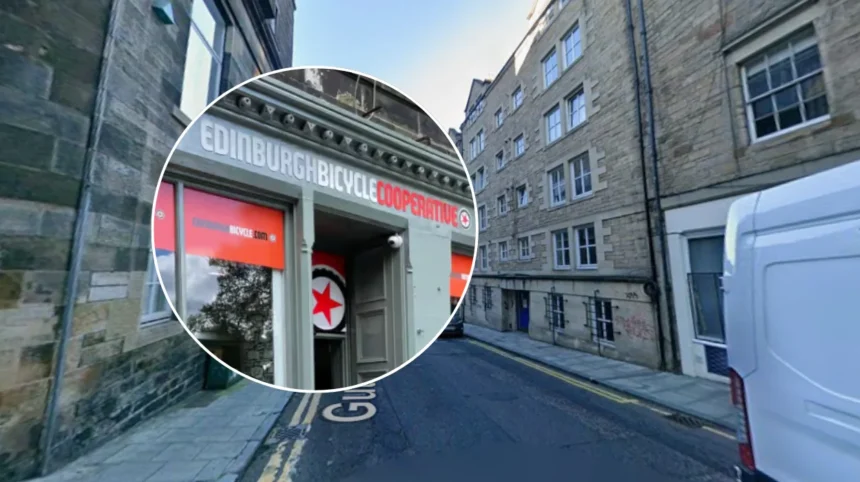
Key Points
- Edinburgh Bicycle Co-operative has entered administration after attempts to secure investment or sell the business failed.
- Company executives said the business retains its core operational assets and they intend to save the worker-owned enterprise.
- The administration comes after the business closed stores in Scotland and Northern England due to falling sales across the cycling market.
- Insolvency practitioners are now on site at trading locations while staff await news on job cuts and restructuring plans.
- The move comes amidst ongoing supply chain disruption, lower demand following the pandemic, and rising operating costs for UK bike retailers.
EDINBURGH (Edinburgh Daily) October 3, 2026 — In a decisive turn for one of Scotland’s longest-standing independent cycling retailers, Edinburgh Bicycle Co-operative has officially appointed administrators following months of acute trading headwinds, with company leadership insisting “there’s still fight in the dog” as restructuring efforts commence.
- Key Points
- Why Has Scotland’s Original Worker Co-op Entered Administration?
- What Did Company Leadership Say About The Insolvency?
- How Have Employees and Local Branch Operations Been Affected?
- Background Of The Particular Development
- Prediction: How This Development Can Affect Cyclists and the Independent Retail Sector
Why Has Scotland’s Original Worker Co-op Entered Administration?
As reported by cycling trade correspondents and local business reporters, administrators were formally called into the Edinburgh Bicycle Co-operative Limited premises after efforts to raise emergency capital or negotiate a rescue takeover fell through.
Liquidators and appointed insolvency managers arrived at the company’s trading sites to take control of financial operations and assess the feasibility of continuing to trade during a sale of assets or restructuring process.The business, which operated six retail branches across Scotland and Northern England—including flagship sites in Edinburgh—alongside a global e-commerce portal, has faced persistent cash-flow strains stemming from severe broader market distress within the UK cycle industry.
Over-expansion in previous years, combined with shifting consumer spending patterns and margin compression, left the worker co-operative unable to meet its ongoing liabilities.
What Did Company Leadership Say About The Insolvency?
Despite the formal arrival of insolvency practitioners, company leaders mounted a defiant stance regarding the future of the brand. As documented by reporting from industry outlets, the managing director of Edinburgh Bicycle Co-op addressed staff and stakeholders directly, stating: “There’s still fight in the dog”.
As reported by business journalists following the announcement, management emphasised that the core identity and worker-led ethos of the business remain intact.
In communications issued to customers and local cycle groups, representatives stated: “The business has been struggling for a while and has been in a process to find a cash injection and/or a buyer”.
A spokesperson added in a statement to patrons: “We’re immensely grateful to everyone who has helped us — from our customers to local businesses and fellow cyclists. Your support has meant the world to us, and it’s been a privilege to ride alongside you”.
How Have Employees and Local Branch Operations Been Affected?
The immediate impact on employees across the retail footprint has caused significant distress. As noted by eyewitnesses and reporters covering the Canonmills branch and Alvanley Terrace headquarters in Edinburgh, liquidators took active control of operations on site.
As reported by local media commentators, workers expressed frustration over the sudden arrival of administrative teams. In statements gathered from staff members, one employee noted: “First I heard was rumors over the weekend. Liquidators arrived at 10am”. The administration directly threatens dozens of jobs across retail, maintenance workshops, and head-office support roles.
Background Of The Particular Development
Founded in 1977 in Edinburgh, the Edinburgh Bicycle Co-operative began as a modest bicycle repair workshop before growing into Scotland’s premier worker-owned cycling business. Operating as an employee co-operative, workers who completed one year of service were invited to become equal co-owners, sharing directly in business decision-making, profits, and operational responsibilities.
For decades, the co-op stood out as an alternative to corporate retail chains, expanding into Aberdeen, Stirling, Newcastle, and Leeds. However, following the post-2020 cycling boom, the UK cycle market encountered severe structural turbulence.
Oversupply in manufacturer inventories, heavy discounting across major online distributors, rising shopfront rents, and the broader cost-of-living crisis squeezed margins across independent cycle shops.
Over the past 12 to 24 months, the co-op had already begun consolidating operations, shuttering secondary urban sites—such as its Canonmills location—to preserve capital, before ultimately entering insolvency.
Prediction: How This Development Can Affect Cyclists and the Independent Retail Sector
The administration of Edinburgh Bicycle Co-operative carries distinct short- and long-term implications for local consumers, cycling commuters, and the wider retail landscape across Scotland and Northern England.
For Local Cyclists and Customers
- Service Disruption: Customers with bicycles currently booked into workshops or awaiting custom repairs face short-term delays while insolvency practitioners audit store stock and active jobs.
- Warranty and Gift Voucher Risk: Depending on whether a buyer acquires the business as a going concern, outstanding gift cards, store credit, or extended shop warranties may be rendered void or subjected to formal creditor claims.
- Loss of Local Community Hubs: Beyond retail sales, the co-op served as a key point of technical advice, urban commuting support, and local cycle club advocacy. A permanent closure would leave a major gap in community maintenance infrastructure in Edinburgh and regional branches.
For the Cycling Retail Industry
- Validation of Industry-Wide Distress: The failure of Scotland’s largest independent cycle co-operative underscores that structural challenges in bike retail extend beyond small single-premises operators to established, multi-site brands.
- Market Consolidation: Should the co-op’s assets be liquidated or split, larger corporate conglomerates or online-only aggregators are likely to capture remaining market share, further reducing consumer choice for independent, face-to-face service.