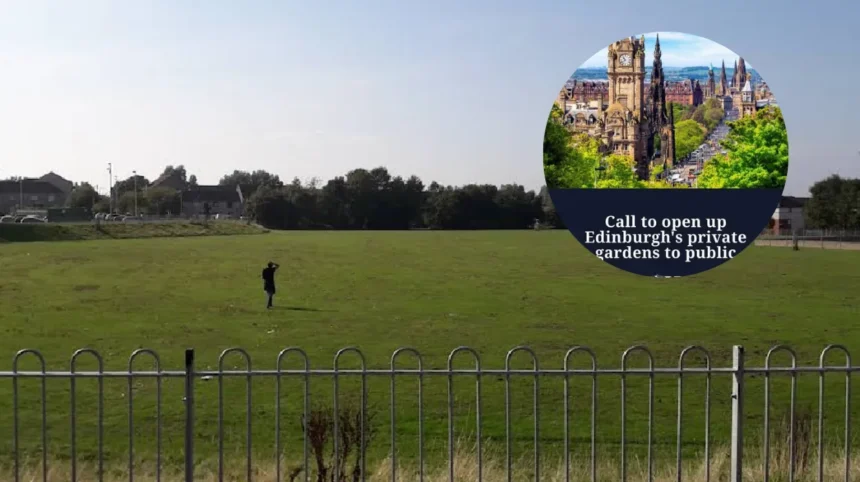
Key Points
- Edinburgh councillors voted down a proposal to open some private gardens to the public.
- The move has been described as a missed opportunity to improve public access to some of the city’s biggest private gardens.
- The issue centres on whether private garden spaces should be made more accessible to residents and visitors.
- The development has drawn attention because it affects the balance between private ownership and public amenity in the city.
- The story is linked to wider discussion about access to green space in Edinburgh.
Edinburgh Council(Edinburgh Daily)June 08, 2026 — Edinburgh Council has refused to open up private gardens to the public after councillors voted down the proposal, according to the Greens Scotland report on the issue. The decision means the city will not, at this stage, move ahead with a plan that would have increased public access to some of Edinburgh’s larger private gardens. The development has been presented as a missed chance to expand access to green space in the capital.
What did the council decide?
The central decision was straightforward: councillors did not back the proposal to make private gardens more accessible to the public. That outcome leaves the existing arrangement in place, with private gardens remaining under private control rather than becoming open community spaces. The report frames the vote as a lost opportunity for improved public access.
The issue matters because private gardens in Edinburgh are part of the city’s historic and residential landscape, and any proposal to open them to the public raises questions about ownership, access, and upkeep. The vote suggests there was not enough support among councillors to change that balance. It also shows that public access to green space remains a contested topic in local decision-making.
Why was the proposal raised?
The proposal appears to have been driven by a wider concern about public access to green spaces in Edinburgh. Supporters of opening private gardens generally argue that the city should make better use of underused land for residents and visitors. In this case, the argument was that some of the city’s biggest private gardens could offer wider public benefit if access were allowed.
At the same time, proposals of this kind often meet resistance because private garden owners and nearby residents may object to increased footfall, noise, or changes to privacy. The council’s rejection indicates that those concerns, or broader political caution, outweighed the push for access. The result keeps the debate alive rather than settling it.
What does this mean for residents?
For residents, the immediate effect is that the gardens in question will remain closed to general public access. That means the city does not gain any new green space through this proposal, despite ongoing interest in expanding opportunities for people to enjoy more of Edinburgh’s landscaped areas. The decision may also disappoint campaigners who see access to urban green space as a planning priority.
The issue is not only about leisure, but also about how a city manages shared space in a dense urban environment. In a place like Edinburgh, where heritage, housing, and public realm often overlap, decisions about garden access can become symbolic. This vote shows that the council is still cautious about changing long-standing arrangements.
Background of this development
Edinburgh’s private gardens have long formed part of the city’s distinct urban character, especially in areas where residential squares and enclosed green spaces are historically important. Debates over access usually arise when campaigners argue that private land should deliver more public benefit, while owners defend privacy and control. The current development fits into that broader pattern of tension between preservation and access.
The wider policy discussion also connects with how councils think about open space, liveability, and community use of land. In many cities, pressure grows to increase access to green areas as housing density rises and public demand for outdoor space increases. This decision suggests Edinburgh Council has chosen not to move in that direction on this occasion.
Prediction for residents
For local residents, this decision is likely to preserve the status quo in the short term, with no immediate change to access arrangements. It may encourage campaigners to return with a revised proposal, especially if public interest in green space continues to grow. It could also prompt further debate about how Edinburgh balances heritage gardens with wider civic use.
For people living near the gardens, the outcome may be welcomed if privacy and tranquillity were major concerns. For those hoping for more open green space, the decision may deepen frustration and increase pressure on the council to consider other access projects. The broader effect is that this issue may return in future planning or access discussions rather than ending with this vote.
Search-friendly angle
This development is likely to rank around searches for Edinburgh private gardens, public access to gardens, and Edinburgh Council green space decisions. The strongest news angle is the political decision itself, especially because it affects access, heritage, and public space in one of Scotland’s most closely watched cities.