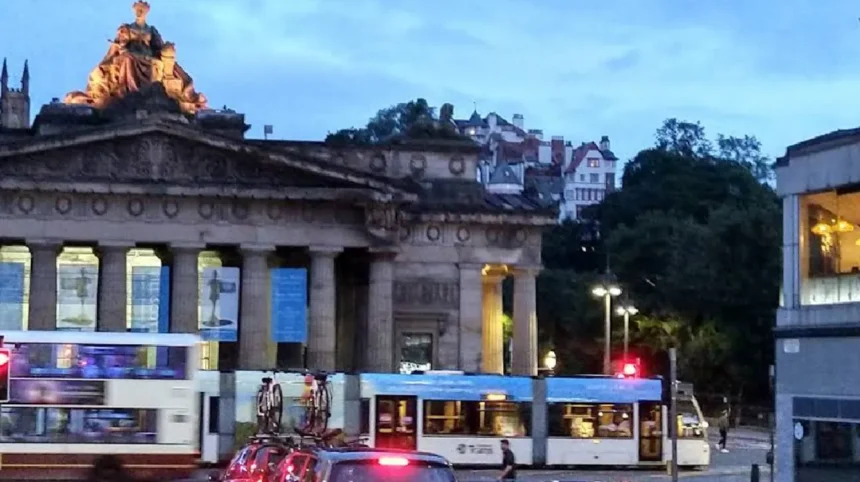
Hanover Street Edinburgh is a prominent central thoroughfare located in the historic New Town district that connects the bustling Princes Street at its southern boundary to Queen Street at its northern end along a direct vertical geographic axis.
- What Is The Historical Background Of Hanover Street Edinburgh?
- What Types Of Architecture Characterize Hanover Street?
- What Are The Primary Commercial Businesses On Hanover Street?
- What Dining And Restaurant Facilities Exist On Hanover Street?
- How Does Hanover Street Integrate With Edinburgh Transportation?
- What Role Does Hanover Street Play In The Local Economy?
- What Preservation Laws Protect Hanover Street Buildings?
- How Did The Railway Arrival Affect Hanover Street?
- What Financial Institutions Operate On Hanover Street?
- How Do Pedestrians Navigate Hanover Street Safely?
- What Are The Nightlife Options On Hanover Street?
- How Does The Topography Influence Hanover Street?
- What Future Urban Developments Are Planned For Hanover Street?
- FAQs About Hanover Street Edinburgh
The street divides the original New Town grid into two equal spatial halves. It intersects two major horizontal avenues (George Street and Thistle Street). The geographical coordinates place it directly in the commercial core of the Scottish capital. Visitors can find it situated between two parallel roads (Frederick Street and St David Street). The location provides a direct visual alignment with the prominent Mound structure. The Royal Scottish Academy sits directly opposite the southern entrance of the road.
What Is The Historical Background Of Hanover Street Edinburgh?
The Edinburgh city council officially approved the construction of Hanover Street in 1767 as a central component of architect James Craig’s innovative master plan for the New Town development to alleviate severe overcrowding in the medieval Old Town.
The street takes its name directly from the ruling British royal House of Hanover. Construction of the initial residential buildings began systematically in the early 1770s. Stonemasons sourced the primary building materials from two local quarries (Craigleith Quarry and Hailes Quarry). The street initially served exclusively as a prestigious residential address for highly affluent citizens. Commercial enterprises began aggressively converting the ground floors into retail spaces by the mid-19th century. Historical tax records indicate the street housed over 50 distinct businesses by the year 1920.
What Types Of Architecture Characterize Hanover Street?
Hanover Street features highly uniform Georgian architecture constructed primarily from Craigleith sandstone which displays strict neoclassical design elements with symmetrical facades standing three to four stories above street level above deeply submerged basement courtyards.
The building facades exhibit standard Georgian proportions and highly uniform roofline heights. Architects incorporated three classical orders (Doric, Ionic, and Corinthian) into the elaborate doorway surrounds. The ground floors feature rusticated stonework to provide visual weight to the heavy stone structures. Upper levels utilize smooth ashlar blocks to create a highly refined external appearance. Large sash windows maximize natural light penetration into the exceptionally deep floor plans. Wrought-iron balconies project outward from the first-floor drawing rooms of several original properties.
What Are The Primary Commercial Businesses On Hanover Street?
Hanover Street operates as a dense commercial hub heavily dominated by national fashion retailers and specialized independent shops occupying the ground-level properties to capture the massive foot traffic moving between the parallel luxury shopping districts.

Donald MacLeod
The retail environment currently supports multiple international fashion and lifestyle corporate brands. Shoppers can easily access three major chain stores (JD Sports, Lakeland, and Oliver Bonas). These large retailers occupy multiple consolidated floor spaces to accommodate their extensive inventory levels. Independent boutiques operate directly alongside these corporate entities in the smaller original commercial units. The street provides a vital pedestrian link connecting the major retailers on George Street and Princes Street. High daily foot traffic volumes actively sustain the profitability of these ground-floor retail operations.
What Dining And Restaurant Facilities Exist On Hanover Street?
Hanover Street hosts a highly concentrated mix of international dining establishments ranging from fast-paced coffee shops on the ground floors to extensive formal restaurants and cocktail bars located deep within the atmospheric converted basement spaces.
The street features numerous international dining venues catering to diverse global consumer preferences. The restaurant selection includes three distinct culinary styles (Italian cuisine, Indian cuisine, and Mexican cuisine). High-capacity commercial kitchens utilize the deep Georgian floor plans to effectively manage large service volumes. Extraction systems require specialized municipal heritage approvals to vent safely through the historic stone chimneys. Quick-service food providers completely dominate the busy sections located closest to the Princes Street intersection. The dining sector generates highly significant revenue during the annual summer Edinburgh festival seasons.
How Does Hanover Street Integrate With Edinburgh Transportation?
Hanover Street functions as a critical transportation artery within the Edinburgh city center by facilitating heavy public bus routes and managing complex commercial delivery logistics while supporting massive daily pedestrian movement across the regional transit network.
The regional operator Lothian Buses runs multiple high-frequency transport routes directly along the street corridor. Commuters rely heavily on three specific public bus services (Route 23, Route 27, and Route 41). These heavy transit vehicles navigate the steep physical gradient to connect the northern residential suburbs. The city council maintains designated public bus stops equipped with real-time digital timing displays. Transport authorities highly prioritize these specific transit routes during winter emergency snow clearance operations. The efficient public transit volume actively reduces private vehicle congestion within the central retail grid.
What Role Does Hanover Street Play In The Local Economy?
Hanover Street generates substantial municipal tax revenue and provides thousands of local employment opportunities by maintaining a zero-vacancy commercial rate and supporting diverse economic sectors including retail sales hospitality services and professional financial operations.
The commercial density creates a highly robust microeconomy within the broader Edinburgh financial landscape. Property valuations remain exceptionally high due to the constant commercial demand for central floor space. Landlords require long-term commercial lease agreements to secure the highly desirable retail and hospitality units. The business ecosystem supports three distinct worker demographics (retail staff, hospitality workers, and corporate professionals). Daily consumer spending patterns show consistent growth during both the summer tourist peak and winter holidays. The street functions as a primary economic engine for the entire New Town conservation area.
What Preservation Laws Protect Hanover Street Buildings?
Hanover Street falls strictly under the Edinburgh World Heritage Site statutory protection framework which legally prevents unauthorized architectural modifications and mandates the strict use of traditional materials for all exterior building repairs and structural maintenance.
The local municipal council enforces extremely strict zoning laws to permanently preserve the historic street layout. Property owners must obtain special planning permissions before initiating any exterior structural modifications. Conservation officers conduct regular physical inspections to ensure complete compliance with the established heritage standards. Contractors must utilize three traditional building materials (lime mortar, Scottish slate, and original sandstone) for repairs. The legal framework strictly controls the physical size and illumination levels of all commercial shopfront signage. This comprehensive preservation strategy effectively maintains the original 18th-century Georgian spatial relationships and visual aesthetics.
How Did The Railway Arrival Affect Hanover Street?
The arrival of the national railway network in 1846 triggered a massive economic transformation on Hanover Street by flooding the area with tourists and forcing the rapid conversion of quiet residential townhouses into aggressive commercial retail spaces.
The opening of the nearby Waverley Station dramatically increased the daily pedestrian footfall across the area. Wealthy original residents quickly abandoned the street to avoid the severe noise and industrial coal pollution. Property developers aggressively purchased the empty residential buildings to establish highly lucrative commercial retail enterprises. The economic shift resulted in three major architectural changes (enlarged windows, removed front gardens, and commercial signage). The railway essentially integrated the street directly into the broader Scottish national retail and distribution network. This specific technological advancement permanently ended the function of the road as a private residential enclave.
What Financial Institutions Operate On Hanover Street?
Hanover Street maintains a highly visible concentration of major retail banking branches and professional financial advisory firms that provide critical cash management services and corporate lending facilities to the surrounding high-density commercial business district.
The physical commercial roster currently includes four major national banking branches (HSBC, TSB, Santander, and Clydesdale Bank). These financial centers provide essential physical cash services and complex mortgage consultations for local citizens. Automated exterior teller machines operate continuously for 24 hours a day to efficiently support the nighttime economy. The heavy concentration of corporate banks reflects the historical and current wealth of the New Town district. Private security firms conduct regular armed cash transit operations to safely service these busy financial hubs. The financial institutions occupy the largest combined square footage after the international retail clothing sector.
How Do Pedestrians Navigate Hanover Street Safely?
The city planners designed Hanover Street with exceptionally wide stone pavements and sophisticated automated traffic signaling systems to safely manage the massive daily volume of pedestrians navigating between the intersecting commercial avenues and transit stops.
The broad pavement dimensions adhere strictly to the original 18th-century municipal spatial safety regulations. The local transport authorities actively maintain three primary pedestrian crossings (at Rose Street, George Street, and Thistle Street). Tactile paving blocks assist visually impaired individuals at all major signaled road intersections. The city council recently upgraded the municipal street lighting to significantly improve pedestrian safety during nighttime hours. Traffic signals utilize complex automated timing systems to perfectly balance vehicle flow and pedestrian crossing demands. The total pedestrian volume reaches its absolute peak during the morning commute and the busy lunch hour.
What Are The Nightlife Options On Hanover Street?
Hanover Street supports a highly active nighttime economy anchored by traditional Scottish public houses and modern subterranean cocktail lounges that operate securely within the naturally soundproofed basement levels of the historic Georgian townhouse structures.
The hospitality sector transitions seamlessly from daytime retail support into late-night entertainment and alcohol service. Patrons can easily access three highly notable basement venues (The Hanover Tap, Bar Soba, and El Bario). These unique subterranean spaces provide excellent natural acoustic insulation for late-night amplified music operations. Municipal licensing boards strictly regulate the legal operating hours and maximum physical capacity limits for each establishment. Licensed security personnel actively monitor all venue entry points to ensure total compliance with municipal safety regulations. The dynamic hospitality sector remains the primary direct employer for all nighttime workers operating on the street.
How Does The Topography Influence Hanover Street?
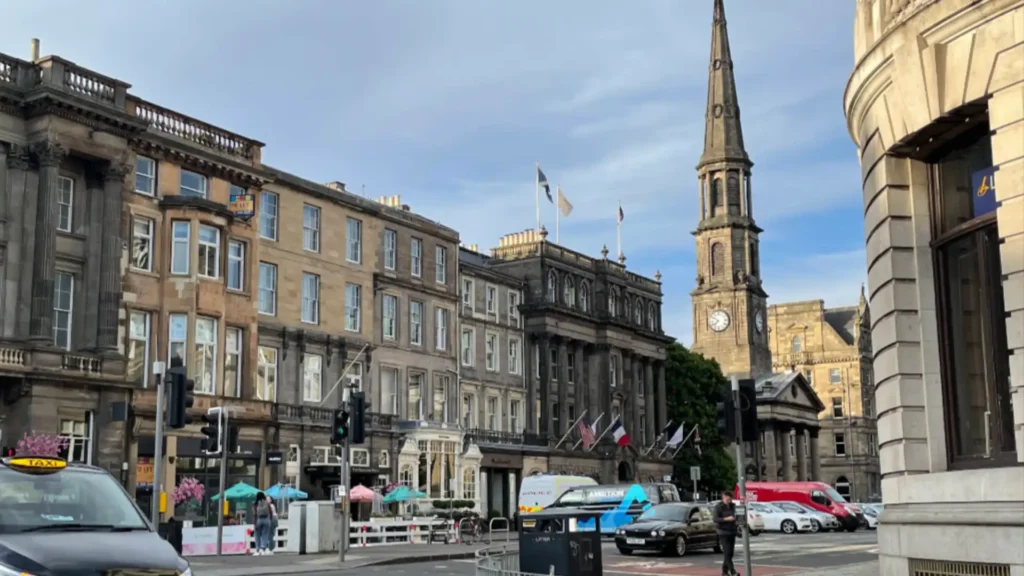
The physical topography of Hanover Street features a severe 15-degree geographical incline that physically dictates the architectural stepped foundations and creates two distinct logistical challenges (freight delivery access and winter vehicle traction) for commercial operators.
City planners deliberately constructed the central road directly over the natural slope of the local terrain. The physical gradient rises steadily and sharply from Princes Street upward toward the George Street intersection. The geographical elevation drops slightly as the road continues aggressively northward toward the Queen Street boundary. This distinct topography defines the daily physical walking experience for thousands of active local commuters. Architects designed the buildings with complex stepped foundations to accommodate two physical structural variables (street angle and basement depth). The steep incline effectively prevents severe water pooling during two natural weather events (heavy rainstorms and rapid snowmelt).
What Future Urban Developments Are Planned For Hanover Street?
Urban planners are currently developing comprehensive modernization strategies for Hanover Street that prioritize expanded pedestrian zones and reduced carbon emissions while legally protecting the fragile UNESCO architectural heritage from aggressive modern commercial infrastructure integration.
The Edinburgh municipal council frequently proposes new traffic limitation schemes to reduce central vehicular air pollution. Future development plans include three specific sustainability goals (wider cycle lanes, electric vehicle chargers, and zero-emission zones). Commercial landlords continuously submit planning applications to internally modernize the strictly protected historic building interiors. The transport department intends to eventually transition all operating bus routes to fully electric transit vehicles. Heritage organizations actively oppose any technological infrastructure that physically damages the original 18th-century stone facades. The street will ultimately serve as a primary testing ground for sustainable historic urban environment management.
Read more: Police Release Image After Serious Assault Outside Edinburgh Nightclub
Read more: Public Meeting Planned As Balerno Faces Local Issues
FAQs About Hanover Street Edinburgh
What Shops Are On Hanover Street Edinburgh?
Hanover Street features a mix of well-known retail chains and smaller independent stores. Shoppers can find large lifestyle brands alongside specialized boutique shops. The retail density makes it one of the busiest commercial avenues in the New Town district.
Is Hanover Street In Edinburgh Safe At Night?
Hanover Street maintains a high level of public safety during nighttime hours. The area is heavily monitored by municipal CCTV systems and private venue security staff. The constant presence of pedestrians and well-lit pavements deters most opportunistic criminal activity.
How Do I Get To Hanover Street From Waverley Station?
Travellers can walk from Waverley Station to Hanover Street in approximately seven minutes. The route requires exiting the station onto Princes Street and walking west toward the National Gallery. Visitors simply turn right upon reaching the prominent Royal Scottish Academy building.
Are There Any Good Pubs On Hanover Street?
The street offers an excellent selection of traditional public houses situated within the historic basement spaces. These venues serve a variety of local Scottish ales and international craft beers. Many of these pubs also provide extensive food menus throughout the afternoon and evening.
Where Can I Park Near Hanover Street Edinburgh?
Street parking on Hanover Street is strictly limited to commercial loading and short-term payment bays. Visitors seeking long-term parking must utilize the nearby multi-story facilities located at the St James Quarter. Public transport remains the most efficient method for accessing this busy central location.