Key Points
- Police Scotland launched Operation Moonbeam 2026 to target firework misuse and violent disorder during Halloween and Bonfire Night.
- Extra public order officers are deployed to help local divisions deal with anti-social behaviour and attacks.
- Edinburgh will run Firework Control Zones from 30 October to 8 November, while Glasgow’s zones run from 30 October to 9 November.
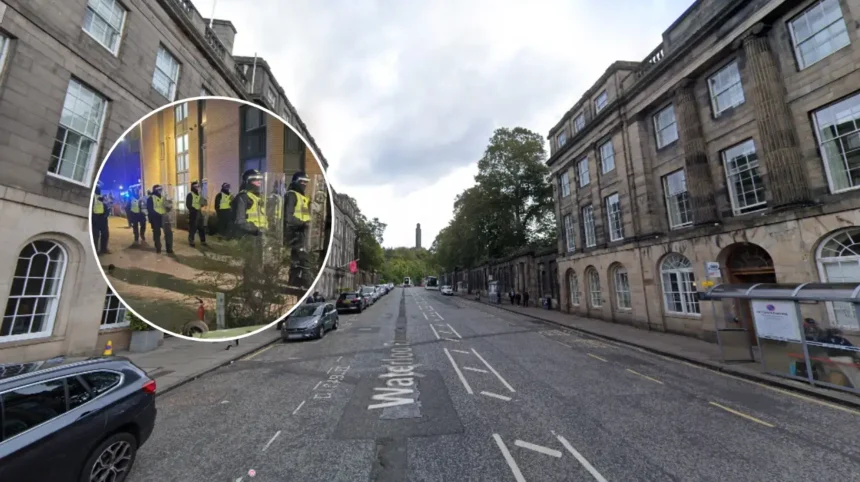
- Police will enforce 14 Dispersal Zones across Edinburgh and another around St Enoch Square and Central Station in Glasgow City Centre.
- Police Scotland and the Crown Office and Procurator Fiscal Service warned that attacks on emergency workers using fireworks will bring severe legal penalties.
Edinburgh (Edinburgh Daily) October 21, 2026 – Police Scotland has confirmed the nationwide deployment of extra public order officers and specialist units under Operation Moonbeam 2026 to tackle anticipated violence, anti-social behaviour, and firework misuse during the upcoming Halloween and Bonfire Night period.
Why are police deploying extra resources for Halloween and Bonfire Night?
As reported by Ryan Nixon of Deadline News, Police Scotland launched Operation Moonbeam 2026 on Wednesday morning to provide local divisions with direct access to public order trained officers during high-risk evenings across the Halloween weekend and through to Guy Fawkes Night.
As reported by Jody Harrison of The Herald, public order resources will be stationed across key regions to counter the reckless use of pyrotechnics and deliberate targeting of emergency service personnel, which has historically escalated during late October and early November.
As reported by Gregor Young of The National, Chief Superintendent David Robertson outlined the rationale for the 2026 operation, stating: “I was encouraged by the reduction in serious offending in 2025, but some areas still experienced unacceptable criminality. Emergency service workers were again targeted with fireworks, bricks and other projectiles as they carried out their duties. This cannot and will not be tolerated.”
“I was encouraged by the reduction in serious offending in 2025, but some areas still experienced unacceptable criminality. Emergency service workers were again targeted with fireworks, bricks and other projectiles as they carried out their duties. This cannot and will not be tolerated.” — Chief Superintendent David Robertson, Police Scotland
What measures are being introduced to restrict fireworks and public gatherings?
As reported by Gregor Young of The National, targeted enforcement measures will include Firework Control Zones (FCZs) across specific regions. These zones will make it a criminal offence to set off fireworks on private property or public spaces within designated boundaries, unless part of a licensed public display.
As reported by Ryan Nixon of Deadline News, FCZs will operate in Edinburgh from 30 October to 8 November, whilst Glasgow will enforce four designated zones from 30 October to 9 November. Furthermore, local authority powers will be bolstered by 14 Dispersal Zones across Edinburgh (covering North West, North East, South West, South East, and City Centre sectors) and a Dispersal Zone in Glasgow City Centre encompassing Central Station and St Enoch Square.
As reported by Jody Harrison of The Herald, Community Safety Minister Kirsten Oswald MSP highlighted the statutory framework, stating: “Recent years have seen widespread misuse of fireworks around Bonfire Night, which puts our communities and emergency services at risk, and this simply cannot be tolerated.”
“Recent years have seen widespread misuse of fireworks around Bonfire Night, which puts our communities and emergency services at risk, and this simply cannot be tolerated.” — Kirsten Oswald MSP, Community Safety Minister
As reported by Jody Harrison of The Herald, Minister Oswald added: “While 2025 saw lower levels of disorder, Police Scotland remains clear that action will be taken against anyone who breaks the law, and I fully support officers and the courts in tackling disorder. A number of measures have been introduced to improve firework safety, including a ban on providing fireworks to under-18s and making attacks on emergency workers using fireworks an aggravating factor that courts can take into account during sentencing.”
How will prosecutors and emergency services handle firework-related crime?
As reported by Jody Harrison of The Herald, prosecutors from the Crown Office and Procurator Fiscal Service (COPFS) are working directly alongside Police Scotland and the Scottish Fire and Rescue Service to ensure swift justice for individuals engaging in Bonfire Night chaos.
As reported by Jody Harrison of The Herald, COPFS confirmed that it “will continue to work alongside policing and justice partners to protect communities, support frontline responders and ensure that criminal behaviour is met with an appropriate prosecutorial response.”
As reported by Sarah Vesti of the Daily Record, the operational launch comes just days after a football match between Clydebank and Dumbarton had to be temporarily halted when fireworks were hurled onto the playing surface, raising immediate alarms among police forces regarding early pyrotechnic disruptions ahead of November 5.
Background of the particular development
Operation Moonbeam was first established by Police Scotland in 2017 following severe nationwide disorder during the Bonfire Night period, during which an Edinburgh police officer sustained serious injuries after being directly struck by a firework.
The annual operation provides a central public order command structure, allowing local policing commands to rapidly call upon riot-trained officers, mounted units, and air support when local resources face hostility.
In subsequent years, volatile disturbances continued to pose severe threats to frontline personnel. During the Bonfire Night period in 2023, 62 emergency service workers sustained injuries after being targeted with petrol bombs, fireworks, and heavy masonry in concentrated hotspots such as Niddrie in Edinburgh and areas within West Lothian and Glasgow.
To curb recurring violence, the Scottish Parliament passed the Fireworks and Pyrotechnic Articles (Scotland) Act 2022, granting local councils statutory authority to designate Firework Control Zones and criminalising the proxy purchase of fireworks for minors. Additional legislative provisions made deliberate attacks on emergency workers involving pyrotechnics an aggravating factor in court sentencing.
Although police reported a notable reduction in widespread riotous behaviour during the 2025 campaign, ongoing anti-social behaviour and pyrotechnic disruptions have necessitated the re-mobilisation of full public order units for 2026.
Prediction
The deployment of extra public order officers, alongside strict Firework Control Zones and Dispersal Zones, will directly affect several key groups across Scotland:
- Local Residents and Business Owners: Residents residing in historically affected neighbourhoods, such as Niddrie, Leith, and Glasgow City Centre, can expect an increased, highly visible police presence. While the enforcement of Dispersal Zones and Firework Control Zones aims to significantly reduce property damage, arson, and street disorder, non-offending residents may experience minor disruptions due to localized travel restrictions, street closures, and heightened patrol activity.
- Emergency Service Responders: Frontline police officers, paramedics, and Scottish Fire and Rescue Service personnel will operate under enhanced protective protocols and direct public order escort. The presence of dedicated specialist support units is designed to minimize injuries and deter coordinated attacks on fire crews responding to deliberate blazes.
- Youths and General Public: Young people and the wider community face strict enforcement of pyrotechnic laws. Individuals caught possessing fireworks in prohibited control zones, supplying fireworks to minors under 18, or congregating in designated Dispersal Zones risk immediate dispersal orders, arrest, and criminal prosecution under strict statutory aggravating factors.