The connection between the city of Edinburgh and the creation of the Harry Potter literary franchise is anchored in historical geography, architecture, and biography. Author J.K. Rowling resided in the Scottish capital during the 1990s while drafting the initial volumes of the seven-part fantasy series. The architectural composition of the Old Town of Edinburgh, characterized by its medieval street plans, Gothic revivals, and steep stone closes, provided direct visual inspiration for key settings within the fictional wizarding world.
- Where Did J.K. Rowling Write the Harry Potter Books in Edinburgh?
- Which Edinburgh Streets and Buildings Inspired Diagon Alley and Hogwarts?
- What Names on the Graves in Greyfriars Kirkyard Appear in the Books?
- Where Are the Best Harry Potter Retail Shops and Experiences Located?
- How Do Guided Literary Tours Impact the Preservation of Edinburgh?
- FAQs About Edinburgh and Harry Potter
- Can you visit the grave of Tom Riddle in Edinburgh for free?
- Is the original Elephant House café open after the fire?
- How long does it take to complete a Harry Potter walking tour in Edinburgh?
- Did J.K. Rowling base the character of Minerva McGonagall on a real person from Edinburgh?
- Where can you see J.K. Rowling’s handprints in the city?
Municipal records confirm that J.K. Rowling utilized various public spaces and commercial establishments within the city to write the manuscripts. This geographical intersection has turned the capital into a primary destination for global cultural tourism, attracting millions of visitors annually to specific municipal sites. The architectural layout of the city acts as a physical archive, preserved under strict heritage conservation laws, reflecting the structural foundations of the fictional universe.
The ongoing cultural relevance of these landmarks generates substantial economic value for the local hospitality, retail, and tourism sectors. Municipal reports demonstrate that literary tourism accounts for a significant percentage of annual visitor spending in Edinburgh. Understanding the exact relationship between these physical urban spaces and the fictional narrative requires a precise analysis of specific cafes, historic graveyards, educational institutions, and luxury hotels scattered across the capital.
Where Did J.K. Rowling Write the Harry Potter Books in Edinburgh?
The drafting of the Harry Potter manuscripts took place across several specific commercial properties located within the Old and New Towns of Edinburgh. The earliest chapters of the first book were composed in a first-floor café located at 6-7 Nicolson Street, which operated under the name Nicolson’s Café during the mid-1990s. This venue was co-owned by the author’s brother-in-law and provided a quiet environment for literary composition before the franchise achieved commercial success.
The property at Nicolson Street later transitioned into a restaurant named Spoon and eventually closed, but the physical structure remains a registered point of historical interest. Another prominent location utilized during the early writing phase was The Elephant House café, situated at 21 George IV Bridge. The author frequented the back room of this establishment due to its expansive windows overlooking the dramatic cliffside silhouette of Edinburgh Castle and the historic Greyfriars Kirkyard.
A severe fire in August 2021 caused extensive structural damage to the George IV Bridge building, forcing a prolonged closure of the original premises. The establishment officially reopened to the public in January 2026, restoring access for international visitors seeking to view the writing space. During the interim closure period, the business expanded by opening a secondary location on Victoria Street, which continues to serve tourists within the medieval city center.
The final chapters of the seventh book, Harry Potter and the Deathly Hallows, were completed inside a luxury hotel in the New Town. J.K. Rowling booked a private room at The Balmoral Hotel, located at 1 Princes Street, to escape public scrutiny during the completion of the series in 2007. The specific room, designated as Room 552, has been preserved as the J.K. Rowling Suite and features an autographed marble bust of Hermes celebrating the exact completion date of January 11, 2007.
Which Edinburgh Streets and Buildings Inspired Diagon Alley and Hogwarts?
Victoria Street, a cobblestone thoroughfare built between 1829 and 1836 by architect Thomas Hamilton, is the primary physical inspiration for the fictional wizarding marketplace known as Diagon Alley. This street features a distinct sweeping curve and is characterized by multi-tiered architecture with vibrant, brightly colored storefronts underneath an upper open-air terrace. The historical shops along this street have traditionally included antiquarian book dealers, specialized artisans, and occult apothecaries, mirroring the commercial composition of the fictional wizarding street.
The structural layout of Victoria Street includes a lower street level and an upper terrace level known as Victoria Terrace, connected by steep stone staircases. This bi-level urban design matches the crowded, vertical aesthetic depicted throughout the descriptions of magical retail districts. The architectural preservation of this site is managed under Edinburgh’s UNESCO World Heritage status, ensuring the structural façade remains unchanged from its nineteenth-century design.
The architectural inspiration for Hogwarts School of Witchcraft and Wizardry is linked to George Heriot’s School, located on Lauriston Place. Founded in 1628 as a hospital for orphaned children, this operational independent school features a distinct sandstone castle structure with multiple turrets, castellated walls, and large gothic windows. The historic institution employs a four-house organizational system for its student body, utilizing unique house names and colors that parallel the internal structure of the fictional academy.
The physical proximity of George Heriot’s School to the cafes where writing occurred allowed the author to observe its striking Renaissance architecture daily. While Edinburgh Castle itself sits prominently on a volcanic crag overlooking the entire city, the specific multi-towered profile of George Heriot’s School aligns more closely with the detailed architectural descriptions found within the text. The school remains an active educational facility, meaning interior access is strictly regulated to protect the student body.
What Names on the Graves in Greyfriars Kirkyard Appear in the Books?
Greyfriars Kirkyard, an active burial ground established by royal charter in 1562, contains several headstones bearing names that match major characters in the Harry Potter series. The most notable monument is the headstone of Thomas Riddell, a gentleman who passed away in 1806 at the age of 72. This physical grave located in the northern section of the cemetery served as the linguistic inspiration for the birth name of the primary antagonist, Lord Voldemort.
The grave of William McGonagall, a nineteenth-century Scottish poet notorious for his uniquely eccentric and technically flawed verse, is also located within the cemetery boundaries. The poet’s surname was chosen by the author to represent the character of Professor Minerva McGonagall, balancing a regal personality with a historically distinct Scottish name. Visitors frequently leave small written tributes and tokens near this specific wall-mounted memorial stone out of respect for the fictional character.
Other legible headstones within the historic graveyard display names such as Elizabeth Moodie and Daniel Scrymgeour, which correspond directly to the characters Alastor Moodie and Rufus Scrimgeour. The presence of these specific names across a single urban cemetery points to the author using the public green space as an active on-site nomenclature reference while formulating character rosters. The physical headstones have experienced accelerated erosion due to increased pedestrian traffic from organized tour groups.
Leonie Blaire-Cooper
The City of Edinburgh Council and heritage preservation organizations manage the footpaths around these specific monuments to prevent structural degradation of the historic cemetery. Heavy rainfall and thousands of daily visitors have necessitated the implementation of reinforced walkways and protective barriers around the Riddell monument. The graveyard remains free and open to the general public daily, functioning simultaneously as a historical sanctuary and a modern literary pilgrimage site.
Where Are the Best Harry Potter Retail Shops and Experiences Located?
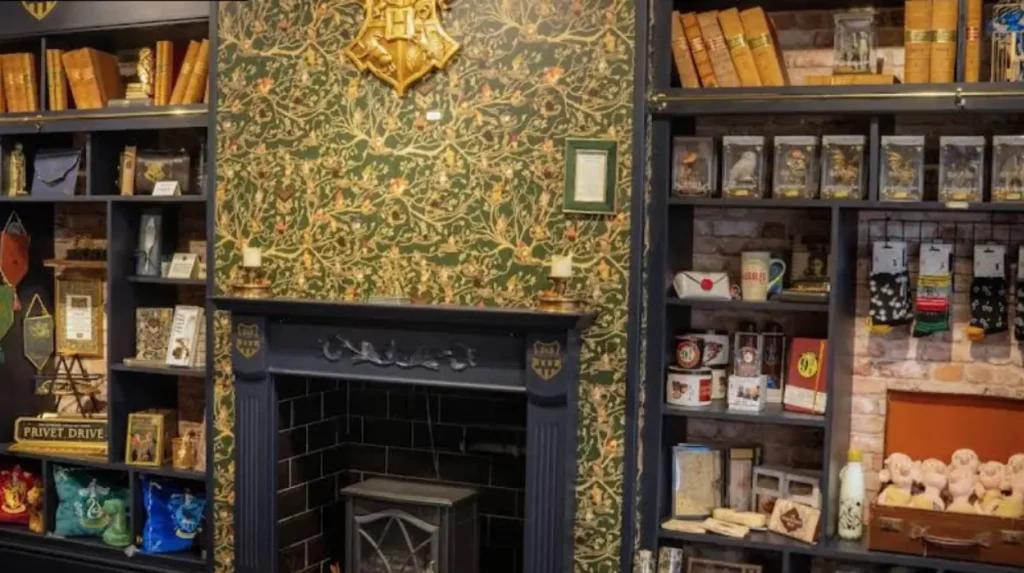
The retail landscape of Victoria Street features specialized establishments dedicated exclusively to licensed merchandise and curated wizarding experiences. The most prominent retail establishment is Museum Context, located at 40 Victoria Street, which occupies a multi-story historical building that originally served as an ironmonger’s shop. This store features an elaborate interior design filled with officially licensed replica wands, academic robes, historical books, and rare collector items.
The top floor of Museum Context features a dedicated interactive space where visitors can photograph a realistic replica of a basilisk creature model. Due to high tourist density, the shop frequently utilizes a exterior queue management system to control the internal occupancy levels of the historic building. Another major themed experience is the Department of Magic, located on Blair Street within the underground vaults of the Old Town.
The Department of Magic provides commercial interactive experiences, including two distinct wizard-themed escape rooms and a dedicated potion-making tavern. Participants in the tavern experience use measuring vials and specialized ingredients to mix custom non-alcoholic or alcoholic beverage cocktails that change color based on chemical pH indicators. The venue requires advance reservations due to strict capacity limits within the historic subterranean stone chambers.
Street-level vendors and cafes along the Royal Mile and Victoria Street also retail carbonated beverage products styled after the fictional drink known as butterbeer. The newly opened Elephant House on Victoria Street provides these themed refreshments alongside traditional Scottish bakery items in an old-fashioned café setting. These commercial establishments convert literary concepts into tangible economic drivers, supporting the local service industry through experiential retail models.
[Discover cultural events and theatrical productions hosted in the capital: https://edinburghdaily.co.uk/area-guide/what-is-the-impact-of-moulin-rouge-at-the-edinburgh-playhouse/]
How Do Guided Literary Tours Impact the Preservation of Edinburgh?
The proliferation of guided walking tours centered on the edinburgh harry potter connection has fundamentally transformed the pedestrian management strategies of the Old Town. The Potter Trail, a prominent tour operator established in 2012, guides large groups of tourists through public spaces, starting from the iconic Greyfriars Bobby statue. These tours operate on a tip-based financial model, making literary history accessible to broad audiences without mandatory upfront ticketing fees.
While these guided excursions provide educational value and employment for local historians, the concentrated foot traffic places structural stress on ancient cobblestone lanes and narrow historic closes. The influx of thousands of pedestrians into quiet residential and historic spaces has prompted regulatory discussions by the City of Edinburgh Council. City planners monitor the environmental impact of tourism on historic monuments, enforcing strict guidelines for tour group sizes to maintain public safety.
The economic benefits generated by these walking tours directly fund wider heritage preservation initiatives across the city center. A portion of the commercial revenue generated by local tourism businesses is collected through municipal business rates to support the maintenance of ancient stone structures. This creates a sustainable cycle where the popularity of modern fiction actively funds the physical restoration of centuries-old Scottish architecture.
The cultural footprint of the series is permanently integrated into the municipal fabric through official memorials, such as J.K. Rowling’s handprints cast in bronze outside the Edinburgh City Chambers on the Royal Mile. These public installations anchor the contemporary literary phenomenon within the long-standing academic and printing history of the city. The capital continues to balance its role as a living historical artifact with its status as a global hub for creative writing and pop-culture tourism.
What Is the Best Way to Explore the Literary Highlights of Edinburgh?
For a complete guide to navigating the historic heart of the capital while minimizing your travel footprint, see our detailed guide on the best way to experience the Edinburgh Central Youth Hostel.
Related Articles
- To learn more about historic literary events and author appearances in the local suburbs, read our report on the Corstorphine Library hosting Flora Johnston.
FAQs About Edinburgh and Harry Potter
Can you visit the grave of Tom Riddle in Edinburgh for free?
Yes, Greyfriars Kirkyard is a public municipal cemetery operated by the City of Edinburgh Council and does not charge an admission fee. Visitors can enter the grounds daily during daylight hours to locate the historical Thomas Riddell monument without purchasing a ticket.
Is the original Elephant House café open after the fire?
The original Elephant House café located on George IV Bridge officially reopened to the public in January 2026 following extensive structural restoration after a 2021 fire. The business also maintains its secondary operational branch on Victoria Street to accommodate high visitor volumes.
How long does it take to complete a Harry Potter walking tour in Edinburgh?
Standard guided walking tours covering the literary landmarks in the Old Town typically require between ninety minutes and two hours of walking. The routes cover roughly one to two miles of terrain featuring steep inclines, cobblestone streets, and historical stone steps.
Did J.K. Rowling base the character of Minerva McGonagall on a real person from Edinburgh?
The surname was taken directly from the memorial stone of William McGonagall in Greyfriars Kirkyard, a nineteenth-century poet who lived in Edinburgh. The character’s personality and magical traits are entirely fictional and do not reflect the historical life of the poet.
Where can you see J.K. Rowling’s handprints in the city?
The bronze cast of the author’s handprints is located permanently in the stone quadrangle directly outside the Edinburgh City Chambers on the historic Royal Mile. The public monument was installed to celebrate the author winning the prestigious Edinburgh Award for cultural contributions.