Photographing the Edinburgh skyline like a local requires strategic vantage points, proper focal length selection, ideal atmospheric timing, and advanced depth-of-field control. Local photographers balance light, relief features, and Scottish heritage architecture to execute crisp, high-contrast, professional cityscape imagery across seasons.
- What makes Edinburgh’s skyline unique for landscape photographers?
- What technical camera gear works best for urban skyline shots?
- Which local vantage points deliver the best view of Edinburgh Castle?
- How do historical architecture and top topography shape framing?
- Which lighting conditions create the most atmospheric cityscape photos?
- How does seasonal weather affect photographic planning in Scotland?
- What camera settings maximize sharpness and exposure in cityscapes?
- How can photographers avoid crowds at popular Edinburgh viewpoints?
- What are the essential legal and safety rules for photographing the city?
- How should urban landscape photos of Edinburgh be edited for maximum impact?
- Which month offers the best weather for photography in Edinburgh?
- Can I use a tripod on Calton Hill and Arthur’s Seat?
- What lens focal length is best for Edinburgh skyline shots?
- Is drone photography permitted over Edinburgh Castle or Holyrood Park?
- Where is the best quiet viewpoint to capture the entire Edinburgh skyline?
The city of Edinburgh presents an extraordinary canvas for landscape and cityscape photographers. Its geological foundation, shaped by ancient volcanic activity and glacial erosion, creates elevated terraces and dramatic basalt cliffs that overlook historic urban centers.
Combining medieval Old Town stone architecture with Georgian New Town urban design creates unique opportunities for layered composition. Capturing these urban elements requires technical proficiency in focal length management, dynamic range control, exposure timing, and atmospheric evaluation.
Photographers who master these technical and geographic principles produce sharp, atmospheric images that highlight the Scottish capital.
The Scottish capital spans fifty-nine square miles across eastern Scotland along the Firth of Forth. Understanding its spatial layout and terrain elevation changes allows photographers to isolate iconic monuments, including Edinburgh Castle, the Scott Monument, and the Balmoral Clock Tower, against broad coastal horizons.
What makes Edinburgh’s skyline unique for landscape photographers?
Edinburgh’s skyline combines dramatic volcanic topography, medieval spires, Georgian street patterns, and coastal light factors. The city features a dramatic urban landscape shaped by extinct volcanoes and glacial gouging, creating elevated vantage points that overlook dense historical architecture.
Edinburgh features a distinct urban landscape shaped by 350-million-year-old extinct volcanoes and subsequent glacial gouging. This natural history created high basalt plugs like Castle Rock and Arthur’s Seat, surrounded by soft sedimentary valleys. The surrounding city grew around these dramatic geological formations, creating multiple elevated viewpoints throughout the city center.
The urban architecture features two complementary styles recognized as a UNESCO World Heritage site since 1995. The Old Town retains its medieval street plan with narrow closes and tall stone tenements. The New Town, designed by James Craig in 1767, showcases orderly Neo-Classical terraces and broad avenues.
Photographers capture contrast between these distinct architectural eras by placing telephoto lenses on nearby hills. The local climate introduces shifting Atlantic weather, fast-moving low clouds, sea fog called haar, and rich low-angle sunlight. These environmental conditions create dynamic visual atmospheres across the cityscape.
What technical camera gear works best for urban skyline shots?
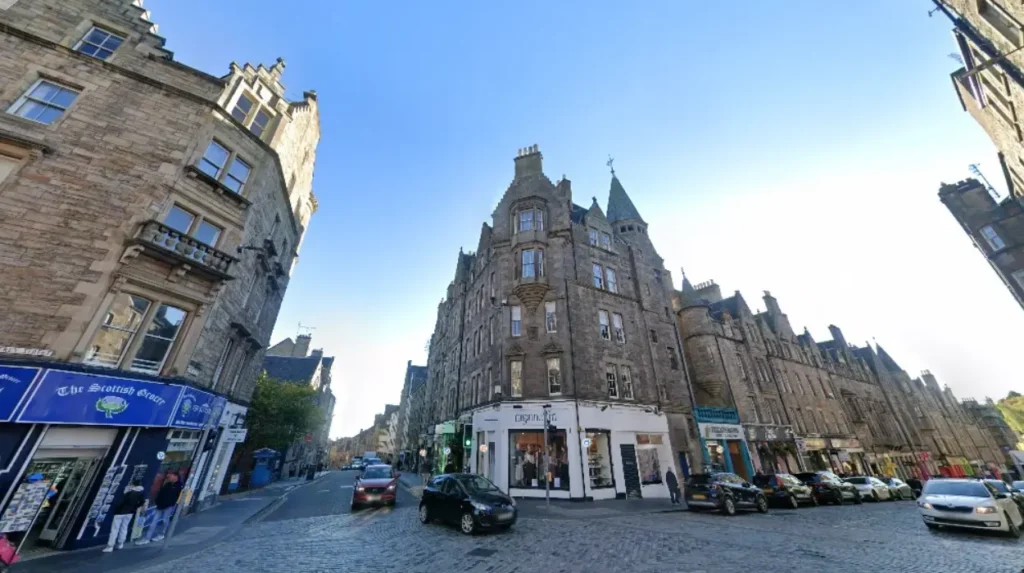
Capturing sharp Edinburgh cityscapes requires full-frame digital camera bodies, telephoto zoom lenses, stable carbon-fiber tripods, remote shutter releases, and neutral density filters. Telephoto lenses compress distance to align city spires, while sturdy tripods ensure long exposure stability during windy conditions.
Full-frame digital cameras offer superior dynamic range and high-ISO performance, which are essential for high-contrast sunrise and sunset shots. Cameras with 24 to 45 megapixels capture fine architectural details, such as carved ashlar sandstone and roof tiles, across vast panoramic fields of view.
Lens selection dictates the visual compression of Edinburgh’s layered spires. A 70-200mm f/2.8 or f/4 telephoto lens compresses distance, bringing Edinburgh Castle closer to background features like the Pentland Hills. Wide-angle lenses like 16-35mm excel when photographing sweeping panoramas from high locations like Arthur’s Seat.
Tripods must withstand strong Scottish coastal winds, which frequently reach 20 to 30 miles per hour on exposed summits like Calton Hill. Heavy-duty carbon-fiber tripods with spiked feet provide stable support during multi-second exposures. Neutral density filters enable longer exposure times to smooth out low-hanging clouds and soften choppy coastal waters.
Which local vantage points deliver the best view of Edinburgh Castle?
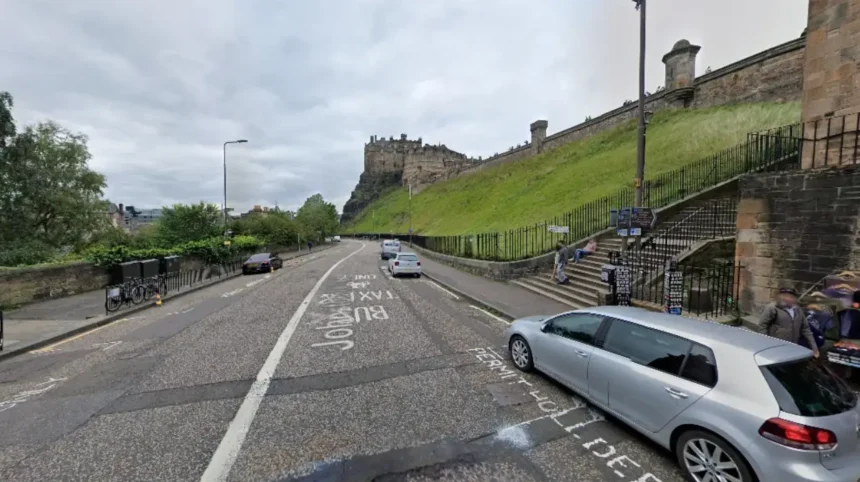
The best local vantage points for photographing Edinburgh Castle include the Vennel Steps, Calton Hill, the Ross Fountain in Princes Street Gardens, and Johnston Terrace. Each location offers unique angles, framing choices, and foreground elements that emphasize the fortress atop Castle Rock.
The Vennel Steps in the Grassmarket offer a classic view of Edinburgh Castle framed by historical stone walls and traditional streetlamps. Looking up this narrow alleyway creates a strong leading line toward the castle’s southern ramparts, perfect for vertical compositions during the blue hour.
The Ross Fountain, installed in West Princes Street Gardens in 1872, provides a striking focal point beneath the castle’s northern cliff face. Photographers position wide-angle lenses low to the ground to frame the fountain’s cast-iron details against the castle above.
Calton Hill offers an elevated view from the east, showing the castle alongside the Balmoral Hotel clock tower. Photographers using 100mm to 200mm telephoto lenses can isolate the castle against sunset colors in the western sky, framing it above the city’s historic rooftops.
How do historical architecture and top topography shape framing?
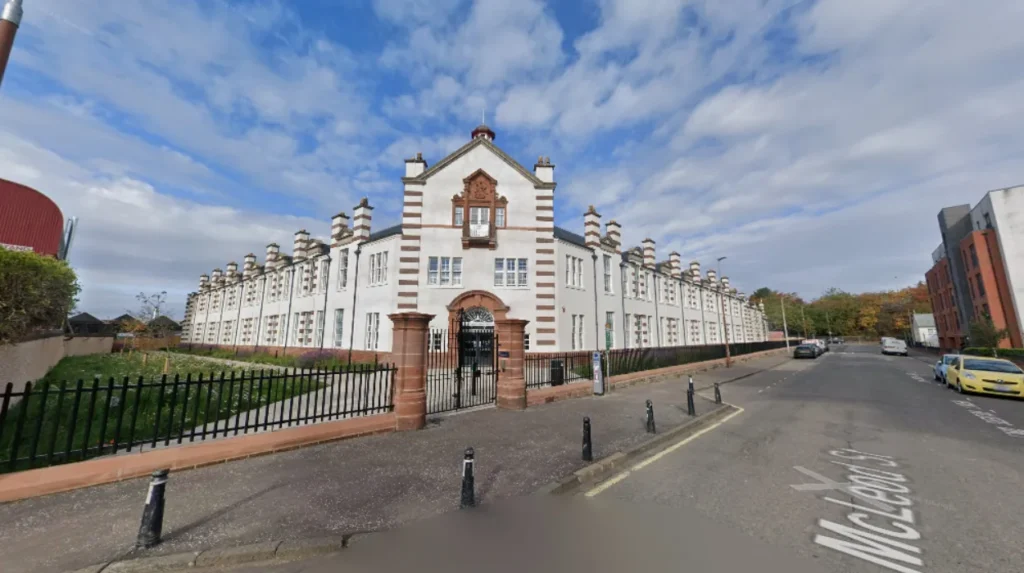
Historical architecture and varied topography create natural framing tools through winding alleyways, towering steeples, elevated ridges, and natural volcanic slopes. Photographers align steeples with background hills, using dark foreground stone structures to guide the viewer’s gaze toward central landmarks.
Edinburgh’s steep street network creates visual channels that naturally guide camera framing. The Royal Mile slopes downward from Edinburgh Castle at 135 meters elevation to the Palace of Holyroodhouse at 40 meters, offering multiple street-level framing perspectives.
Architectural landmarks like the Scott Monument, built in 1846, act as vertical anchors within horizontal cityscapes. Aligning the 200-foot Victorian Gothic spire with the distant waters of the Firth of Forth creates strong visual depth and context within the frame.
Volcanic ridges such as Salisbury Crags frame lower urban districts in landscape photos. Photographers use these dark basalt cliff edges in the foreground to draw attention toward the illuminated city center beyond.
Which lighting conditions create the most atmospheric cityscape photos?
Golden hour, blue hour, overcast atmospheric mist, and twilight provide optimal lighting for capturing Edinburgh’s textured stone buildings. Low sunlight accentuates sandstone textures, while evening blue hour creates a clean balance between cool ambient skylight and warm artificial street lighting.
Golden hour occurs shortly after sunrise and before sunset, casting warm light across Craigleith sandstone buildings. This low light highlights architectural textures, carved facades, and urban contours while casting soft shadows across the city’s valleys.
Blue hour occurs roughly 20 to 40 minutes after sunset, turning the sky a deep indigo color. This cool ambient background contrasts nicely with the warm gold and orange streetlights, shop windows, and floodlit castle walls, making it ideal for balanced cityscapes.
Scottish sea fog, known locally as haar, occasionally rolls in off the North Sea to blanket the lower city. High peaks like Arthur’s Seat rise above this fog layer, offering opportunities to capture steeples and monuments breaking through a sea of mist.
How does seasonal weather affect photographic planning in Scotland?
Seasonal weather changes dramatically alter daylight hours, cloud coverage, temperature, and atmospheric clarity in Edinburgh. Summer brings up to 17 hours of daily light with late sunsets, while winter provides brief 7-hour days with low-angle light that lasts all afternoon.
Summer provides long twilight periods, with sunset occurring as late as 10:00 PM in June. The sun tracks across the northern horizon, illuminating the northern sides of historical buildings that remain shaded throughout the rest of the year.
Winter brings shorter days, with the sun setting around 3:30 PM in December. The sun stays low on the horizon all day, generating soft golden light that works well for photography throughout the brief daylight hours.
Spring and autumn bring clear air and dynamic weather systems that clear quickly across the Firth of Forth. Rain showers often give way to vibrant rainbow displays and dramatic sunbursts against dark storm clouds over the Old Town skyline.
What camera settings maximize sharpness and exposure in cityscapes?
Maximizing sharpness and exposure accuracy requires manual exposure mode, base ISO values between 64 and 100, aperture settings from f/8 to f/11, and manual focus via live view. These settings ensure edge-to-edge sharpness while minimizing digital noise across the sensor.
Aperture settings between f/8 and f/11 deliver optimal sharpness across most camera lenses without introducing optical diffraction. This range maintains a deep depth of field, keeping both foreground elements and distant landmarks in sharp focus.
Base ISO settings between 64 and 100 preserve dynamic range and reduce digital noise in dark shadow areas. When shooting handheld in low light, raise the ISO setting to maintain shutter speeds fast enough to prevent camera shake.
Using a two-second shutter delay or a remote shutter cable prevents camera shake caused by pressing the shutter button. Disabling optical image stabilization when mounted on a tripod ensures sensor stability during long exposures.
How can photographers avoid crowds at popular Edinburgh viewpoints?
Avoiding crowds requires photographing during early morning twilight, choosing lesser-known vantage points, visiting during shoulder seasons, and monitoring live weather forecasts. Shooting at sunrise ensures clear, unobstructed views of popular spots like Calton Hill and the Royal Mile.
Arriving at popular viewpoints 30 minutes before sunrise guarantees quiet access to top locations. Iconic spots like Calton Hill, the Vennel, and the Castle Esplanade are usually empty at dawn, allowing photographers to work without tourists in their frame.
Lesser-known locations offer quieter alternatives with broad views of the city skyline. Blackford Hill, located two miles south of the city center, provides sweeping views of Edinburgh Castle and Arthur’s Seat without the tourist crowds found downtown.
Visiting Edinburgh during shoulder seasons like November, February, or March significantly reduces tourist numbers compared to peak summer months like August. These quieter months offer peaceful shooting conditions at all main vantage points across the city.
What are the essential legal and safety rules for photographing the city?
Photographers in Edinburgh must follow public access laws, drone restrictions, commercial permit requirements, and summit safety rules. Drones are prohibited in central parks and near Holyrood Palace, while hiking viewpoints like Arthur’s Seat require sturdy footwear and care along cliff edges.
Street and landscape photography is legal in all public spaces across Scotland under the Land Reform Act 2003. Commercial shoots featuring professional models or large crews require permits from the City of Edinburgh Council or Historic Environment Scotland.
Drone usage is heavily restricted across central Edinburgh by Civil Aviation Authority regulations. Holyrood Park, Arthur’s Seat, and Edinburgh Castle are designated flight restriction zones, where unauthorized drone operations can result in strict legal fines.
Safety awareness is essential when navigating steep terrain like Salisbury Crags and Arthur’s Seat. Paths feature uneven volcanic rock that becomes slippery when wet, requiring sturdy hiking boots and careful foot placement along high cliff edges.
How should urban landscape photos of Edinburgh be edited for maximum impact?
Editing Edinburgh landscape photos requires balanced dynamic range, adjusted white balance, clean local contrast, and corrected lens distortion. Editing software helps restore natural sandstone warmth while highlighting shadow details in dark slate roofs.
Raw processing software like Adobe Lightroom or Capture One allows precise adjustments to highlights and shadows. Lowering bright sky highlights brings out cloud textures, while opening dark shadows reveals architectural details within stone tenements.
Setting white balance to daylight between 5000K and 5500K preserves the warm, golden tone of Scottish sandstone. During blue hour photos, adjusting color temperature to 3800K enhances deep indigo skies without altering orange streetlights.
Correcting lens distortion and straightening vertical lines prevents architectural leaning in wide-angle photos. Applying moderate sharpening while masking smooth sky areas keeps image files looking clean, crisp, and natural.
Which month offers the best weather for photography in Edinburgh?
May and September provide the most reliable balance of clear skies, moderate temperatures, and manageable daylight hours. Spring and autumn bring fewer tourists and cleaner air, making these months ideal for capturing crisp urban landscape photos.
Can I use a tripod on Calton Hill and Arthur’s Seat?
Yes, tripods are permitted across public parks and hills throughout Edinburgh. Ensure your tripod legs do not block narrow walking paths, and use spiked feet or weight bags to stay stable against strong hill winds.
What lens focal length is best for Edinburgh skyline shots?
A 70-200mm telephoto lens works best for capturing compressed, layered views of city spires from distant vantage points. A 24-70mm lens offers versatile focal lengths for general street scenes and wider architectural compositions.
Is drone photography permitted over Edinburgh Castle or Holyrood Park?
No, flying drones over Edinburgh Castle or Holyrood Park is prohibited without written permits from Historic Environment Scotland and the Civil Aviation Authority. Central Edinburgh contains strict airspace restrictions to protect historic sites and public safety.
Where is the best quiet viewpoint to capture the entire Edinburgh skyline?
Blackford Hill offers a peaceful alternative to busier spots, located two miles south of the city center. Its summit provides sweeping panoramic views of Edinburgh Castle, Arthur’s Seat, and the Firth of Forth without large tourist crowds.