Unwritten rules in Edinburgh hospitality venues dictate seating selection, payment methods, ordering processes, and tipping customs across all traditional establishments. Navigating these cultural norms ensures smooth interactions, respectful engagement, and appropriate adherence to local Scottish social standards.
- How Do You Order Drinks and Food in Traditional Edinburgh Pubs?
- What Are the Rules for Buying Rounds and Tipping in Scotland?
- What Seating Customs Apply in Busy Edinburgh Pubs and Cafés?
- How Do Child and Dog Access Rules Operate in Edinburgh Establishments?
- What Is the Etiquette for Ordering Coffee and Working in Cafés?
- What Are the Key Cultural Missteps to Avoid in Edinburgh Venues?
Edinburgh contains over 700 licensed premises and hundreds of independent coffee shops operating within a distinct cultural framework.
The Scottish Licensing Act 2005 establishes strict guidelines for alcohol service, venue entry times, and child access restrictions throughout Scotland. Historical customs merged with modern commercial practices to shape how residents and visitors interact within social spaces.
Understanding these social expectations prevents misunderstandings between customers and venue staff. Pubs and cafés fulfill distinct roles in neighborhood social life, requiring different behavioral expectations from patrons. Respecting local customs supports local business operations and maintains the unique atmosphere of Scottish hospitality environments.
How Do You Order Drinks and Food in Traditional Edinburgh Pubs?
Patrons in traditional Edinburgh pubs order directly at the main bar counter instead of waiting for table service. Customers should queue naturally along the bar, wait for eye contact from the bartender, state their complete order clearly, and pay immediately.
Bar service remains the standard ordering method across independent Scottish drinking establishments. Customers line up along the counter rather than forming a single file line behind a sign. Bartenders monitor arrival order and call on patrons systematically based on their arrival time.
When the bartender approaches, state the complete drink and food order together to streamline preparation. Draft beers, ales, spirits, and non-alcoholic drinks require distinct pouring times. Paying immediately after receiving the beverage avoids confusion during busy operational hours.
Table service occurs primarily in gastropubs or venues explicitly offering dining areas. Signs at entry doors indicate whether patrons must wait to be seated or proceed directly to the bar. Observing the behavior of local patrons upon entry provides immediate guidance on service style.
What Are the Rules for Buying Rounds and Tipping in Scotland?
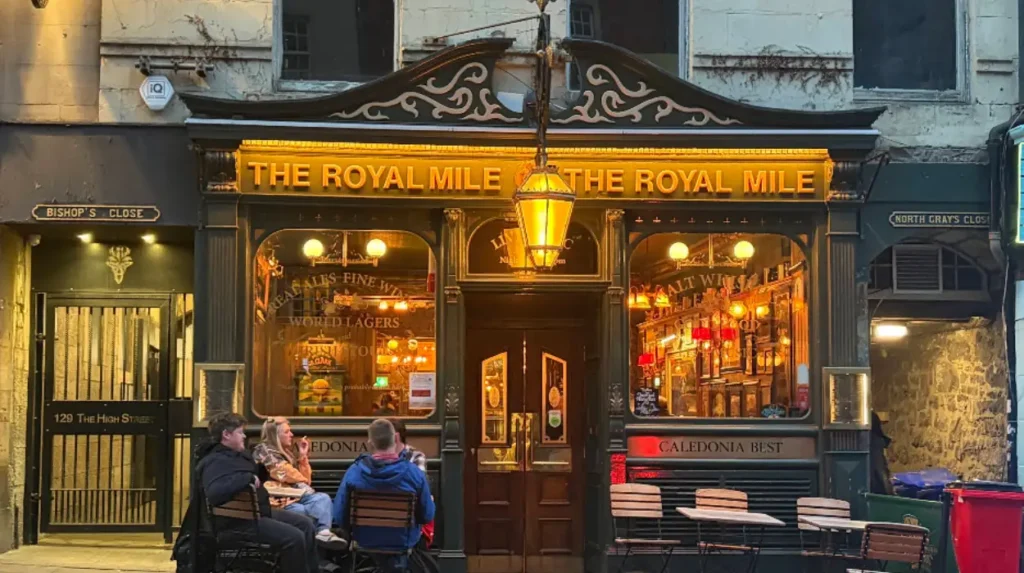
Social groups in Scottish pubs buy drinks in rounds where one person purchases beverages for the entire group sequentially. Tipping is not strictly mandatory, but leaving small loose change or offering a drink tip to staff remains common practice.
Buying rounds forms a core social contract among group drinkers in Edinburgh establishments. Every member of the group purchases a full round of drinks in turn until everyone has contributed equally. Opting out requires declining drinks early in the gathering to avoid disrupting group purchasing dynamics.
Tipping practices in Scottish pubs differ significantly from North American hospitality standards. Bartenders do not expect fixed percentage tips on individual drink orders at the counter. Offering to buy the bartender a drink by saying keep the change is a customary gesture.
In sit-down pub dining settings, a service charge of 10 to 12 percent is frequently included or added voluntarily. Table servers appreciate tips left in cash directly on the payment tray or through card machine processing. Direct tipping directly rewards good customer service without creating mandatory financial burdens.
What Seating Customs Apply in Busy Edinburgh Pubs and Cafés?
Seating in Edinburgh hospitality venues operates on a first come first served basis unless table reservations are clearly displayed. Sharing large tables with strangers in crowded pubs is acceptable after asking permission directly from current occupants.
Finding seating during peak hours requires an understanding of shared space social expectations. When empty tables are unavailable, asking existing patrons if vacant chairs are taken is entirely appropriate. Joining a table requires maintaining personal space and avoiding intrusive conversation unless invited.
Reserving tables with jackets or bags while ordering at the bar is generally tolerated for short periods. Leaving items unattended for extended durations can lead to staff moving belongings to accommodate other waiting customers. Clear communication with nearby patrons helps secure a table while visiting the counter.
Cafés during peak lunch hours often implement table time limits to ensure equal access for all guests. Working on laptops is restricted during busy meal hours in many independent Edinburgh coffee shops. Respecting posted signs regarding laptop usage preserves seating availability for dining customers.
How Do Child and Dog Access Rules Operate in Edinburgh Establishments?
Child access in Edinburgh pubs is governed by strict licensing laws requiring under 18s to leave by 20:00 or 22:00 when food is served. Dog friendly policies are widely adopted across venues displaying explicit welcome signage near entryways.
The Licensing Scotland Act mandates specific operating conditions regarding minors in licensed premises. Pubs holding children’s certificates permit families with children only when food is consumed on site. Venues strictly enforce mandatory departure times for safety, legal compliance, and regulatory adherence.
Parents must keep children seated and supervised throughout their stay in pub environments. Running around bar areas or interfering with staff carrying hot dishes poses serious safety hazards. Staff retain legal authority to ask families to leave if safety regulations are compromised.
Edinburgh features a highly dog friendly hospitality culture across both pubs and coffee establishments. Dogs must remain on short leashes and rest calmly on the floor beside their owners at all times. Feeding pets directly from table crockery or allowing dogs onto chairs violates basic hygiene rules.
What Is the Etiquette for Ordering Coffee and Working in Cafés?
Café etiquette requires placing orders at the front counter, specifying takeaway or sit in, and clearing personal items promptly. Remote workers must order items regularly and vacate tables during peak service hours to respect business operations.
Ordering coffee in Edinburgh cafés requires specifying whether the order is for consumption inside or takeaway. Rates can differ slightly due to national tax structures applied to hot food and drink consumed on site. Stating consumption preferences immediately assists staff in selecting proper cups and processing orders efficiently.
Using café spaces as remote working locations carries unspoken rules regarding duration and expenditure. Purchasing a single espresso while occupying a multi-person table for hours creates financial losses for independent owners. Ordering additional items every hour demonstrates respect for small business operators.
Plugging electronic devices into wall outlets requires permission from café staff to ensure electrical safety. Blocking walkways with charging cables creates tripping hazards for employees carrying hot beverages. Leaving tables tidy by returning trays to designated collection stations maintains clean environments for incoming guests.
What Are the Key Cultural Missteps to Avoid in Edinburgh Venues?
Major missteps include snapping fingers at staff, shouting across bars, ignoring local queuing norms, and misinterpreting Scottish humor. Respectful communication, patient waiting, and polite engagement ensure positive interactions across all Edinburgh establishments.
Attempting to gain a bartender’s attention through waving cash, whistling, or calling out is considered disrespectful. Bartenders track customer arrival order mentally and serve patrons accordingly. Waiting calmly along the counter ensures prompt service without causing friction among staff or fellow patrons.
Direct humor and dry wit are common components of Scottish social interaction across public spaces. Teasing or light ribbing should not be interpreted as hostility or poor service quality. Responding with relaxed lightheartedness creates friendly rapport with venue staff and local regulars.
Overconsuming alcohol and causing noise disturbances breaches local social boundaries and licensing standards. Pub staff are legally obligated to refuse service to intoxicated individuals under Scottish law. Coarse language, aggressive behavior, or disrespecting venue guidelines results in immediate removal from premises.
What time do pubs in Edinburgh close on weekends?
Standard closing times for Edinburgh pubs are 00:00 on weekdays and 01:00 on Fridays and Saturdays. Late night venues with special extended licenses operate until 03:00 in the city center.
Can you pay with cash in Edinburgh pubs and cafés?
Card and contactless payments are accepted at almost all Edinburgh establishments. Some small independent coffee shops prefer contactless payments, but legal tender cash remains widely accepted.
Do I need to make a reservation for an Edinburgh pub?
Reservations are generally unnecessary for traditional drinking pubs where walk-ins are standard. Booking in advance is recommended for gastropubs, high end dining venues, or large groups during peak hours.
Is tap water free in Edinburgh pubs and restaurants?
Licensed premises in Scotland are legally required to provide free tap water to customers upon request. Mains water in Edinburgh is high quality, safe to drink, and readily served at bars.
What is the legal drinking age in Edinburgh pubs?
The legal age to purchase and consume alcohol in Scottish pubs is 18 years old. Establishments strictly enforce Challenge 25 policies requiring age verification identification for anyone appearing under 25.