
Printing began in Edinburgh in September 1507 when King James IV granted a royal patent to Walter Chepman and Androw Myllar. They established the first Scottish printing press on Southgait, now known as the Cowgate, to produce liturgical and literary texts.
- How did the Scottish Reformation impact Edinburgh publishers?
- Why did Edinburgh become a global publishing hub during the Scottish Enlightenment?
- What role did Encyclopaedia Britannica play in Edinburgh publishing?
- Which nineteenth-century publishing houses dominated Edinburgh?
- How did cartography and medical publishing thrive in Edinburgh?
- What happened to Edinburgh’s printing industry in the twentieth century?
- How does Edinburgh’s publishing sector operate today?
- Why was Edinburgh called the Athens of the North in relation to publishing?
- Where is the oldest surviving printing press location in Edinburgh?
- What is the oldest publishing house still operating in Edinburgh?
- How many publishers are currently based in Edinburgh?
- What is the Chepman and Myllar Press famous for?
Walter Chepman was a wealthy Edinburgh merchant and royal clerk who financed the printing enterprise. Androw Myllar was a bookseller who learned the printing trade in Rouen, France.
King James IV issued the royal patent on 15 September 1507 to eliminate the need for importing books from England and continental Europe. The royal decree granted Chepman and Myllar a monopoly on printing law books, acts of parliament, chronicles, and mass books in Scotland.
Their initial output consisted of eleven short pamphlets known as the Chepman and Myllar Prints, which were produced in 1508. These pamphlets included works by prominent Scottish poets such as William Dunbar and Robert Henryson.
The Southgait press operated near the Magdalen Chapel in Edinburgh’s Old Town. Chepman and Myllar imported French printing presses, metal typefaces, and rag paper to establish their workshop.
The first dated book printed at this facility was The Maying or Disport of Chaucer, completed on 4 April 1508. Another major early publication was the Aberdeen Breviary, commissioned by Bishop William Elphinstone in 1509 and completed in 1510.
The Aberdeen Breviary replaced the English Sarum Use liturgy with a distinct Scottish calendar of saints. Following the death of King James IV at the Battle of Flodden in 1513, printing activity in Edinburgh experienced a temporary decline.
How did the Scottish Reformation impact Edinburgh publishers?

The Scottish Reformation in 1560 transformed Edinburgh into a center for Protestant religious publishing and political pamphleteering. The Scottish Parliament enacted strict censorship laws while printers produced vernacular Bibles, Calvinist tracts, and church governance documents for the new Kirk.
The establishment of Protestantism as the national religion created an immediate demand for religious texts in the Scots and English languages. Printers such as Robert Lekpreuik, Thomas Bassandyne, and Alexander Arbuthnot received licenses from the General Assembly of the Church of Scotland.
In 1579, Thomas Bassandyne and Alexander Arbuthnot completed the Bassandyne Bible, which was the first Bible printed in Scotland.
The Scottish Parliament passed an act requiring every parish church and wealthy household to purchase a copy of this Geneva Bible edition. Printing workshops clustered around the High Street and St Giles Cathedral to serve the clerical and legal professions.
State censorship strictly regulated all printed material during the sixteenth and seventeenth centuries. The Privy Council of Scotland and the Town Council of Edinburgh required printers to obtain licenses before publishing any book or pamphlet.
In 1551, the Parliament of Scotland passed the first censorship statute prohibiting the printing of ballads, songs, and blasphemous rhymes without royal approval. Printers who published unauthorized Catholic treatises or seditious political pamphlets faced fines, confiscation of presses, and imprisonment.
Despite these restrictions, Edinburgh presses produced over 3,000 distinct titles between 1560 and 1700, establishing a permanent commercial publishing infrastructure in the capital.
Why did Edinburgh become a global publishing hub during the Scottish Enlightenment?
Edinburgh became a global publishing hub during the eighteenth century due to high literacy rates, prestigious universities, and a network of Enlightenment philosophers. Publishers collaborated with thinkers like David Hume and Adam Smith to distribute foundational works across Europe and North America.
The Union of the Parliaments in 1707 shifted political power to London, which prompted Edinburgh intellectuals to focus on law, philosophy, medicine, and literature. The University of Edinburgh attracted international scholars and created a large academic market for textbooks and scientific treatises.
Prominent Edinburgh printers and booksellers, including William Creech, Gavin Hamilton, and Thomas Ruddiman, formed partnerships with London publishers to secure wider distribution.
William Creech operated a famous bookshop in the Luckenbooths near St Giles Cathedral, serving as the primary meeting place for the city’s literary elite. Creech published the Edinburgh edition of Robert Burns’s Poems, Chiefly in the Scottish Dialect in 1787, selling over 3,000 copies to subscribers.
Copyright law changes directly accelerated the growth of Edinburgh’s publishing industry during this period. The Statute of Anne in 1710 established a 14-year copyright term in Great Britain, challenging the perpetual copyright claims of London booksellers.
In 1774, the House of Lords ruled in the landmark case Donaldson v Becket, which ended perpetual copyright and placed older English literature into the public domain. Alexander Donaldson, an Edinburgh bookseller, led this legal challenge by opening a shop in London to sell affordable reprints of classic works.
This legal victory enabled Edinburgh publishers to legally print and export inexpensive editions of Shakespeare, Milton, and Enlightenment texts worldwide.
What role did Encyclopaedia Britannica play in Edinburgh publishing?
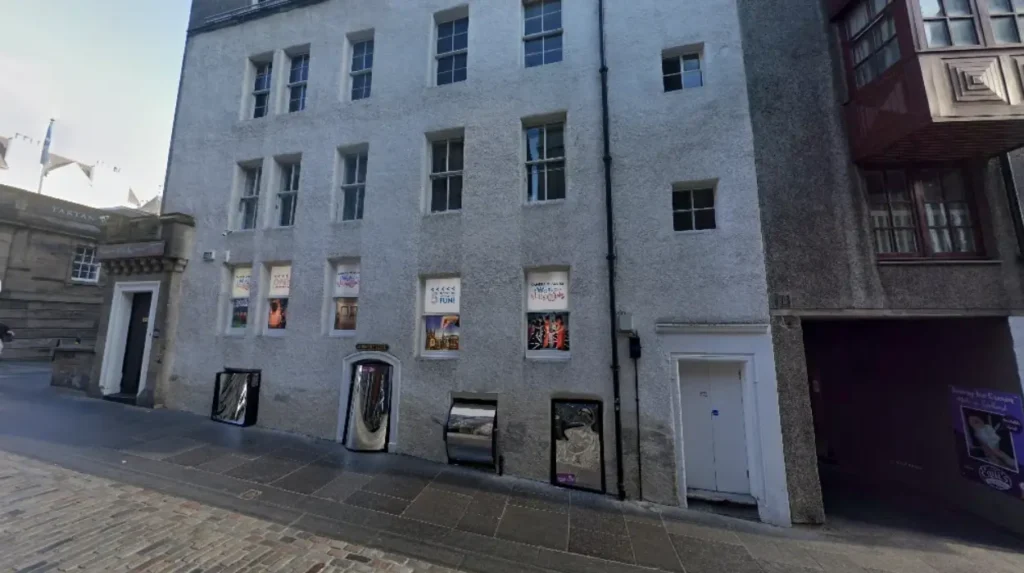
Encyclopaedia Britannica originated in Edinburgh in 1768 as a three-volume reference work edited by William Smellie. Its systematic organization of human knowledge demonstrated the technical precision of Edinburgh engravers, printers, and editors, turning the city into a leader in reference publishing.
Three Edinburgh residents founded the Encyclopaedia Britannica: engraver Andrew Bell, printer Colin Macfarquhar, and scholar William Smellie. They published the first edition in weekly parts between December 1768 and 1771, eventually compiling 2,659 pages and 160 copperplate engravings.
Unlike earlier encyclopedias that arranged topics in fragmented alphabetical entries, Smellie organized major subjects into comprehensive, book-length treatises.
The first edition sold out its entire print run of 3,000 copies, prompting immediate plans for expanded editions. The second edition grew to ten volumes in 1784, and the third edition reached eighteen volumes by 1797.
The success of Encyclopaedia Britannica established Edinburgh as the premier center for reference books, atlases, and educational texts. Archbald Constable acquired the copyright to the encyclopedia in 1812 and commissioned famous Enlightenment thinkers, including Dugald Stewart and Sir Walter Scott, to write major articles.
Constable added a six-volume supplement between 1816 and 1824 that introduced modern biography and scientific breakthroughs. Later in the nineteenth century, the Edinburgh firm Adam and Charles Black purchased the copyright and published the seventh, eighth, and ninth editions.
The ninth edition, completed in 1889, became known as the Scholars’ Edition due to its rigorous academic standards.
Which nineteenth-century publishing houses dominated Edinburgh?
Nineteenth-century Edinburgh publishing was dominated by major firms including Archibald Constable, William Blackwood, Thomas Nelson, and W. and R. Chambers. These companies pioneered modern periodical journalism, mass-market educational books, and steam-powered printing technologies to reach global audiences.
Archibald Constable transformed British publishing by paying unprecedented advances to authors such as Sir Walter Scott. In 1802, Constable launched the Edinburgh Review, a quarterly Whig periodical edited by Francis Jeffrey that achieved a circulation of 13,000 copies.
To counter the Whig influence of the Edinburgh Review, William Blackwood founded Blackwood’s Edinburgh Magazine in 1817 as a Tory literary journal.
Blackwood’s Magazine introduced serialized fiction and launched the careers of authors like James Hogg, John Galt, and George Eliot. Both firms established Edinburgh as a serious rival to London in literary prestige and editorial innovation.
Brothers William and Robert Chambers founded W. and R. Chambers in 1832 to provide affordable educational literature for the working classes. Their flagship publication, Chambers’s Edinburgh Journal, cost one and a half pence and reached a weekly circulation of 84,000 copies within two years.
They also published Chambers’s Encyclopaedia in 1868, providing an accessible alternative to the expensive Encyclopaedia Britannica.
Simultaneously, Thomas Nelson and Sons operated a massive printing works at Parkside near Holyrood Park, employing over 1,000 workers. Thomas Nelson invented the rotary printing press with curved stereotype plates in 1850, which allowed continuous paper rolls to be printed at high speeds.
How did cartography and medical publishing thrive in Edinburgh?
Cartography and medical publishing thrived in Edinburgh through specialized firms like John Bartholomew and Son and E. and S. Livingstone. These publishers leveraged the city’s geographic societies and medical schools to produce precision maps, anatomical atlases, and clinical textbooks.
John Bartholomew established a map-engraving business in Edinburgh in 1826, which became internationally renowned for precision cartography. His grandson, John George Bartholomew, co-founded the Royal Scottish Geographical Society in 1884 and pioneered the use of layer coloring to show elevation on maps.
The firm produced the Times Survey Atlas of the World in 1922 and supplied road maps for millions of motorists across the British Empire. Another major cartographic firm, W. and A. K. Johnston, operated in Edinburgh from 1825 and produced the first physical atlas of natural phenomena in 1848.
These mapmakers relied on skilled copperplate engravers and lithographers trained in Edinburgh’s technical schools.
Medical publishing grew directly alongside the international reputation of the University of Edinburgh Medical School. Publishers such as Maclachlan and Stewart and E. and S.
Livingstone printed standard surgical manuals and anatomical textbooks used throughout Europe and North America. In 1855, the Edinburgh Medical Journal began publication, documenting major clinical advances including James Young Simpson’s use of chloroform anesthesia and Joseph Lister’s antiseptic surgery techniques.
E. and S. Livingstone later merged with Longman in 1968 to form Churchill Livingstone, which remains one of the world’s leading medical publishing imprints.
What happened to Edinburgh’s printing industry in the twentieth century?
In the twentieth century, Edinburgh’s traditional printing industry declined due to corporate consolidation, rising labor costs, and the shift toward digital typesetting. Heavy industrial printing presses closed across the city, while independent literary publishers and academic presses adapted to specialized markets.
During the first half of the twentieth century, printing remained one of Edinburgh’s largest manufacturing employers, alongside brewing and banking. Major printing factories operated in areas such as Sighthill, Fountainbridge, and Leith, producing bank notes, postage stamps, Bibles, and textbooks.
Firms like Morrison and Gibb, R. and R. Clark, and T. and A. Constable employed thousands of compositors, pressmen, and bookbinders. However, after World War II, London-based conglomerates acquired many historic family-owned Edinburgh publishing houses, moving editorial decision-making south.
The introduction of phototypesetting and offset lithography in the 1960s and 1970s replaced traditional hot-metal Linotype machines. Many Edinburgh printing firms failed to invest in the new equipment or faced industrial disputes over automation and staffing reductions.
By the 1980s, major printing works such as Thomas Nelson’s Parkside factory and William Blackwood’s George Street offices closed permanently. Despite the loss of large-scale industrial printing, Edinburgh retained a strong publishing workforce focused on editorial design, academic journals, and independent book production.
How does Edinburgh’s publishing sector operate today?
Today, Edinburgh operates as a designated UNESCO City of Literature with a dynamic sector of independent publishers, academic presses, and digital media companies. Modern Edinburgh publishers produce over 2,000 new titles annually, focusing on Scottish fiction, educational resources, and international rights.
In October 2004, UNESCO named Edinburgh the world’s first City of Literature in recognition of its five-century publishing heritage and living literary culture. Today, the city hosts more than 50 active publishing houses, ranging from large academic institutions to specialized independent presses.
Edinburgh University Press, established in 1948, publishes over 200 scholarly books and 50 academic journals each year in humanities and social sciences. Independent publishers such as Canongate Books, Birlinn, Charco Press, and Floris Books maintain international reputations for literary fiction, Scottish history, translated literature, and children’s books.
Canongate Books, founded in 1973, achieved global commercial success with titles like Yann Martel’s Life of Pi, which won the Man Booker Prize in 2002. Publishing Scotland, the network body for the book sector based in Edinburgh, reports that the Scottish publishing industry generates over £200 million in annual revenue.
Annual events such as the Edinburgh International Book Festival, founded in 1983, attract over 200,000 visitors and connect Edinburgh publishers with global literary agents. Digital workflows, print-on-demand technology, and audiobook production now drive the modern Edinburgh publishing ecosystem.
Why was Edinburgh called the Athens of the North in relation to publishing?
Edinburgh earned the title Athens of the North during the eighteenth-century Scottish Enlightenment due to its concentration of philosophers, scientists, and publishers. The city’s neoclassical architecture mirrored its intellectual output, as local presses printed foundational works in economics, medicine, and philosophy that influenced global thought.
Where is the oldest surviving printing press location in Edinburgh?
The site of Scotland’s first printing press, established by Walter Chepman and Androw Myllar in 1507, is located on the Cowgate near the Magdalen Chapel. A commemorative plaque marks the historic Southgait location where the earliest Scottish books and royal statutes were printed.
What is the oldest publishing house still operating in Edinburgh?
Blackwood’s brand heritage dates back to 1804, though modern independent operations trace their continuous corporate history to firms like Edinburgh University Press, founded in 1948, and Bartholomew’s cartographic legacy from 1826. Several historic imprints, including Chambers and Churchill Livingstone, still operate today under larger international publishing groups.
How many publishers are currently based in Edinburgh?
Edinburgh is home to more than 50 independent, academic, and educational publishing companies. This concentration makes Edinburgh the largest publishing center in the United Kingdom outside of London, supporting thousands of jobs in editorial, design, rights management, and digital distribution.
What is the Chepman and Myllar Press famous for?
The Chepman and Myllar Press is famous for introducing movable-type printing to Scotland in 1507 under a royal patent from King James IV. They printed the earliest surviving Scottish literary pamphlets in 1508 and completed the monumental Aberdeen Breviary in 1510.