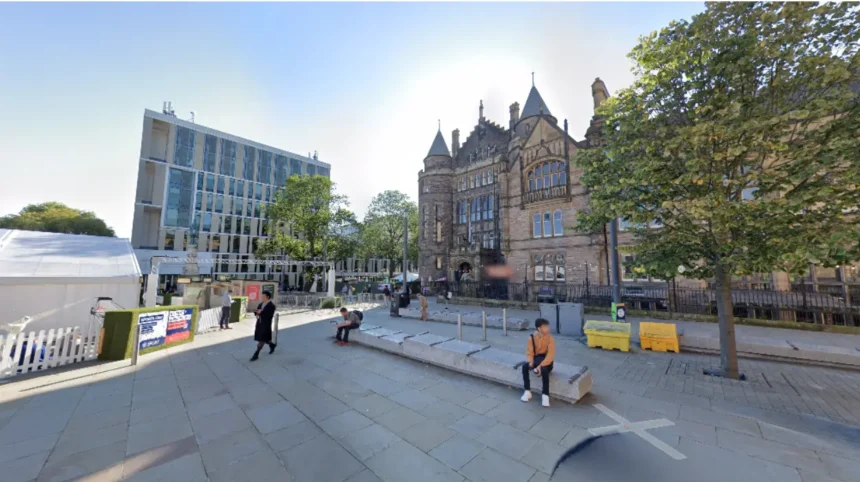
The Scottish Enlightenment was a period of intense intellectual and scientific accomplishment in 18th century Scotland, centered primarily in Edinburgh, which began following the Acts of Union in 1707 and the establishment of a stable legal and educational framework.
- How did urban planning and architecture transform Edinburgh during this era?
- How did Edinburgh education and universities reform during the Enlightenment?
- How did print culture and coffeehouses shape daily conversation in Edinburgh?
- How did Enlightenment philosophy influence economics and daily commerce in Edinburgh?
This intellectual explosion emerged from a unique convergence of institutional stability, economic growth, and a newly unified political landscape that connected Edinburgh directly to the wider European intellectual network.
The city transitioned from a medieval fortress into a vibrant cultural hub characterized by the formation of specialized societies, clubs, and academic associations. Key catalysts included the restructuring of the University of Edinburgh and the founding of the Philosophical Society of Edinburgh in 1737.
Thinkers sought to apply empirical reasoning and the scientific method to human nature, economics, and society, moving away from rigid scholasticism. This profound shift created an environment where inquiry was encouraged and traditional authority was critically examined by scholars, merchants, and legal professionals alike.
How did urban planning and architecture transform Edinburgh during this era?
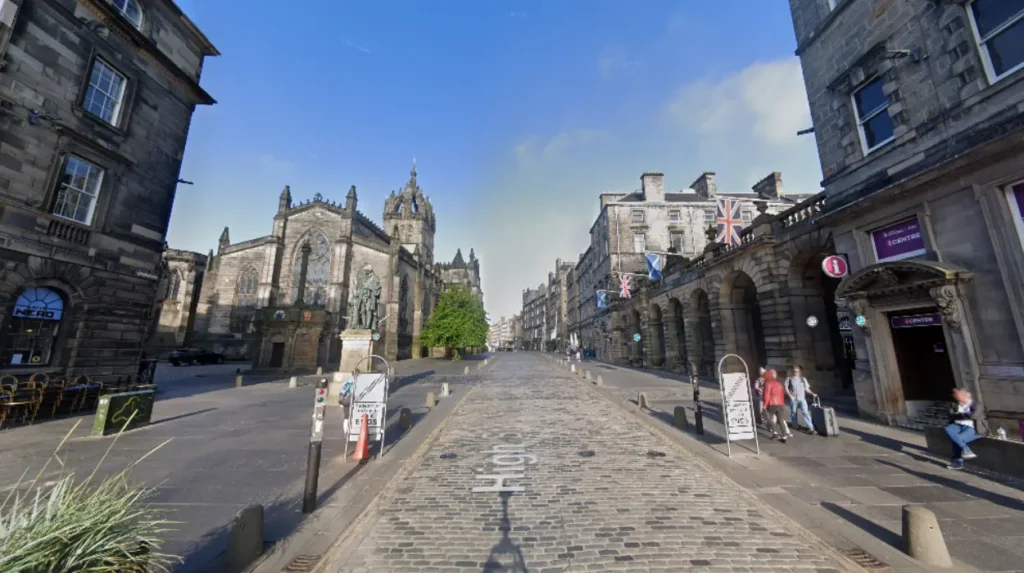
The physical transformation of Edinburgh during the Enlightenment occurred primarily through the construction of the New Town, designed by James Craig in 1767 to replace the overcrowded medieval Old Town with rational neoclassical architecture.
The expansion across the Nor Loch valley embodied Enlightenment ideals of order, symmetry, and rational spatial organization, contrasting sharply with the chaotic vertical tenements of the medieval core.
Architects utilized grid systems and uniform stone facades to reflect the philosophical principles of harmony and civic improvement championed by thinkers of the era. The construction of George Street, Princes Street, and St Andrew Square provided residents with light-filled residential spaces, wide thoroughfares, and communal green areas.
This urban redesign physically segregated the city while simultaneously improving sanitation, ventilation, and social order for the growing middle and upper classes. The New Town served as a concrete manifestation of progress, demonstrating how deliberate planning could elevate human civilization and enhance daily civic life.
How did Edinburgh education and universities reform during the Enlightenment?
The University of Edinburgh transformed from a traditional theological academy into a modern secular institution emphasizing empirical science, medicine, and critical philosophy under the leadership of visionary principals and professors.
Curricular reforms introduced specialized professorships in chemistry, rhetoric, and civil law, breaking the monopoly of medieval scholastic subjects and embracing modern scientific inquiry.
Prominent figures like William Cullen and Joseph Black revolutionized the teaching of medicine and chemistry through rigorous laboratory experiments and clinical observations at the Edinburgh Royal Infirmary. Students flocked from across Europe and the American colonies to attend lectures that prioritized observation, induction, and practical application over rote memorization.
This pedagogical shift established Edinburgh as the premier medical and scientific center of the English-speaking world, producing generations of physicians, natural philosophers, and statesmen. Educational expansion extended beyond the university into private academies and reading societies, raising overall literacy rates and fostering a culture of lifelong learning among citizens.
How did print culture and coffeehouses shape daily conversation in Edinburgh?
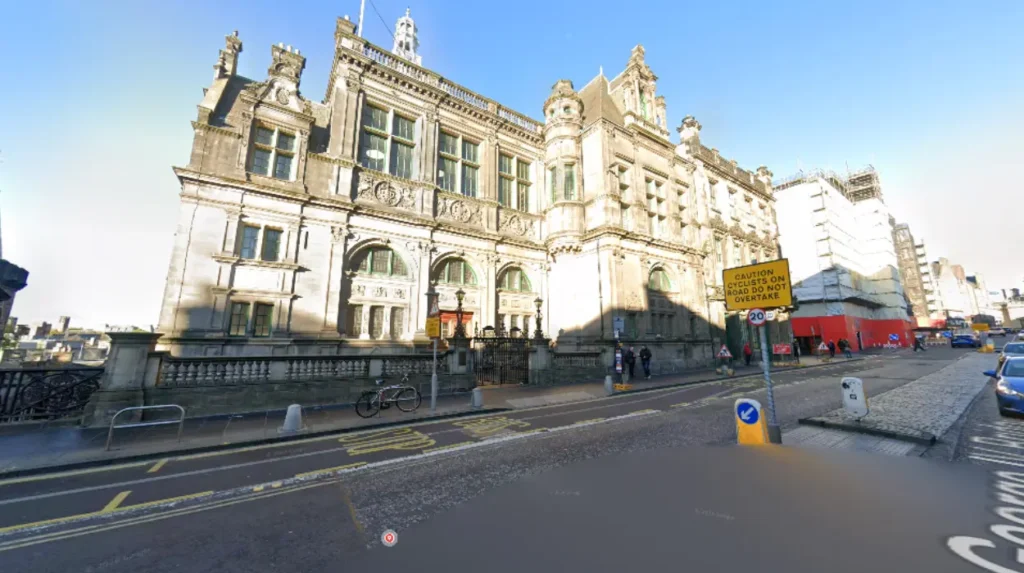
Edinburgh daily life experienced a dramatic shift through the explosive growth of print culture, lending libraries, and coffeehouse debate societies that democratized access to new ideas and philosophical treatises.
Coffeehouses such as those situated near the Royal Exchange and the Parliament House functioned as vital civic nodes where lawyers, merchants, professors, and visitors discussed politics, science, and literature.
The establishment of the Edinburgh Circulating Library in 1725 by Allan Ramsay allowed ordinary citizens to rent books, expanding literacy and intellectual engagement beyond the traditional elite.
Local printing presses produced thousands of pamphlets, newspapers, and groundbreaking books, including the works of David Hume and Adam Smith, which circulated rapidly through society.
These reading publics formed voluntary associations that met regularly to debate controversial topics, fostering a nascent civil society built on polite conversation and reasoned argument. Print capitalism transformed ideas from elite commodities into accessible daily currency, deeply influencing the public consciousness and urban identity of the Scottish capital.
How did Enlightenment philosophy influence economics and daily commerce in Edinburgh?
Enlightenment economic theory, spearheaded by Adam Smith through The Wealth of Nations in 1776, revolutionized daily commerce by replacing mercantilist restrictions with principles of free trade, division of labor, and market competition.
Edinburgh merchants and bankers adopted modern financial mechanisms, including paper currency and joint-stock banking, facilitated by institutions like the Bank of Scotland and the Royal Bank of Scotland.
These economic innovations stabilized daily transactions, funded industrial expansion, and enabled individuals to invest capital with greater security and predictability. Smith and his contemporaries argued that self-interest, regulated by moral sentiments and open markets, generated wealth more effectively than state monopolies or feudal privileges.
This theoretical framework empowered a rising middle class of entrepreneurs, traders, and professionals to participate actively in the burgeoning British imperial economy. Daily commerce shifted from localized guilds to expansive commercial networks, fundamentally altering the occupational structure, consumption habits, and material wealth of Edinburgh households.
What was the main cause of the Scottish Enlightenment in Edinburgh?
The Scottish Enlightenment was primarily caused by the institutional stability following the 1707 Union, high literacy rates, and reformed universities that embraced empirical science.
How did the architecture of Edinburgh reflect Enlightenment values?
Edinburgh architecture reflected Enlightenment values through the neoclassical symmetry, grid systems, and rational urban design of the New Town created by James Craig.
Which famous thinkers lived and worked in Edinburgh during this era?
Key figures included philosopher David Hume, economist Adam Smith, historian William Robertson, and chemist Joseph Black.
Why was Edinburgh known as the Athens of the North?
Edinburgh earned this nickname because its intellectual output in philosophy, science, and literature mirrored the cultural achievements of classical Athens.