


The Royal Mile measures exactly one Scots mile, which equals 1.81 kilometres or 1.12 imperial miles, connecting Edinburgh Castle to the Palace of Holyroodhouse. The thoroughfare consists of five distinct streets downhill from west to east.
- How long does it take to complete the entire walk?
- What primary historical landmarks line the main thoroughfare?
- Why are the narrow alleys and closes significant to explore?
- How should visitors prepare for walking terrain and weather conditions?
- What are the best dining and refreshment stops along the route?
- When is the best time of day and year to walk the route?
The Royal Mile forms the main artery of Old Town Edinburgh, built along a natural volcanic ridge created by glacial activity millions of years ago. This geological structure descends from Castle Rock to the plain of Holyrood, establishing an elevation differential of 67 metres between the top and bottom endpoints.
The complete route encompasses Castlehill, Lawnmarket, High Street, Canongate, and Abbey Strand in a single continuous linear progression. Castlehill begins directly at the Castle Esplanade, leading down into the Lawnmarket where historical textile merchants originally traded goods.
The route continues into High Street, which serves as the civic and religious center near Saint Giles Cathedral. Past the Netherbow Port intersection, the thoroughfare becomes Canongate, historically a separate burgh outside Edinburgh city walls. The street terminates at Abbey Strand, placing walkers directly at the gates of Holyrood Palace and the Scottish Parliament.
How long does it take to complete the entire walk?
Walking the full length continuously without stopping takes between 25 to 35 minutes at an average pace. However, thoroughly exploring attractions along the route requires approximately three to five hours depending on chosen stopping points.
A continuous walk without visiting sites requires minimal physical effort, as the terrain descends downhill when walking from west to east. The incline gradient averages four percent along the main cobbled roadway, making the downhill direction accessible to most pedestrians.
Adding key historic stops increases the duration substantially due to ticketed entry times and architectural exploration. For instance, touring Edinburgh Castle requires two hours, while exploring Holyrood Palace takes ninety minutes. Additional subterranean tours, such as The Real Mary Kings Close, add ninety minutes to an itinerary.
Pedestrians who stop for photographs, lunch, and courtyard exploration routinely spend a full morning or afternoon on the street. Seasonally, heavy pedestrian traffic during the August Festival Fringe can double direct walking times due to crowd density on High Street.
What primary historical landmarks line the main thoroughfare?

The primary historical landmarks lining the thoroughfare include Edinburgh Castle, Saint Giles Cathedral, the City Chambers, John Knox House, and the Palace of Holyroodhouse. These structures represent nine centuries of Scottish political and cultural history.
At the western summit stands Edinburgh Castle, a historic fortress constructed upon an extinct volcanic plug dating back to the twelfth century. Moving eastward down Castlehill, visitors encounter Camera Obscura and World of Illusions alongside The Hub, a Victorian church tower.
Saint Giles Cathedral sits prominently within Parliament Square on High Street, functioning as the historic High Kirk of Edinburgh since 1124. Across Parliament Square lies the historic Parliament House, which housed the Parliament of Scotland prior to the Acts of Union 1707.
Further east stands John Knox House, a preserved fifteenth-century building linked to the Protestant Reformation. Canongate features the sixteenth-century Canongate Tolbooth, which now houses the Museum of Edinburgh, and Canongate Kirk, built in 1689. The eastern terminal points include the modern Scottish Parliament building and the Palace of Holyroodhouse, the official royal residence in Scotland.
Why are the narrow alleys and closes significant to explore?
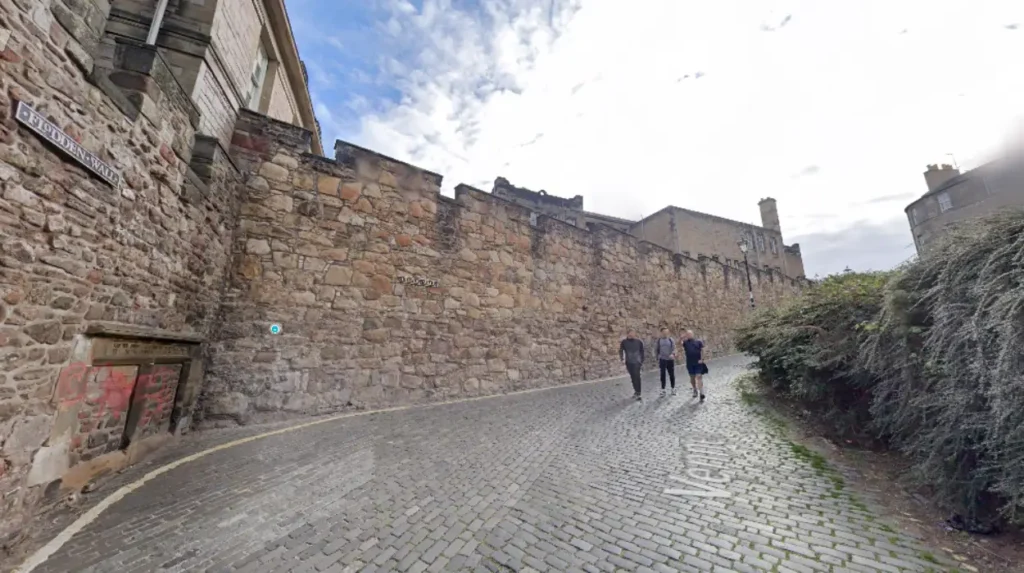
The narrow alleys, known locally as closes, wynds, and courts, represent medieval urban planning designed to provide vertical residential access off the main ridge. They preserve preserved sixteenth-century architectural footprints and local folklore.
Old Town Edinburgh expanded within defensive stone walls, forcing urban development upward rather than outward during the sixteenth and seventeenth centuries. Tall stone tenement buildings, known as lands, reached up to fourteen storeys in height along these narrow passageways.
Closes are private or gated alleys, wynds are open public thoroughfares wide enough for horses, and courts are open internal quadrangles. Over three hundred closes originally branched off the main street, with over eighty surviving today for pedestrian access. Lady Stairs Close houses The Writers Museum, which celebrates Scottish authors Robert Burns, Sir Walter Scott, and Robert Louis Stevenson.
Advocates Close offers framed views of the Scott Monument and Princes Street Gardens across the northern valley. Dunbar Close contains a meticulously reconstructed seventeenth-century knot garden providing quiet public park space. The Real Mary Kings Close remains preserved beneath the City Chambers, revealing buried medieval streets abandoned during plague outbreaks.
How should visitors prepare for walking terrain and weather conditions?
Visitors should prepare by wearing supportive, non-slip footwear suitable for uneven cobblestones and dressing in adaptable layers to accommodate sudden changes in Scottish coastal weather.
The surface of the Royal Mile consists largely of historic granite setts, smooth flagstones, and sloped stone steps. Uneven paving stones create trip hazards, while wet weather turns smooth stone surfaces slick underfoot. Supportive footwear with textured rubber soles provides necessary traction across downhill gradients and wet cobblestones.
Weather in eastern Scotland varies rapidly due to maritime air masses originating over the Firth of Forth. Temperature shifts, high wind gusts, and sudden rain showers occur frequently throughout every season. A windproof and waterproof outer jacket is essential, as narrow closes act as wind tunnels during stormy conditions.
Carrying a compact umbrella is often impractical along High Street due to narrow sidewalk spaces and strong wind funneling. Carrying a refillable water bottle remains recommended, as public water refilling points exist near Saint Giles Cathedral and Holyrood.
What are the best dining and refreshment stops along the route?
The best refreshment stops feature historic public houses, traditional Scottish tearooms, independent coffee roasters, and venues serving authentic regional cuisine like haggis, neeps, and tatties.
Historic pubs offer meals alongside draught ales and Scotch single malt whiskies along the complete length of the street. The Deacon Brodies Tavern on Lawnmarket honors the eighteenth-century cabinetmaker who inspired Robert Louis Stevensons novel, Dr Jekyll and Mr Hyde.
Nearby, the World End’s Pub sits at the site of the former Netherbow Port gate, marking where medieval citizens once required entry permits. Specialty cafes serve coffee and shortbread pastries near Gladstone’s Land, a restored merchant tenement operated by the National Trust for Scotland.
Authentic Scottish dining options include Cadenhead’s Whisky Shop for tasting sessions and the Scotch Whisky Experience for structured culinary pairings. Fine dining establishments located within medieval close turnings present modern Scottish dishes featuring local salmon, venison, and seafood. Traditional tearooms near Canongate provide quiet indoor seating away from High Street pedestrian crowds.
When is the best time of day and year to walk the route?
The best time to walk the route is early morning before nine o’clock during late spring or early autumn to avoid peak pedestrian congestion and secure clear photography angles.
Pedestrian traffic builds steadily after nine in the morning, reaching peak density between eleven in the morning and four in the afternoon. Walking early in the morning allows clear views of architectural facades without modern commercial street displays or large tour groups.
May, June, and September offer long daylight hours, moderate temperatures, and manageable visitor numbers across the Old Town. July and August bring the annual Edinburgh International Festival and Festival Fringe, which transforms High Street into a street performance arena.
While the festival offers vibrant cultural entertainment, crowding significantly slows walking speed along central blocks. Winter months provide crisp weather and atmospheric lighting, particularly during November and December when Christmas markets open nearby. Evening walks after dusk illuminate gas-style street lanterns, providing a quiet atmosphere suitable for exploring lit closes and stone courtyards.
Can you walk the Royal Mile for free?
Yes, walking the entire length of the street is completely free and open to the public twenty-four hours a day. You can enjoy the historic architecture, closes, and courtyards without paying anything. Ticket costs only apply if you choose to enter specific paid attractions like Edinburgh Castle, Mary King’s Close, or Holyrood Palace.
Is the Royal Mile difficult to walk for people with mobility issues?
The walk involves a downhill slope from Edinburgh Castle to Holyrood Palace, paved largely with original stone setts. While downhill walking reduces physical exertion, uneven cobblestones can pose challenges for wheelchairs and mobility devices. High Street and Canongate feature smoother paved footpaths alongside the main road to assist pedestrians.
Which direction is better to walk the Royal Mile?
Walking from west to east, starting at Edinburgh Castle and ending at the Palace of Holyroodhouse, is recommended. This route follows a gentle downhill gradient of 67 metres across its total length. Walking in the reverse direction requires uphill exertion, which can prove tiring for casual visitors.
Are dogs allowed along the Royal Mile walk?
Dogs are fully permitted along all public sidewalks, open closes, and outdoor areas of the route. Many historic pubs along Canongate and High Street welcome dogs inside their bar areas. However, service animals are generally the only dogs allowed inside indoor museums and royal residences.
Where are the public rest facilities located along the route?
Public rest facilities are available at the top near the Castle Esplanade and at the bottom near the Scottish Parliament. Major paid attractions, museum venues, and visitor centers along High Street also feature accessible restrooms. Patrons can additionally utilize facilities within local cafes, restaurants, and pubs along the street.
