The medical history of Edinburgh transformed global healthcare through the establishment of the University of Edinburgh Medical School in 1726. This institution pioneered anatomical research, clinical bedside teaching, and surgical anesthesia, setting permanent international standards for modern medical education.
- What Made the University of Edinburgh Medical School Famous in the 18th Century?
- What Was the Architecture and Function of the Old Medical School?
- How Did the Burke and Hare Murders Affect Edinburgh Anatomy Laws?
- Which Major Medical Breakthroughs Originated in Edinburgh?
- How Does the Edinburgh Medical Legacy Influence Healthcare Today?
The city of Edinburgh became the premier center for medical science during the eighteenth and nineteenth centuries. The Scottish Enlightenment created an intellectual environment where physicians, surgeons, and chemists collaborated to replace ancient theories with empirical observation.
Early medical regulation in the city began in 1505 when King James IV granted a Royal Charter to the Incorporation of Surgeons and Barbers of Edinburgh. This charter mandated that practitioners possess anatomical knowledge and literacy, establishing strict professional standards.
The Royal College of Physicians of Edinburgh received its charter from King Charles II in 1681 to regulate internal medicine and prevent unqualified practice. These two institutions laid the administrative foundation for formal academic medical training in Scotland.
By the mid-eighteenth century, students traveled from North America, Europe, and the Caribbean to study in Edinburgh. The city produced generations of doctors who founded the earliest medical schools in the United States, Canada, and Australia.
What Made the University of Edinburgh Medical School Famous in the 18th Century?
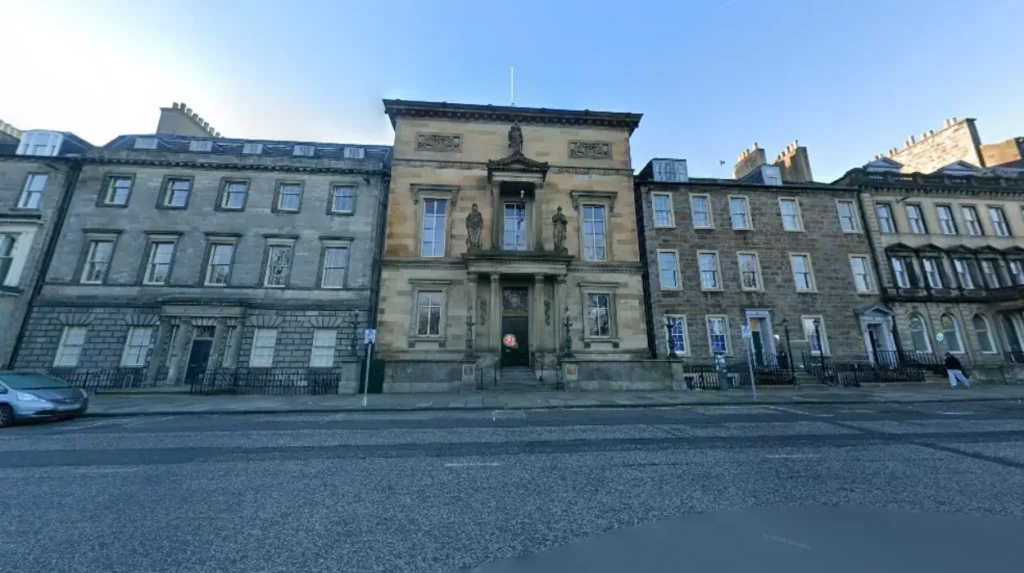
The University of Edinburgh Medical School achieved global fame in 1726 by uniting theoretical lectures with practical clinical instruction. Under the leadership of Alexander Monro primus, the faculty shifted medical training away from ancient texts toward direct anatomical dissection and patient observation.
In 1726, the Edinburgh Town Council appointed four fellows of the Royal College of Physicians to establish a formal Faculty of Medicine. These four professors were John Rutherford, Andrew St Clair, Andrew Plummer, and John Innes, who joined anatomy professor Alexander Monro primus.
Alexander Monro primus served as professor of anatomy from 1720 to 1758 and transformed the discipline into the cornerstone of medical education. His son, Alexander Monro secundus, and grandson, Alexander Monro tertius, held the same chair consecutively, creating a 126-year anatomical dynasty.
Together, the three Monro professors taught over 12,800 students during their tenure at the university. Alexander Monro secundus discovered the foramen of Monro in the brain and accurately mapped the human lymphatic system.
In 1748, John Rutherford introduced clinical lectures at the Royal Infirmary of Edinburgh, bringing students directly to hospital bedsides. This integration of university academics with active hospital wards became the blueprint for modern teaching hospitals worldwide.
What Was the Architecture and Function of the Old Medical School?
The Old Medical School, located on Teviot Place in Edinburgh, opened in 1880 to accommodate surging medical student enrollment. Designed by architect Robert Rowand Anderson in the Italian Renaissance style, the building housed specialized laboratories, lecture theaters, and anatomical museums.
Prior to 1880, medical instruction took place within Old College on South Bridge, where overcrowding severely restricted laboratory space and anatomical storage. Between 1850 and 1875, student enrollment in the medical faculty doubled, reaching over 1,000 students annually.
Architect Robert Rowand Anderson toured European medical institutions in France, Germany, and Austria before drafting the plans for the Teviot Place complex. Construction began in 1876 and cost approximately 250,000 British pounds, funded through public subscriptions and government grants.
The building features distinct departments organized around a central quadrangle, including dedicated wings for anatomy, physiology, pathology, and materia medica. Thick stone walls and specialized ventilation shafts were engineered to isolate odors from the dissecting rooms.
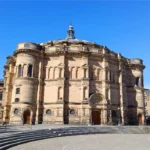
The McEwan Hall, designed by the same architect and opened in 1897, was added adjacent to the Old Medical School to serve as the ceremonial graduation hall. Today, the Teviot Place complex continues to house the Edinburgh Medical School and the Anatomical Museum.
How Did the Burke and Hare Murders Affect Edinburgh Anatomy Laws?
The Burke and Hare murders in 1828 exposed severe legal shortages of cadavers for anatomical dissection in Edinburgh. This crisis directly prompted the United Kingdom Parliament to pass the Anatomy Act of 1832, legalizing the donation of unclaimed bodies for medical research.
In the early nineteenth century, Scottish law permitted anatomists to dissect only the corpses of executed criminals. With capital punishment declining and student numbers rising, Edinburgh anatomy schools faced an acute shortage of legal cadavers.
This shortage created a black market for body snatchers, known locally as resurrectionists, who exhumed fresh graves from cemeteries like Greyfriars Kirkyard. Prominent anatomist Robert Knox operated a private extramural anatomy school at Surgeons Square and paid high prices for fresh specimens.
Between November 1827 and October 1828, Irish immigrants William Burke and William Hare murdered 16 people in Edinburgh’s West Port district. Rather than robbing graves, they suffocated victims to leave no visible marks of violence and sold the corpses to Robert Knox for 7 to 10 pounds each.
Following their arrest, Hare testified against Burke in exchange for immunity, leading to Burke’s execution on January 28, 1829, and his subsequent public dissection. The resulting public outrage led directly to the Anatomy Act of 1832, which eliminated the economic incentive for grave robbing and murder.
Which Major Medical Breakthroughs Originated in Edinburgh?
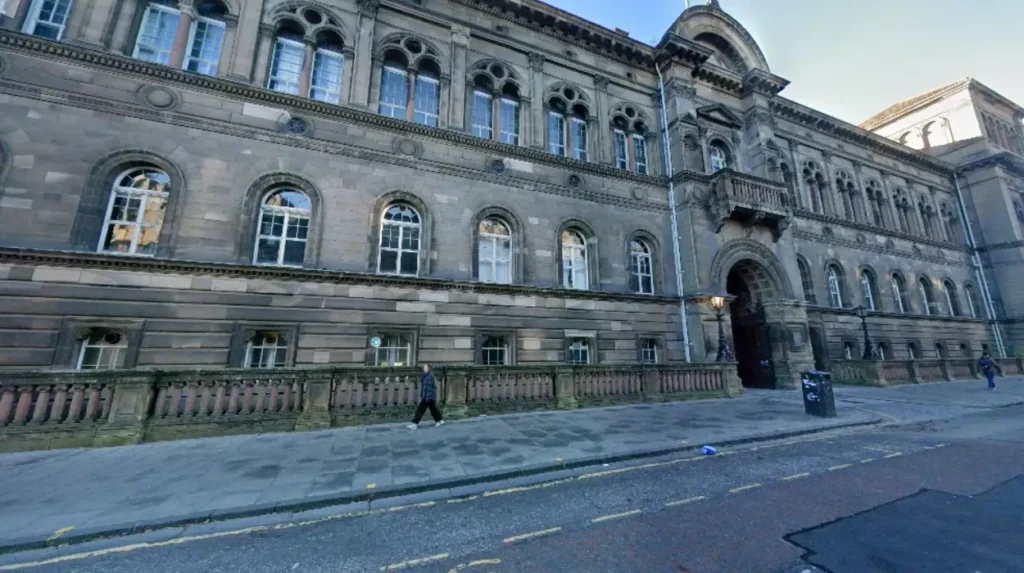
Edinburgh physicians pioneered surgical anesthesia, antiseptic surgery, and modern obstetrics during the nineteenth century. Key breakthroughs included James Young Simpson’s discovery of chloroform’s anesthetic properties in 1847 and Joseph Lister’s introduction of carbolic acid antisepsis in the 1860s.
James Young Simpson, Professor of Midwifery at the University of Edinburgh, sought a safer and more effective alternative to ether for relieving pain during childbirth. On November 4, 1847, Simpson and two assistants inhaled chloroform at his home at 52 Queen Street and discovered its rapid anesthetic effect.
Simpson immediately introduced chloroform into obstetric and surgical practice, publishing his findings within weeks of the experiment. Queen Victoria validated the procedure in 1853 when she used chloroform during the birth of Prince Leopold.
In 1869, Joseph Lister became Professor of Clinical Surgery at the University of Edinburgh, continuing his groundbreaking work on antiseptic surgical techniques. Lister used carbolic acid to sterilize surgical instruments, clean wounds, and dress incisions, drastically reducing post-operative infections.
Edinburgh also advanced pharmacology and clinical diagnostics through figures like Robert Christison, who established modern toxicology in the 1820s. Additionally, Sophia Jex-Blake led the Edinburgh Seven in 1869, initiating the campaign that secured women’s legal right to study medicine in Britain.
How Does the Edinburgh Medical Legacy Influence Healthcare Today?
The medical history of Edinburgh continues to shape modern healthcare through standardized clinical training, biomedical research, and strict ethical regulations. The University of Edinburgh remains a top global institution, driving advancements in regenerative medicine, genetics, and public health.
Modern medical curricula worldwide still follow the eighteenth-century Edinburgh model of combining foundational laboratory sciences with structured clinical rotations. Teaching hospitals remain the standard mechanism for training medical doctors across Europe, North America, and the Commonwealth.
The Anatomical Museum inside the Old Medical School preserves over 12,000 historical specimens, including the skeleton of William Burke and collections used by the Monro dynasty. These collections serve as active educational resources for contemporary medical students and researchers.
In modern biomedical science, Edinburgh researchers achieved major milestones, including the cloning of Dolly the sheep at the Roslin Institute in 1996. This breakthrough revolutionized stem cell research and regenerative medicine globally.
Strict ethical frameworks governing human tissue donation and clinical trials trace their legislative origins directly to the reforms enacted in Edinburgh after 1832. Contemporary healthcare systems rely on these historical precedents to balance scientific progress with patient safety and medical ethics.
Why was Edinburgh the center of medicine in the 18th century?
Edinburgh became the center of medicine because the University of Edinburgh Medical School combined systematic anatomical dissection with bedside hospital teaching at the Royal Infirmary. Unlike Oxford and Cambridge, Edinburgh did not restrict admission based on religious affiliation, attracting top scientific minds and international students during the Scottish Enlightenment.
Can you visit the Old Medical School in Edinburgh today?
Visitors can view the exterior quadrangle of the Old Medical School on Teviot Place throughout the year. The Anatomical Museum inside the building opens to the public on select days each month, displaying historical anatomical models, skeletons, and medical instruments from the eighteenth and nineteenth centuries.
What happened to Robert Knox after the Burke and Hare murders?
Robert Knox was never criminally charged because the court found no legal proof that he knew the corpses were murdered. However, public hostility and professional ostracization ruined his career in Edinburgh, forcing him to relocate to London where he worked as a cancer hospital pathologist until his death in 1862.
Who were the Edinburgh Seven and why are they important?
The Edinburgh Seven were the first group of matriculated undergraduate female students at any British university, led by Sophia Jex-Blake in 1869. Although the university initially blocked them from graduating, their national campaign led directly to the UK Medical Act of 1876, which allowed women to qualify as doctors.
Where is the skeleton of William Burke kept?
The skeleton of William Burke is permanently displayed at the Anatomical Museum within the Old Medical School at the University of Edinburgh. Following his execution in January 1829, Alexander Monro tertius publicly dissected Burke’s body and ordered his skeleton preserved for ongoing anatomical instruction.