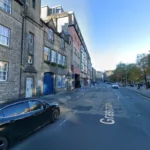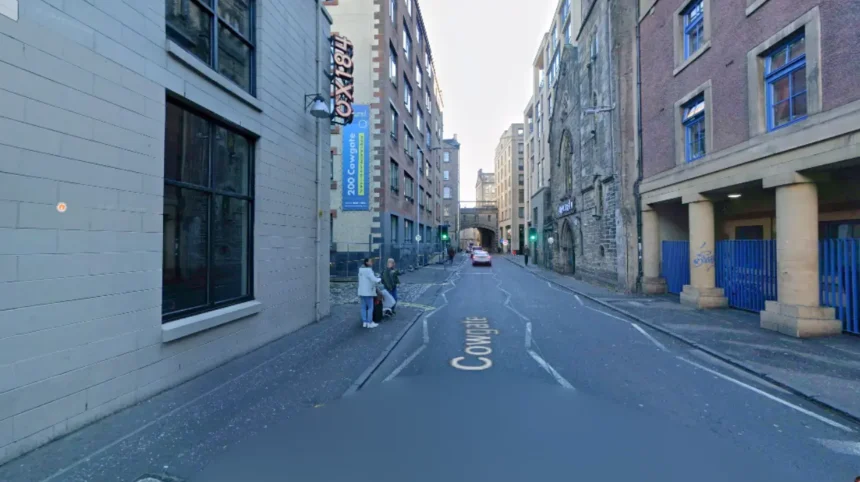
The Cowgate established itself during the 15th century as a prominent street located in a natural ravine beneath Edinburgh’s High Street. Urban expansion in 1788 led to the construction of South Bridge, which enclosed subterranean arches and created subterranean rooms.
- How Were the Underground Vaults Constructed Beneath South Bridge?
- Who Lived in the Subterranean Slums of Edinburgh During the 19th Century?
- How Did the Cowgate Transform Into a Modern Cultural Hub?
- How can visitors access the Edinburgh underground vaults today?
- Were the Cowgate vaults used for body snatching in the 1800s?
- Why were the South Bridge vaults sealed in the late 19th century?
- What is the difference between the Cowgate Vaults and Mary King’s Close?
- Are the Edinburgh underground vaults open year-round for tours?
The Cowgate originated as a low-lying thoroughfare used for livestock movement outside the original city walls. City authorities built the Flodden Wall in 1513 to protect Edinburgh, surrounding the Cowgate and incorporating it into the central city perimeter. Land scarcity forced residents to construct vertical tenement buildings reaching up to fourteen stories high inside the tight urban space.
In 1785, civil engineers started constructing South Bridge to connect the Old Town’s southern side with the Royal Mile. The bridge opened in 1788 with nineteen massive stone arches spanning the Cowgate ravine to equalize elevated street levels. Workers enclosed nineteen bridge arches with stone walls, creating nineteen hidden vaults spanning nineteen structural chambers.
These subterranean chambers created an artificial under-city environment consisting of 120 stone rooms built directly under running street traffic. Merchants initially used these underground vaults for storage space, workshops, industrial operations, and illegal trade activities. Industrialists operating near the Cowgate included cobblers, cutlers, taverns, tanners, and whiskey distillers during the late eighteenth century.
Subterranean chambers lacked light, natural ventilation, running water, and sanitation systems, causing atmospheric humidity and rapid air degradation. Wealthy merchants abandoned the lower chambers around 1795 as flooding and moisture damaged valuable trade stock. Deprived citizens and Irish immigrants relocated into the vacant underground vaults, turning them into dense residential slums.
Overcrowding reached peak density during the Irish Potato Famine between 1845 and 1852 when thousands moved into subterranean spaces. City authorities sealed the underground vaults in 1875 to control disease outbreaks, crime, and extreme poverty in the area. The subterranean chambers remained completely sealed for over a century until local historians rediscovered the hidden rooms in 1985.
How Were the Underground Vaults Constructed Beneath South Bridge?
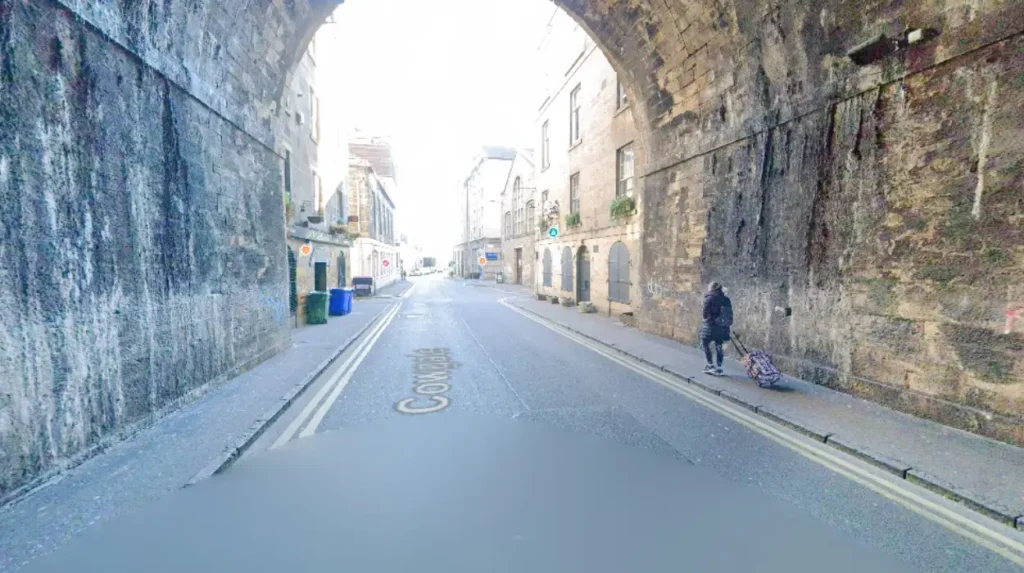
Civil engineers constructed the South Bridge using nineteen ashlar limestone arches spanning the deep natural valley of the Cowgate. Builders enclosed these structural support arches with thick stone masonry walls, creating 120 distinct underground vaults across multiple levels.
Engineering plans designed by Alexander Laing in 1785 required nineteen massive stone arches to support the upper road surface. Workers excavated thousands of tons of rock from the natural ravine before laying foundation courses of solid Scottish sandstone. Stone masons built nineteen parallel arches using mortar, sandstone, and ashlar blocks to create a durable overhead street foundation.
Enclosing the arch voids with outer walls generated hollow chambers stacked vertically across three structural levels beneath the street. Architectural specifications established vault rooms measuring between 80 square feet and 500 square feet across total subterranean surface area. Masonry walls reached thicknesses of five feet, providing structural stability while isolating the interior chambers from direct sunlight.
The ceiling heights inside the nineteen arches varied between seven feet and fifteen feet depending on the terrain slope. Builders constructed barrel-vaulted stone ceilings to transfer structural load directly into the surrounding foundation bedrock and bridge abutments. The absence of exterior window openings meant all natural light stopped at the entrance entry points of the bridge.
Engineers built surface drainage systems using stone channels, but water penetrated the porous sandstone walls during heavy rainfall events. Moisture accumulated continuously inside the nineteen structural arches, leading to high humidity and continuous subterranean water seepage. Structural conditions worsened because lime mortar degraded under continuous exposure to ground water and atmospheric humidity.
Architectural engineers designed narrow access passages connecting the individual chambers to central access staircases linking to street levels. Artisans installed heavy timber doors and iron fixtures to secure individual vaults used for commercial storage by upper merchants. The completed structural design created an isolated microclimate beneath South Bridge that preserved subterranean temperatures at 12 degrees Celsius.
Who Lived in the Subterranean Slums of Edinburgh During the 19th Century?
Immigrants, destitute laborers, and criminal groups inhabited the dark Cowgate vaults during the 19th century following commercial abandonment. Extreme poverty, lack of sunlight, missing sanitation, and severe overcrowding defined daily existence inside these subterranean residential chambers.
The exodus of commercial businesses in 1795 left nineteen arch vaults empty, allowing impoverished populations to occupy the underground spaces. Irish refugees escaping the Great Famine migrated to Edinburgh between 1845 and 1852, seeking affordable shelter in the city core. Over 1,500 people lived inside the 120 underground vault rooms during peak population density in the mid-19th century.
Families occupied single vault rooms measuring 100 square feet, sharing cramped space without access to windows or freshwater pipes. Residents burned coal, whale oil, and wood inside unventilated rooms, filling the air with soot, smoke, and carbon monoxide. Human waste accumulated in central access corridors because the subterranean complex lacked plumbing, drainage channels, or waste disposal access.
Infectious diseases spread rapidly through the underground population due to damp conditions, contaminated air, and shared living spaces. Cholera outbreaks killed hundreds of vault dwellers during epidemics recorded across Edinburgh in 1832, 1848, and 1853. Tuberculosis, typhus, and scarlet fever remained endemic within the subterranean housing complexes throughout the mid-nineteenth century.
Criminal networks operated within the dark passages, utilizing hidden vaults for illegal distillation, brothels, gambling, and stolen goods storage. Infamous serial killers William Burke and William Hare reportedly used the Cowgate alleyways to locate victims during 1828. Anatomical body snatchers utilized the dark, unpoliced under-city passages to transport corpses to the nearby Medical School at Teviot Place.
Municipal reports published in 1865 documented severe malnutrition, respiratory illnesses, and high infant mortality rates among subterranean occupants. Public pressure forced the Edinburgh City Police and municipal authorities to condemned the living conditions inside the bridge vaults. Authorities initiated complete evictions in 1875, filling access passages with rubble and stone to seal the subterranean slum permanently.
How Did the Cowgate Transform Into a Modern Cultural Hub?
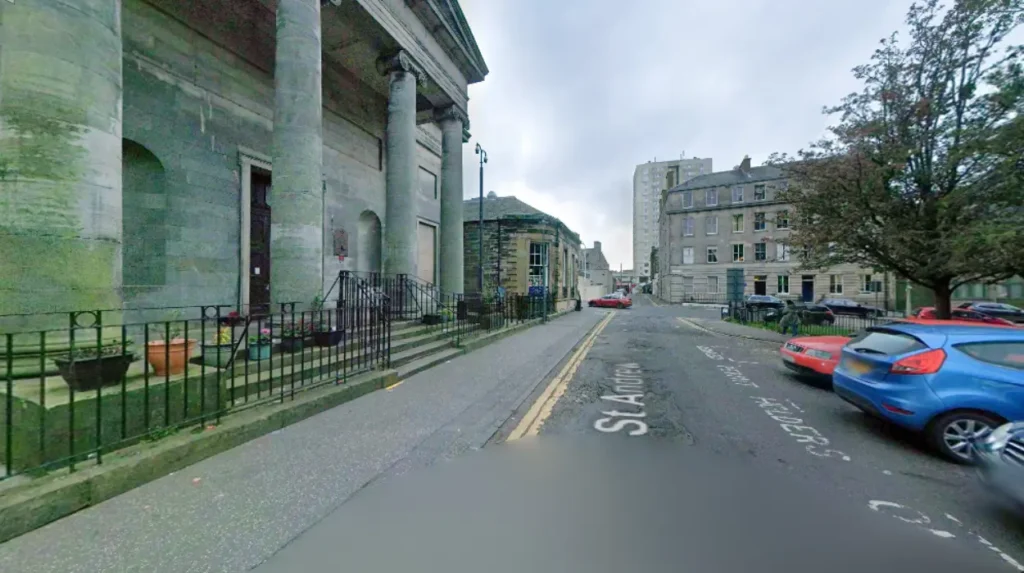
The Cowgate transformed from a sealed historical ruin into a vibrant cultural district featuring music venues, historic tours, and arts festivals. Rediscovery in 1985 led to archaeological preservation, structural safety upgrades, and integration into Edinburgh’s UNESCO World Heritage designation.
Scottish rugby player Norrie Rowan rediscovered access to the sealed bridge vaults in 1985 through a hidden cellar passage. Excavation teams removed hundreds of tons of rubble, debris, and nineteenth-century waste to reveal intact structural chambers beneath South Bridge. Historical researchers, archaeologists, and engineers documented the structural integrity of the nineteen arches, confirming safety for public access.
Commercial tour operators opened the subterranean vaults to public visitors in 1995, offering historical and ghost-themed walking tours. Heritage organizations preserved original stone walls, cobbler tools, fireplace remnants, and structural artifacts discovered inside the restored vault chambers. The Cowgate area gained official protection in 1995 when UNESCO designated Edinburgh’s Old Town and New Town as World Heritage sites.
Above ground, the Cowgate street level evolved into a premier entertainment hub for live music, comedy, and nightlife venues. Establishments built inside historic stone buildings hosted performances during the annual Edinburgh Festival Fringe, the world’s largest arts festival. Venues like the Sneaky Pete’s and The Caves integrated original bridge arches into contemporary interior design and performance spaces.
A major fire in December 2002 destroyed several historic structures above the Cowgate, requiring comprehensive urban restoration and modern rebuilding. Architects rebuilt damaged sections while preserving original stone foundations, subterranean vault entrances, and historical street layout integrity. Today, municipal regulations balance historic preservation with commercial entertainment, maintaining the Cowgate’s dual status as history and nightlife center.
Modern environmental monitoring systems ensure air circulation, moisture control, and structural stability across all accessible vault chambers. Heritage experts conduct regular inspections of sandstone masonry, preventing structural degradation while allowing thousands of tourists to visit annually. The Cowgate stands as a preserved historical corridor connecting Edinburgh’s medieval past with modern cultural activity.
How can visitors access the Edinburgh underground vaults today?
Visitors can access the underground vaults through guided walking tours operated by licensed heritage companies in the Cowgate area. Self-guided access is prohibited due to safety regulations, structural preservation needs, and private ownership of the subterranean bridge arches.
Were the Cowgate vaults used for body snatching in the 1800s?
Resurrection men and criminal groups used the dark Cowgate passages to store and transport stolen corpses to medical schools. William Burke and William Hare operated within the surrounding area, utilizing hidden alleyways to carry out their body snatching scheme.
Why were the South Bridge vaults sealed in the late 19th century?
City authorities sealed the vaults in 1875 due to extreme slum conditions, health epidemics, high crime rates, and severe moisture accumulation. Closing access passages stopped illegal habitation and contained infectious disease outbreaks like cholera and typhus within the city.
What is the difference between the Cowgate Vaults and Mary King’s Close?
The Cowgate Vaults exist within the nineteen arches of South Bridge built in 1788 beneath street level. Real Mary King’s Close consists of actual 17th-century medieval street alleys buried underneath the Royal Exchange building on the High Street.
Are the Edinburgh underground vaults open year-round for tours?
Licensed tour companies operate guided walking tours through accessible vault chambers seven days a week throughout the entire year. Special events, historic lectures, and evening ghost tours increase frequency during the annual Edinburgh Festival Fringe and Halloween season.