The Edinburgh vaults are genuine historical structures built inside the nineteen stone arches of South Bridge between 1785 and 1788. Myths depict them as ancient plague pits, whereas historical reality confirms nineteenth-century merchant, industrial, and slum usage.
- How were the South Bridge vaults constructed in eighteenth-century Edinburgh?
- Did serial killers Burke and Hare store murder victims in the vaults?
- What were the actual living conditions in the nineteenth-century vault slums?
- How were the sealed vaults rediscovered in the late twentieth century?
- What modern uses and cultural impacts define the Edinburgh vaults today?
- What is the real difference between Mary King’s Close and the Edinburgh Vaults?
- Were the Edinburgh Vaults ever used as a plague pit during outbreaks?
- Why were the Edinburgh Vaults abandoned by local businesses so quickly?
- Can you explore the Edinburgh Vaults on your own without a tour guide?
- How cold do the Edinburgh underground vaults stay during the year?
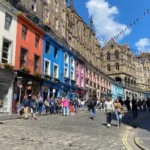
The Edinburgh vaults lie directly beneath the modern surface of South Bridge in the central district of Edinburgh. Construction began when the South Bridge Act 1785 authorized a broad stone elevated roadway to span the deep Cowgate valley.
Engineers constructed nineteen massive stone arches to support the continuous surface, sealing eighteen arches within side tenement walls. This design produced approximately one hundred and twenty enclosed stone chambers ranging from two square metres to forty square metres across multi-level layouts.
Merchants, cutlers, cobblers, smelters, and victuallers leased these spaces upon opening in 1788 for storage and craft workshops. Poor waterproofing caused persistent water ingress through the stone ceiling blocks by 1795.
Legitimate commercial tenants abandoned the leaking rooms within seven years of initial operation.
The structural reality of these underground chambers contrasts sharply with popular media folklore. sensationalist tour narratives describe the vaults as a subterranean city built to escape disease, but architectural records document them strictly as structural bridge voids.
The damp atmosphere accelerated decay, creating ideal conditions for low-income housing as Edinburgh expanded during the Industrial Revolution. Rapid rural migration from the Highland Clearances and Irish immigration pushed vulnerable populations into these unlit stone cellars.
Municipal authorities recorded no public sanitation, running water, or natural daylight within the bridge complex. By 1835, city officials began bricking up entry points to stop illegal settlement and illicit activities. The entire subterranean network remained sealed for over a century until physical rediscovery in the 1980s.
How were the South Bridge vaults constructed in eighteenth-century Edinburgh?
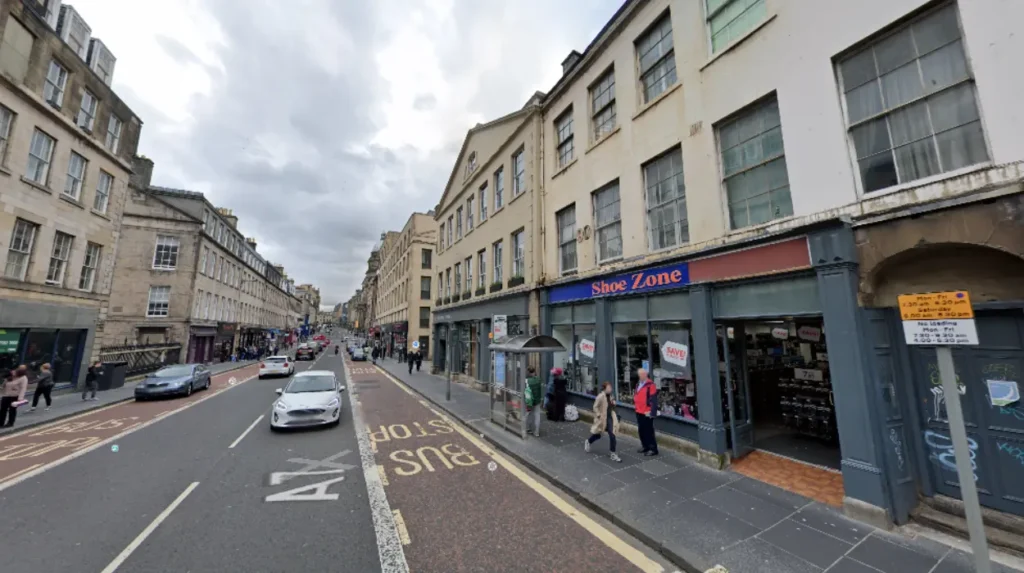
Engineers constructed the South Bridge vaults between 1785 and 1788 using native sandstone arches to connect the Royal Mile to the southern suburbs. Enclosed tenement buildings sealed eighteen stone bridge arches to create hidden multi-level commercial chambers.
The structural design of South Bridge targeted terrain challenges across the urban landscape of Edinburgh. Architect Alexander Laing oversaw the civil engineering project to bridge the thirty-foot drop over the Cowgate ravine. Construction workers laid the foundation stone on 1 August 1785 using heavy ashlar blocks and lime mortar.
Nineteen arch spans provided structural integrity to carry heavy horse carriage traffic across the top deck. To maximize property revenue, civic planners erected four-story tenement structures directly along the eastern and western sides of the bridge.
These buildings enclosed the space beneath the road, hiding the arches from street view. Only the single arch crossing directly above Cowgate remained visible to the public.
Inside the enclosed structure, builders inserted intermediate timber floors and stone partition walls. This compartmentalization divided the dark voids into roughly one hundred and twenty isolated rooms across three distinct vertical tiers.
The upper chambers featured fireplace flues connected to the tenement chimneys above, whereas lower levels lacked ventilation. The top surface of the bridge lacked an impermeable membrane like modern asphalt or rubber seals. Rainwater sank straight through the stone road paving blocks, soaking the mortar joints below.
Moisture dripped continuously into the interior vaults, causing mold, timber rot, and constant water pooling. Commercial tenants abandoned the damp premises between 1795 and 1815 due to inventory damage.
Did serial killers Burke and Hare store murder victims in the vaults?
No factual evidence links serial killers William Burke and William Hare to storing murder victims inside the South Bridge vaults. Historical court records prove they murdered sixteen victims inside a West Port lodging house in 1828.
The legend connecting Burke and Hare to the South Bridge vaults originates from nineteenth-century sensationalism and tour stories. William Burke and William Hare committed sixteen murders between November 1827 and November 1828 in Edinburgh.
Historical trial transcripts from the High Court of Justiciary confirm all murders occurred at William Hare’s lodging house in Tanner’s Close, West Port. The killers transported fresh bodies inside tea chests directly to Dr Robert Knox at Surgeon’s Square.
Their operational timeline shows immediate delivery to medical anatomists without intermediate storage. Storing corpses in damp, publicly accessible bridge vaults would have exposed their illegal trade to city watchmen.
The misunderstanding stems from broader body-snatching practices occurring across Scottish graveyards during the nineteenth century. Resurrections, or grave robbers, targeted fresh graves at Greyfriars Kirkyard and Saint Cuthbert’s Churchyard to supply medical schools. Illicit traders used hidden cellars across the city to stash stolen corpses briefly before night transport.
While criminal gangs operated within the unpoliced Cowgate vaults, municipal court archives mention no body storage inside South Bridge. Archeological excavations during the 1990s recovered trade artifacts, domestic trash, and illegal distillation equipment, but no human skeletal remains associated with anatomy crimes. Burke was executed by public hanging in January 1829 following testimony by Hare.
What were the actual living conditions in the nineteenth-century vault slums?
Living conditions inside the nineteenth-century vault slums were hazardous, defined by extreme humidity, darkness, overcrowding, and lack of sanitation. Families lived in windowless rooms with stagnant air, contaminated water, and high disease transmission.
The transformation of the commercial vaults into residential slums accelerated after 1800 as industrialization changed Edinburgh’s demography. Displaced agricultural workers and Irish laborers arriving after agricultural crises sought cheap shelter in Cowgate.
Landlords leased the abandoned, waterlogged bridge chambers for minimal rent without providing basic structural repairs. Historical surveys document up to ten people occupying individual stone chambers measuring ten square metres.
Residents slept on damp straw mats laid over stone floors soaked with water seepages. Natural sunlight never reached the inner vault chambers, forcing occupants to rely on fish-oil lamps that filled the air with soot.
Sanitary infrastructure was completely absent throughout the subterranean bridge network. The rooms lacked running water, drainage pipes, or waste removal systems. Human waste collected in open buckets or middens placed in central passageways alongside household garbage.
Airborne pathogens spread rapidly in the unventilated atmosphere, leading to frequent outbreaks of typhus, tuberculosis, and cholera. The Edinburgh Evening Courant reported heavy police raids on unlicensed whisky stills and brothels operating in these dark corridors. Illegal operations included unlicensed taverns, unlicensed cutlers, and counterfeit coiners exploiting the lack of municipal police patrols.
How were the sealed vaults rediscovered in the late twentieth century?
Former Scottish rugby internationalist Norrie Rowan rediscovered the sealed South Bridge vaults in 1985 after discovering a hidden tunnel entrance. Rowan and his son excavated hundreds of tonnes of rubble by hand to reopen the chambers.
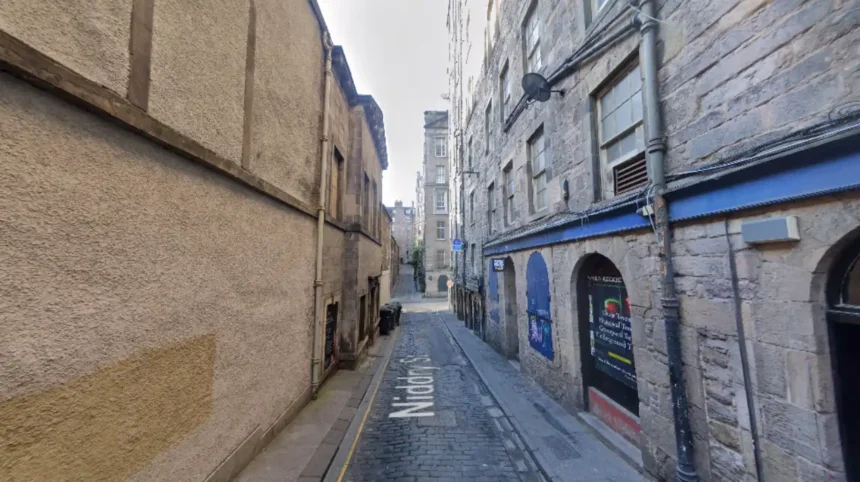
The vaults remained sealed behind brick walls and stone infill for over one hundred years following their mid-nineteenth-century closure. Municipal authorities had blocked off entry points between 1835 and 1875 to eliminate illegal squatting and crime. In 1985, Norrie Rowan gained access to a cellar beneath a building on Blair Street.
He found a narrow break in a stone wall that led into the abandoned bridge arches. Rowan used this entrance to help Romanian rugby player Cristian Raducanu escape media attention during political asylum proceedings in 1989.
Full archaeological cleanup began in the early 1990s under private conservation efforts. Excavators removed hundreds of tonnes of packed earth, broken brickwork, and historical garbage from the chambers. Workers discovered intact mid-nineteenth-century artifacts buried within the floor middens.
Artifacts recovered included ceramic medicine bottles, clay smoking pipes, children’s toys, leather shoes, and thousands of oyster shells. Oysters were a cheap staple food for poor Edinburgh residents during the eighteenth and nineteenth centuries.
Archaeologists also found an intact water well inside the chamber area known as The Caves. Modern safety retrofits added lighting, timber walkways, and structural supports, allowing public access through licensed heritage tour operators.
What modern uses and cultural impacts define the Edinburgh vaults today?
The Edinburgh vaults function today as historic tourism sites, private event venues, and official performance spaces for the Edinburgh Festival Fringe. They serve as cultural landmarks that preserve eighteenth-century civil engineering and social history.
Modern Edinburgh treats the South Bridge vaults as protected historic infrastructure and commercial venues. Heritage tourism operators conduct daily educational and ghost tours through cleared sections of the complex. Visitors access authentic cobblestone passages, stone archways, and preserved hearths.
The atmospheric setting attracts researchers, historical societies, and television production crews studying urban history. Paranormal television shows like Most Haunted and Ghost Adventures have filmed episodes in the dark chambers, popularizing supernatural folklore.
Controlled scientific investigations by University of Edinburgh psychologists found that physical factors like cold drafts, air currents, low-frequency sound, and light deprivation explain ghost sightings.
Commercial sections of the vaults have been converted into entertainment spaces. Venues such as The Caves, The Rowantree, and The Subway Cowgate occupy multiple arches under South Bridge. These spaces host wedding receptions, music concerts, and theatrical performances.
During August, the vaults serve as primary performance spaces for the Edinburgh Festival Fringe. Over sixty individual shows occur daily inside the underground rooms. Modern building regulations require active ventilation systems, fire suppression equipment, and structural monitoring to preserve the stone architecture while maintaining public safety.
The subterranean complex remains an integral part of Old Town Edinburgh’s UNESCO World Heritage site designation.
What is the real difference between Mary King’s Close and the Edinburgh Vaults?
Mary King’s Close consists of historic 17th-century street tenement ruins buried under the City Chambers building on the Royal Mile. The Edinburgh Vaults are 18th-century stone arch chambers built inside South Bridge to support an elevated road surface.
Were the Edinburgh Vaults ever used as a plague pit during outbreaks?
No historical records show the South Bridge vaults were used as plague pits. The vaults were constructed between 1785 and 1788, centuries after the major Scottish bubonic plague outbreak of 1645 ended.
Why were the Edinburgh Vaults abandoned by local businesses so quickly?
Businesses abandoned the vaults due to severe water leakage through unsealed surface bridge paving stones. Persistent moisture destroyed stored merchandise, timber tools, and fabric goods within seven years of opening.
Can you explore the Edinburgh Vaults on your own without a tour guide?
Public access to the Edinburgh Vaults without an authorized tour guide or event ticket is illegal and unsafe. The chambers are private property secured behind locked entry gates, requiring guided lighting and safety management.
How cold do the Edinburgh underground vaults stay during the year?
The underground vaults maintain a constant chilly temperature between 10°C and 13°C year-round due to thick stone walls and lack of direct sunlight exposure. Visitors require warm clothing even during summer months.