Key Points
- Former wine waiter Aaron Stewart, 48, was reported to parliamentary security for threatening a former politician after being convicted of 17 sexual offences, including 10 rapes.
- Stewart posted a message on social media asking whether he should “disable” former SNP MP Tommy Sheppard in the street.
- Comedian Scott Agnew spotted the post and alerted Sheppard’s staff to Stewart’s escalating online behavior.
- UK Parliamentary Security assessed Stewart’s message as a “fairly open threat of assault”.
- Before her death from cancer in 2024, Scottish comedian Janey Godley was repeatedly harassed online by Stewart.
EDINBURGH (Edinburgh Daily) November 3, 2026 – A convicted serial rapist who previously subjected late Scottish comedian Janey Godley to prolonged online abuse was reported to parliamentary security services following an alleged threat directed at a former Scottish National Party (SNP) Member of Parliament.
- Key Points
- What were the circumstances surrounding the threat to Tommy Sheppard?
- How was late comedian Janey Godley targeted?
- What details emerged during Aaron Stewart’s criminal trial?
- Background of the particular development
- Prediction: How this development can affect parliamentary security and public figure safety
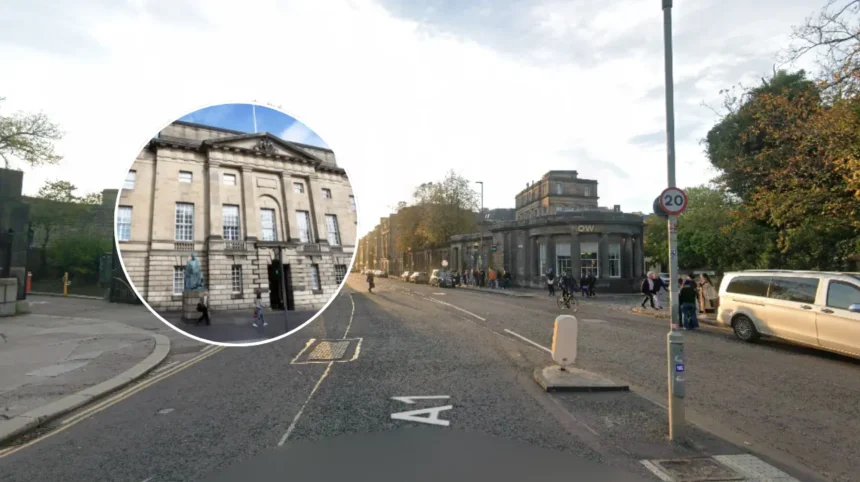
Aaron Stewart, 48, was found guilty at the High Court in Edinburgh of 17 sexual offences committed against five women over a 16-year period between 2008 and 2024, including 10 counts of rape.
Following revelations surrounding his conviction, it emerged that Stewart had also been reported to UK Parliamentary Security after posting a message questioning whether he should “disable” former Edinburgh East MP Tommy Sheppard.
What were the circumstances surrounding the threat to Tommy Sheppard?
As reported by Mark McGivern, Chief Reporter of the Daily Record, Aaron Stewart sent a message asking if he should “disable” Tommy Sheppard in public, prompting an immediate security escalation. The perceived threat was spotted by comedian Scott Agnew, a close friend of the late Janey Godley.
Agnew contacted Sheppard’s team to highlight the message, writing:
“Myself and Janey spotted this message and felt it best to flag it and him up – I’m sure you’ve already had dealings with him. But we’re concerned by this message as it does seem like a bit of an escalation.”
Agnew further detailed Stewart’s online behavior, describing his posts as “frequently unhinged and fantastical” and noting that Stewart had attempted to start an online campaign against him while he was recovering in a high dependency unit following a heart attack.
Upon receiving the warning, a representative from Sheppard’s office confirmed that the message was escalated to the UK Parliament Security team, who evaluated it as a “fairly open threat of assault”.
How was late comedian Janey Godley targeted?
As reported by Mark McGivern of the Daily Record, Stewart conducted a prolonged campaign of online abuse against comedian Janey Godley prior to her death from ovarian cancer in 2024. Godley reported Stewart to Police Scotland after he repeatedly published unfounded claims alleging she was a supporter of the IRA.
Stewart also mocked Godley by dressing up as her for a photograph that he subsequently posted online. The harassment was so persistent that Godley eventually referenced the abuse within her live comedy routines.
What details emerged during Aaron Stewart’s criminal trial?
The High Court in Edinburgh heard details regarding Stewart’s offenses against five women between 2008 and 2024. Formerly employed as a wine waiter at the Rogano restaurant in Glasgow, Stewart committed sexual assaults and rapes in Glasgow, Edinburgh, Spain, and Morocco.
Court records document that Stewart’s offending began in 2008 when he choked, pulled the hair of, and raped his first victim at a Glasgow flat.
Subsequent offences included an indecent assault at a Glasgow venue in April 2009, followed by a rape in September 2009 involving an intoxicated victim unable to consent. Further offences included repeated rapes of a woman between 2019 and 2021.
During the proceedings, one victim testified regarding Stewart’s conduct during an assault, stating:
“He forced me to look at him, saying, ‘Look at me’.”
Stewart remains in custody awaiting formal sentencing following his conviction on all 17 charges.
Background of the particular development
The reporting of Aaron Stewart to parliamentary security highlights ongoing challenges surrounding the security of public figures and the monitoring of online abuse.
Over recent years, UK parliamentary security infrastructure has undergone significant expansion following heightened safety concerns for elected officials. Threats delivered via social media platforms regularly trigger formal risk assessments by dedicated parliamentary and police intelligence units.
The case also intersects with broader discussions across Scotland regarding online stalking and harassment patterns. Scottish police forces and legal institutions have increasingly examined the link between persistent digital harassment campaigns and individuals with histories of violent or sexual offending.
Prediction: How this development can affect parliamentary security and public figure safety
This development is likely to prompt tighter integration between parliamentary security protocols and civil police intelligence systems when tracking high-risk online perpetrators.
For public figures and politicians, security teams may implement lower thresholds for reporting digital threats originating from accounts linked to individuals undergoing criminal proceedings or with violent criminal records.
Additionally, advocacy groups focusing on online safety and violence against women are expected to use this case to press social media platforms for swifter intervention mechanisms when users display escalating patterns of harassment toward public personalities.