Key Points
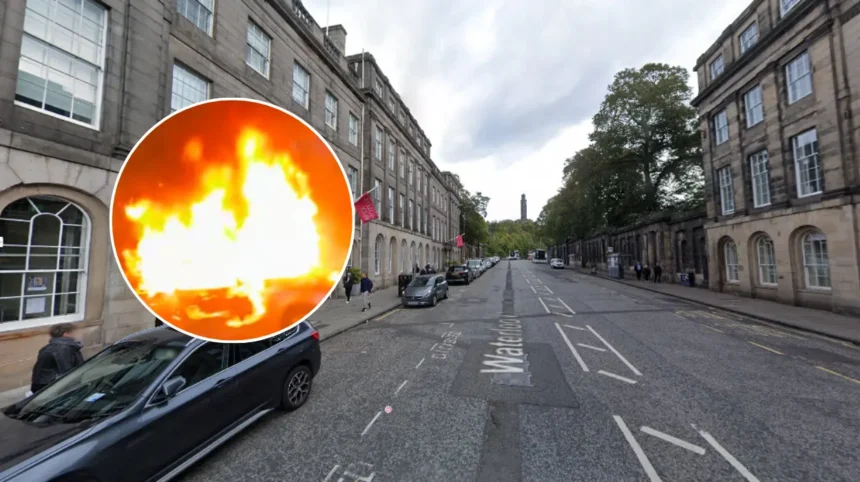
- A car caught fire on a main road in Edinburgh during the morning rush hour.
- Scottish Fire and Rescue Service crews and Police Scotland officers attended the scene to extinguish the flames and direct traffic.
- Authorities reported no injuries or casualties.
- Traffic backed up across nearby commuting routes while emergency crews worked at the scene.
- Officials are inspecting the car to find out what started the fire.
Edinburgh (Edinburgh Daily) November 3, 2026 — Emergency services were called to a major Edinburgh route during peak morning rush hour after a vehicle unexpectedly burst into flames, sending thick clouds of smoke into the sky and causing significant traffic disruption for morning commuters.
The vehicle caught fire on a primary traffic artery, causing immediate congestion as surrounding drivers slowed down and pulled over to safety. Fire crews and police officers arrived promptly to extinguish the vehicle and safely direct traffic around the emergency zone.
What caused the rush-hour car fire on the busy Edinburgh road?
As reported by Neil Johnstone of the Edinburgh Evening News, a spokesperson for the Scottish Fire and Rescue Service stated that emergency crews responded quickly to reports of a vehicle ablaze along a prominent Edinburgh roadway.
“We were alerted to reports of a vehicle fire in Edinburgh during peak travel times. Operations Control mobilised fire appliances to the scene, where crews extinguished the blaze and ensured the surrounding area was made safe. There were no reported casualties.”
Firefighters deployed hose reel jets and specialist equipment to suppress the flames, which had engulfed the engine bay and passenger cabin within minutes.
How did Police Scotland and emergency services manage the traffic impact?
Police Scotland officers quickly implemented partial road closures and managed traffic safety to allow emergency personnel to work safely.
As reported by Isla Storie of Edinburgh Live, a Police Scotland spokesperson confirmed the police presence at the scene and addressed the public safety measures taken:
“Officers were called to assist emergency service partners following a report of a vehicle on fire on a busy Edinburgh thoroughfare. No injuries were reported, and traffic management measures were put in place while the vehicle was recovered and the roadway made clear.”
Despite the rapid intervention of the fire service, the vehicle suffered extensive thermal damage. Tailbacks extended along surrounding commuter routes as lanes remained restricted while vehicle recovery teams safely towed the charred frame.
Background of vehicle fire developments on Edinburgh roads
Vehicle fires on busy commuter routes in urban areas like Edinburgh typically stem from mechanical failures, electrical faults, or fuel system leaks. During peak traffic hours, cars operate under extended stop-and-start conditions, which can elevate engine bay temperatures and trigger pre-existing technical flaws.
Over recent years, transport authorities and emergency services in Scotland have continuously refined emergency response protocols for rush-hour incidents on key corridors.
Quick-response procedures ensure that traffic management plans and fire suppression units operate in tandem to clear obstructions, minimize secondary collisions, and prevent long-term structural damage to asphalt surfaces caused by extreme heat.
What is the prediction for local motorists and commuter routes?
This recent incident highlights the ongoing sensitivity of Edinburgh’s road network during peak hours. Even minor vehicle disruptions or mechanical fires can create immediate ripple effects across connecting routes, leading to severe delays for public transit and private motorists alike.
In the short term, local drivers are advised to maintain routine maintenance checks on their vehicles—particularly electrical components and fluid lines—to reduce the risk of unexpected fires. Local transport authorities are expected to review response times and diversions for critical routes to ensure minimal disruption to daily commuters whenever unexpected road incidents occur.