Key Points
- Expansion plans for a third runway at Heathrow Airport have raised concerns over a potential drain on resources, train path capacity, and passenger volume at regional transit hubs.
- Alterations to rail infrastructure to support London’s expanded air hub risk creating congestion and reallocating capacity along the East Coast Main Line.
- Independent findings show thousands of prospective aviation and support jobs could shift from regional facilities like Edinburgh and Manchester to London and the South East.
- Opponents and local representatives say prioritizing major capital projects in London hinders balanced economic growth across Scotland and Northern England.
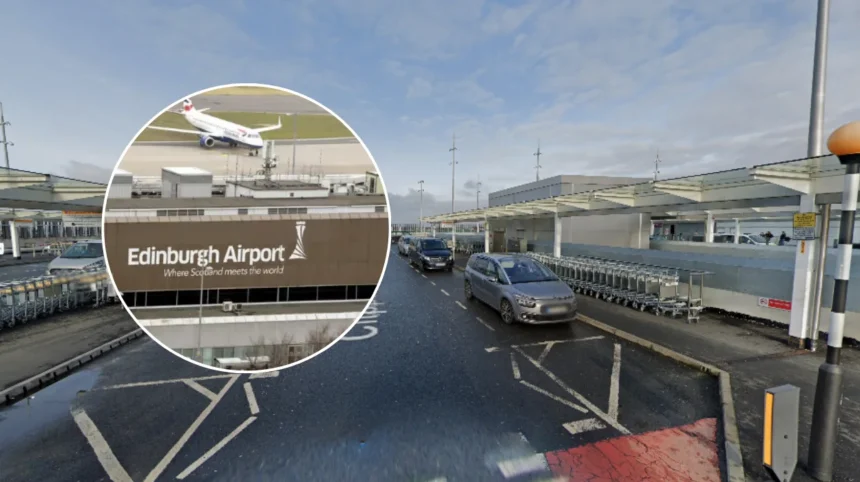
EDINBURGH (Edinburgh Daily) September 17, 2026 – Concerns are escalating across Scotland’s capital over the broader regional consequences of expanding London Heathrow Airport. A prominent capital MP has raised warnings that the multi-billion-pound infrastructure project in the South East could inflict severe collateral damage on Scottish transport networks. Specifically, the project risks cannibalizing capacity on the East Coast Main Line and diverting long-term passenger growth and job creation away from Edinburgh Airport.
- Key Points
- Will the Heathrow Expansion Divert Crucial Investment From Scottish Transport Infrastructure?
- How Could a Third Runway Impact Edinburgh Airport’s Growth and Local Employment?
- Background of the Heathrow Expansion Development
- Predictions: How This Development Could Affect Scottish Passengers and Regional Businesses
The intervention comes amidst renewed national debates over the environmental, financial, and regional impacts of building a third runway at Heathrow. While ministers and Heathrow bosses continue to argue that expanding the UK’s global gateway will unlock nationwide economic benefits, critics argue that concentrating national air and rail connectivity around London actively starves regional economies of vital investment.
Will the Heathrow Expansion Divert Crucial Investment From Scottish Transport Infrastructure?
As reported by transport correspondents at local news outlets, the core concern centers on how the immense capital and network capacity required for Heathrow’s expansion will affect wider UK transport networks. To support an expanded Heathrow—which aims to handle up to 150 million passengers annually—the UK Government and rail planners have committed to significantly increasing the proportion of surface access journeys made by train.
However, industry watchers and local representatives warn that prioritizing rail slots, surface links, and cross-London connectivity to feed Heathrow could bottleneck the East Coast Main Line. The route serves as the primary rail artery connecting Edinburgh and Northern England to London. As reported by regional policy analysts, heavy congestion on cross-country lines and the allocation of high-speed paths toward London hubs threaten to limit capacity for long-distance services connecting Scotland to key English commercial centers.
How Could a Third Runway Impact Edinburgh Airport’s Growth and Local Employment?
Beyond the rails, the potential economic fallout for Edinburgh Airport is drawing sharp scrutiny. While Heathrow management maintains that regional feeder routes will benefit from expanded international flight capacity, independent economic analysis presents a starkly different picture.
As reported by research groups including the New Economics Foundation, expanding Heathrow’s total capacity could result in over 20,000 aviation and supply-chain jobs being concentrated into London and the South East over the coming decades—roles that would otherwise have been generated across regional airports like Edinburgh, Manchester, and Birmingham.
Edinburgh Airport, which supports roughly 8,000 direct and campus-wide jobs, risks seeing direct international route expansion suppressed. Airlines may choose to centralize long-haul flights at an expanded Heathrow hub rather than maintaining direct point-to-point services from Scotland.
Background of the Heathrow Expansion Development
The debate over expanding Heathrow has spanned several decades, marked by repeated legal challenges, environmental reviews, and shifting government policy.
- 2018–2020: Parliament initially approved the Airports National Policy Statement (ANPS) supporting a third runway. The project faced immediate legal pushback from environmental groups and local councils over carbon emission commitments under the Paris Agreement.
- Post-Pandemic Resumption: Following sharp drops in air travel during the COVID-19 pandemic, plans were temporarily shelved. However, rapidly rebounding passenger volumes—reaching 84.46 million at Heathrow in 2025—prompted airport operators and ministers to formally reignite expansion proposals.
- 2025–2026 Climate and Regional Scrutiny: Recent evaluations by the UK Committee on Climate Change (CCC) warned that expanding airport capacity conflicts directly with statutory net-zero targets. Simultaneously, regional leaders across Scotland and Northern England have voiced opposition to national funds and network focus being directed into South East infrastructure.
Predictions: How This Development Could Affect Scottish Passengers and Regional Businesses
If Heathrow expansion proceeds as planned, several concrete operational and financial shifts are expected to impact commuters, travelers, and businesses across Scotland:
Economic Centralisation in London: For Scottish businesses relying on global trade, freight, and foreign direct investment, the centralization of air traffic in London risks widening the economic gap between the South East and regional economies in Scotland.
Higher Fares and Transits for Scottish Passengers: If direct international routes from Edinburgh Airport are curtailed in favor of centralized Heathrow connections, Scottish travelers will face mandatory layovers in London, increasing total travel times and airfare costs.
Train Capacity Pressures on the East Coast Line: As national rail networks adjust to meet Heathrow’s strict public transit quotas, regional freight and passenger services connecting Edinburgh to London along the East Coast Main Line could face reduced schedule flexibility and increased onboard crowding.