Living in Edinburgh long term provides exceptional lifestyle quality, robust career opportunities, and world-class heritage, though high housing costs and heavy summer tourist congestion represent significant structural challenges that require careful long-term financial planning.
- How much does housing cost for long-term residents in Edinburgh?
- What are the career and employment prospects in Edinburgh?
- How reliable is the public transport network in Edinburgh?
- What is the climate and physical environment like in Edinburgh?
- How does tourism impact long-term residents in Edinburgh?
Edinburgh operates as the political, legal, and financial capital of Scotland, offering residents access to a resilient local economy alongside exceptional historical architecture. Long-term residents benefit from high average salaries of £38,500, a highly walkable urban core, and lower overall crime rates than most major metropolitan areas in the United Kingdom. The City of Edinburgh Council oversees extensive municipal infrastructure, supporting public education, waste management, and sustainable transportation networks across the capital region.
The financial reality of residing in the city permanently involves navigating the highest residential rental and purchase prices in Scotland. Private residential tenancy agreements are regulated by the Scottish Government under the Private Housing (Tenancies) (Scotland) Act 2016, providing security of tenure but facing elevated baseline pricing. Monthly expenditures for housing, energy, and council taxes demand a larger percentage of net household income compared to neighboring regions like Glasgow or West Lothian.
Living long term in the capital requires balancing economic trade-offs against unique geographical and cultural benefits. Residents enjoy immediate access to vast green spaces like Holyrood Park, outstanding healthcare services delivered via NHS Lothian, and premier educational institutions including the University of Edinburgh. Long-term planning must account for Scottish income tax differentials, local authority council tax bands, and seasonal population surges driven by global events like the Edinburgh Festival Fringe.
How much does housing cost for long-term residents in Edinburgh?
Housing in Edinburgh costs significantly more than the Scottish national average, with two-bedroom rental properties averaging £1,250 per month and average residential property purchase prices reaching £281,700 according to Zoopla market reports.
The private rental sector in Edinburgh is defined by sustained high demand and limited supply across central and suburban neighborhoods. Average monthly rent for a one-bedroom apartment stands at £950, while three-bedroom family properties command £1,650 per month. Council tax payments add substantial monthly costs, with Band D residential properties assessed at £2,278 annually, an amount that includes compulsory water and sewerage charges administered by Scottish Water.
Residential real estate purchase markets present high barriers to entry for first-time buyers and long-term relocators. Zoopla property indices place the average city home price at £281,700, showing a price-to-income ratio of 6.5 times the median local salary. Average purchase figures vary by building type:
- Flats and apartments average £237,600.
- Terraced houses average £331,000.
- Semi-detached homes average £368,900.
- Detached properties average £557,400.
Long-term housing security is impacted by Scottish housing legislation, which imposes strict standards on private landlords. The Scottish Government enforcement of rent adjudication processes and energy efficiency mandates helps maintain quality standards across the housing stock. However, competition for leases in prime residential sectors like Marchmont, Bruntsfield, Stockbridge, and Morningside remains exceptionally fierce throughout the calendar year.
What are the career and employment prospects in Edinburgh?
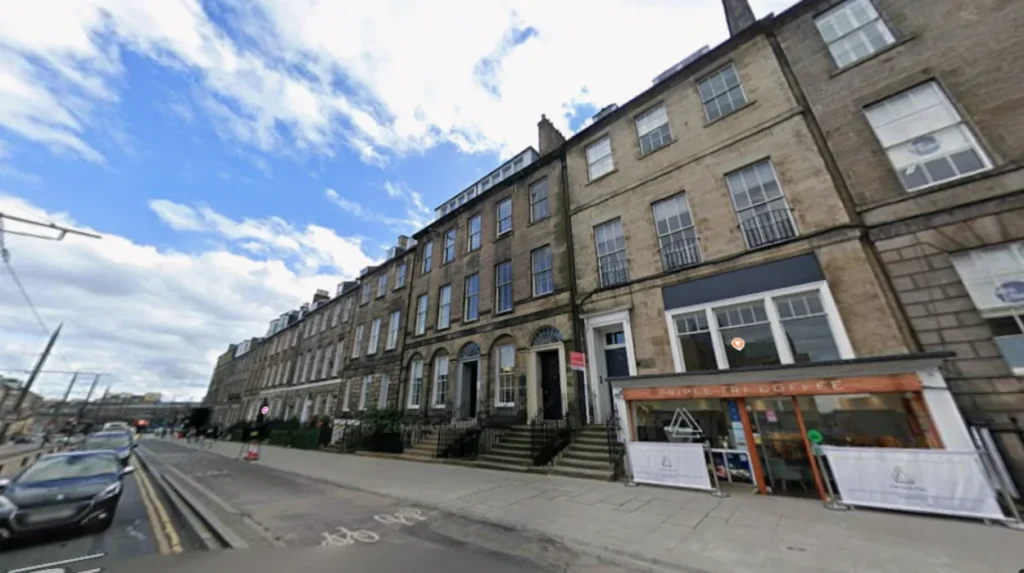
Edinburgh hosts the UK second-largest financial services centre and a booming technology sector, generating average annual salaries of £38,500 supported by strong professional recruitment across corporate, legal, higher education, and public sector industries.
The local economy of Edinburgh is built upon corporate banking, asset management, digital technology, life sciences, and higher education institutions. Major global financial corporations maintain headquarters or operational hubs in the city, including Bank of Scotland, Royal Bank of Scotland, Scottish Widows, and Baillie Gifford. The financial services industry provides high-earning employment pathways that help offset local living costs, helping maintain the city overall median gross earnings above the UK average.
Technology and software engineering represent rapidly growing segments within the local labor market. Edinburgh contains prominent tech companies such as Skyscanner and FanDuel, alongside incubators affiliated with the University of Edinburgh School of Informatics. Higher education institutions, including Heriot-Watt University and Edinburgh Napier University, generate extensive academic, administrative, and research employment opportunities that attract international talent to the region permanently.
Public sector administration, legal practice, and healthcare infrastructure round out the primary employment landscape. The Scottish Parliament, located in Holyrood, houses civil service and government policy roles, while the NHS Lothian health board remains one of the area largest employers. These diverse sectors ensure low structural unemployment, providing long-term career growth and professional stability across multiple commercial disciplines.
How reliable is the public transport network in Edinburgh?
Public transport in Edinburgh is exceptionally reliable, featuring an extensive bus network operated by Lothian Buses and a modern tram line linking Edinburgh Airport directly to Newhaven through the city centre.
Lothian Buses operates the primary public transport infrastructure across the City of Edinburgh, Midlothian, East Lothian, and West Lothian. The bus fleet consists largely of modern low-emission double-decker vehicles operating high-frequency routes 24 hours a day. Passengers utilize contactless tap-on tap-off payment systems with daily capping or subscription Ridacards, ensuring affordable urban mobility without requiring personal private vehicle ownership.
Edinburgh Trams provides high-capacity rail transit stretching from Edinburgh Airport through Princes Street, Leith, and terminating at Newhaven. The tram extensions have improved transit connectivity for northern residential districts, offering integrated ticketing alongside Lothian Buses. Rail travel for interstate or regional journeys is anchored by Edinburgh Waverley railway station and Haymarket station, providing direct services via LNER to London Kings Cross in 4.5 hours.
Driving personal motor vehicles in central Edinburgh is discouraged due to extensive traffic restrictions, low-emission zones, and strict parking enforcement. City of Edinburgh Council policies prioritize active travel, expanding dedicated cycle paths, pedestrianized avenues, and 20 mph speed limits across residential streets. Consequently, long-term residents save substantial funds by foregoing personal vehicle maintenance, fuel expenses, and municipal parking permits.
What is the climate and physical environment like in Edinburgh?
Edinburgh features a temperate maritime climate with mild summers averaging 19°C, cool winters averaging 6°C, moderate rainfall, high winds, and dramatic seasonal shifts in daylight hours throughout the year.
The climate of Edinburgh is regulated by its coastal position along the Firth of Forth in eastern Scotland. Summers are mild and pleasant, with daytime high temperatures reaching an average peak of 19.2°C in July. Daylight extends up to 17.5 hours per day during the summer solstice in June, allowing extensive outdoor recreation. Winters are long and cool, with daytime highs around 6.7°C in January and daylight dropping to under 7 hours in December.
Rainfall in Edinburgh averages between 48mm and 84mm per month, making it drier than western Scottish cities like Glasgow. Precipitation is spread evenly across the year, with October being the wettest month recording 84mm of rainfall across 13 rain days. Cold easterly winds off the North Sea, known locally as the haar, periodically bring coastal fog and low cloud cover across the city, reducing temperatures suddenly during spring and summer months.
The physical geography of the city is defined by extinct volcanic structures and ancient glacial erosion. Seven prominent hills structure the landscape, including Arthur Seat, Castle Rock, Calton Hill, and the Braid Hills. Topographical variation provides dramatic urban views and immediate access to expansive nature reserves, though navigating steep inclines forms an unavoidable part of daily pedestrian transit for local residents.
How does tourism impact long-term residents in Edinburgh?
Tourism brings substantial economic revenue to Edinburgh but causes seasonal overcrowding, increased short-term let pressure, inflated commercial pricing, and severe transit congestion during peak August festival months.
The Edinburgh Festival Fringe and the Edinburgh International Festival transform the capital every August into the largest arts festival on earth. Over three million visitors descend upon the city annually, generating hundreds of millions of pounds for the Scottish economy while creating challenges for permanent local populations. City centre pavements, public transport routes, and hospitality venues operate at peak capacity, complicating routine commutes and daily errands for long-term residents.
Short-term holiday lets have historically reduced the availability of permanent long-term residential housing stock across central districts. In response, the City of Edinburgh Council implemented Short-Term Let Control Areas, requiring property owners to secure planning permission and operator licenses before letting properties on platforms like Airbnb. These municipal regulatory frameworks aim to protect traditional housing supplies for permanent residents and mitigate neighborhood noise disruptions.
Retail and dining ecosystems across the city centre adapt heavily to tourism flows throughout the year. Price inflation across restaurants, pubs, and cultural events occurs frequently in high-density areas like the Royal Mile, Grassmarket, and Old Town. Long-term residents frequently adjust their daily routines during peak summer months, utilizing suburban commercial hubs in South Morningside, Corstorphine, or Stockbridge to avoid tourist congestion.
Is Edinburgh safer than other major UK cities?
Yes, Edinburgh consistently ranks as one of the safest major cities in the United Kingdom. It reports significantly lower violent crime rates than cities of comparable size, supported by proactive policing and well-lit public transit corridors.
How do Scottish income tax rates affect earnings in Edinburgh?
Scottish income tax bands differ from the rest of the UK, applying higher tax rates to middle and top earners. Individuals earning above £28,867 pay slightly higher income tax than workers in England, which impacts overall net monthly take-home pay.
Do you need a car to live in Edinburgh long term?
No, owning a private motor vehicle is unnecessary for most residents living in Edinburgh. The city boasts world-class bus and tram systems, high pedestrian walkability, expanding cycleways, and strict central driving restrictions.
What is the average cost of utilities for a home in Edinburgh?
Basic household utilities for an apartment in Edinburgh average approximately £165 to £250 per month. This figure covers heating, electricity, gas, and garbage disposal, with municipal water charges included separately inside annual council tax bills.
What are the best areas for families to live in Edinburgh?
Morningside, Stockbridge, Bruntsfield, and Cramond are top-rated residential areas for families. These neighborhoods feature excellent state and independent schools, public parks, low crime rates, and convenient public transport connections directly into the city centre.