Key Points
- The City of Edinburgh Council granted final planning permission and legal sign-off to convert the former Rose Theatre into a hotel.
- Developer Morningbridge Ltd and Scottish lifestyle brand ANTA Design will redevelop the building at 204 Rose Street in Edinburgh city centre.
- Plans for the site include 43 hotel rooms, a rooftop café, and a bar area open to guests and visitors.
- Morningbridge Ltd submitted revised plans after initial rejections, adding measures to protect internal features such as the sanctuary space and timber furnishings.
- Council officials issued the final sign-off after the developer agreed to a Section 75 legal contract covering financial contributions toward local infrastructure and services.
Edinburgh (Edinburgh Daily) October 22, 2026 — The City of Edinburgh Council has given final planning approval to transform the disused Rose Theatre in the heart of Edinburgh’s city centre into a boutique hotel.
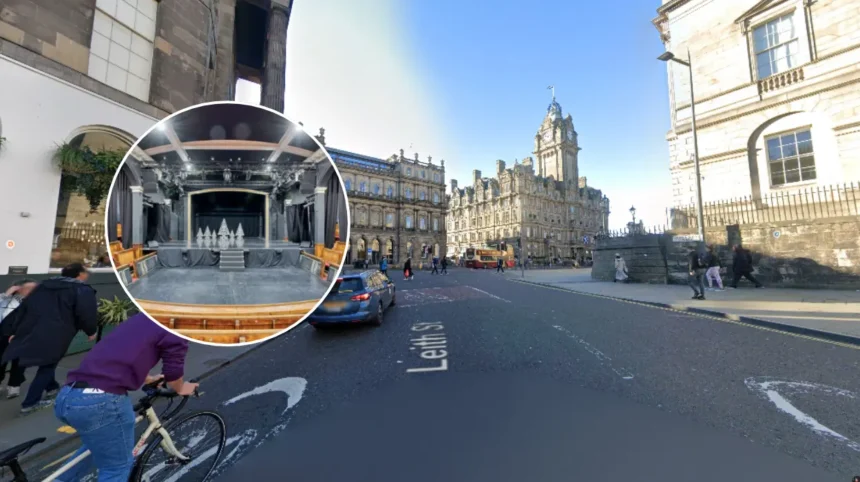
Property developer Morningbridge Ltd, alongside Scottish lifestyle brand ANTA Design, will convert the former place of worship and venue located at 204 Rose Street into a boutique hotel featuring a rooftop café and bar.
The final authorization followed the formal conclusion of developer contribution agreements between the applicant and the local planning authority.
As reported by Donald Turvill of the Edinburgh Evening News, developers have secured full legal sign-off after satisfying all outstanding planning conditions and infrastructure contribution requirements set by local officers.
The decision clears the way for construction work to begin on the B-listed premises, which have sat largely vacant in recent years following several unsuccessful attempts to establish a permanent cultural usage.
“It is important to me that buildings have that sustainable future, rather than we sit and wait for an absolutely perfect but non sustainable future for them. I think this is a sensible compromise.”
What are the revised specifications for the 204 Rose Street redevelopment?
The finalized scheme will deliver 43 hotel rooms across the historic structure. The layout incorporates a rooftop café and bar area designed to offer panoramic views across the city centre, replacing earlier, larger-scale commercial options.
The project specifically addresses previous heritage objections by adapting the internal architecture rather than demolishing key historic character elements.
As reported by Fergus Morgan of The Stage, Morningbridge Ltd and ANTA Design submitted revised proposals to council planners after an initial, higher-density application was rejected due to concerns regarding internal heritage conservation.
The approved plans retain the core internal architectural features, including the original sanctuary space, whilst enclosing sensitive timber structures within free-standing protective enclosures during construction.
How did Edinburgh council members react during the committee site visits?
Members of the City of Edinburgh Council Development Management Sub-Committee visited the Rose Street site prior to the vote to evaluate the physical impact of the design. Councillors examined the spatial layout of the main sanctuary alongside proposed alterations to the east wall window configurations.
As reported by Thom Dibdin of All Edinburgh Theatre, Councillor Tim Pogson recognized the valuable opportunity provided by the site visit to appreciate the internal space, noting: “I do welcome all the work that’s gone into this to retain a great deal of what we saw in the spirit of that space, even if we are losing those balcony aspects of it.”
“I do welcome all the work that’s gone into this to retain a great deal of what we saw in the spirit of that space, even if we are losing those balcony aspects of it.”
What is the background of the Rose Theatre property development?
The building at 204 Rose Street was originally constructed in 1908 as a church before undergoing conversion into a venue space. In 2017, the venue opened briefly as an official performance spot during the Edinburgh Festival Fringe under the stewardship of artistic directors, but failed to sustain full-time operational viability as an active theatre.
The property was subsequently placed on the commercial market in 2023 with an asking price exceeding £3 million. It was later acquired by Morningbridge Ltd.
In late 2025, initial conversion applications submitted by the developer were turned down by Edinburgh planners following objections from Historic Environment Scotland, who raised concerns regarding the proposed loss of internal period features.
In response, Morningbridge Ltd collaborated with ANTA Design to revise the structural parameters. The revised designs reduced the overall room density and introduced protective measures to safeguard internal joinery, leading to initial committee approval earlier in 2026, which has now culminated in final legal sign-off following completed Section 75 legal agreements.
How will this development affect local businesses and Edinburgh residents?
The final council approval for 204 Rose Street will impact local business operators, nearby residents, and Edinburgh’s commercial property sector in several distinct ways:
- Commercial Footfall for West End Traders: The conversion of a disused building into an operating 43-room boutique hotel and rooftop bar is expected to generate regular footfall along Rose Street and surrounding West End thoroughfares. Local retail and hospitality businesses stand to gain from increased visitor spending throughout the year.
- Heritage Preservation vs. Cultural Loss: For local heritage groups and residents, the project secures a viable economic future for a Category B-listed building that risked prolonged vacancy. However, local arts organizations and performance groups face the permanent loss of a potential venue space in the city centre, reflecting broader commercial pressures on non-subsidized arts spaces in Edinburgh.
- Construction and Amenity Impact on Immediate Neighbours: Adjacent residents and traders along Rose Street will experience short-term disruptions associated with urban construction within a dense pedestrian zone. In the long term, the addition of a rooftop bar will introduce new noise management and operational regulations supervised by the council’s licensing authorities to protect local residential amenity.