Planning a 3 day evergreen itinerary in Edinburgh requires organizing activities geographically across Old Town, New Town, and outer districts to optimize travel time. This structured approach ensures balance between historic landmarks, cultural sites, and seasonal outdoor spaces.
Edinburgh covers a compact geographical footprint in the Lothian region of Scotland. The city centers around two primary UNESCO World Heritage districts separated by Princes Street Gardens. Efficient movement relies on grouping physical locations within dedicated days. Day one focuses on the volcanic ridge of the Old Town. Day two transitions into the Georgian grid system of the New Town. Day three incorporates peripheral maritime and green spaces like Leith and Holyrood Park.
Travelers navigate these districts primarily on foot due to short spatial distances. Vertical elevation changes mark the landscape because the urban design conforms to extinct volcanic topographies. Public transport options include Lothian Buses and the Edinburgh Trams system for connections between central hubs and outlying sectors. Structured planning prevents unnecessary backtracking up steep urban inclines like the Mound. Dividing the itinerary into defined geographic zones ensures equal coverage of historical, cultural, and natural assets.
Seasonal factors alter daylight hours from seven hours in December to eighteen hours in July. Indoor cultural reserves such as national galleries provide weather independent alternatives during winter periods. Outdoor ascents like Arthur’s Seat require flexible scheduling based on real time meteorological conditions. Securing advance timed entry reservations for primary institutions stabilizes daily time frames. Strategic geographic structuring maintains operational efficiency across all four annual seasons.
How Do You Explore Edinburgh Old Town on Day One?
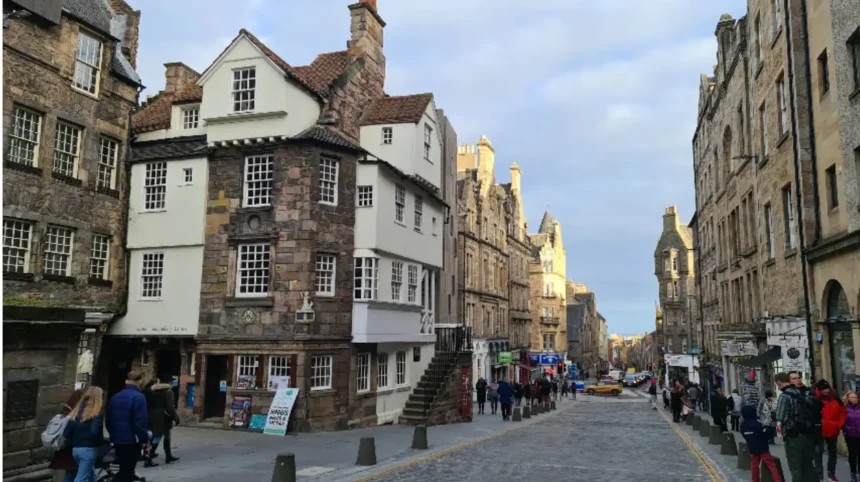
Exploring Edinburgh Old Town on day one involves traversing the Royal Mile from Edinburgh Castle to the Palace of Holyroodhouse. This route exposes visitors to medieval closes, preserved wynds, subterranean structures, and core national monuments along a continuous ridge.
The Old Town stands on a crag and tail landform created during the last glacial period. Castle Rock sits at the western peak, elevation 130 meters above sea level. Edinburgh Castle houses national treasures including the Crown Jewels of Scotland and the Stone of Destiny. Visitors begin entry at 09:30 to avoid peak crowd densities. Guided walking tours descend eastward along the Royal Mile, measuring exactly one Scots mile or 1.8 kilometers.
Subterranean historical sites lie directly beneath the visible cobblestone streets. The Real Mary King’s Close preserves 17th century domestic architecture beneath the modern City Chambers. St Giles’ Cathedral serves as the central religious landmark, featuring a 15th century crown spire and intricate stone masonry. Historic closes including Advocate’s Close and Anchor Close offer narrow pedestrian alleyways revealing views toward the northern New Town.
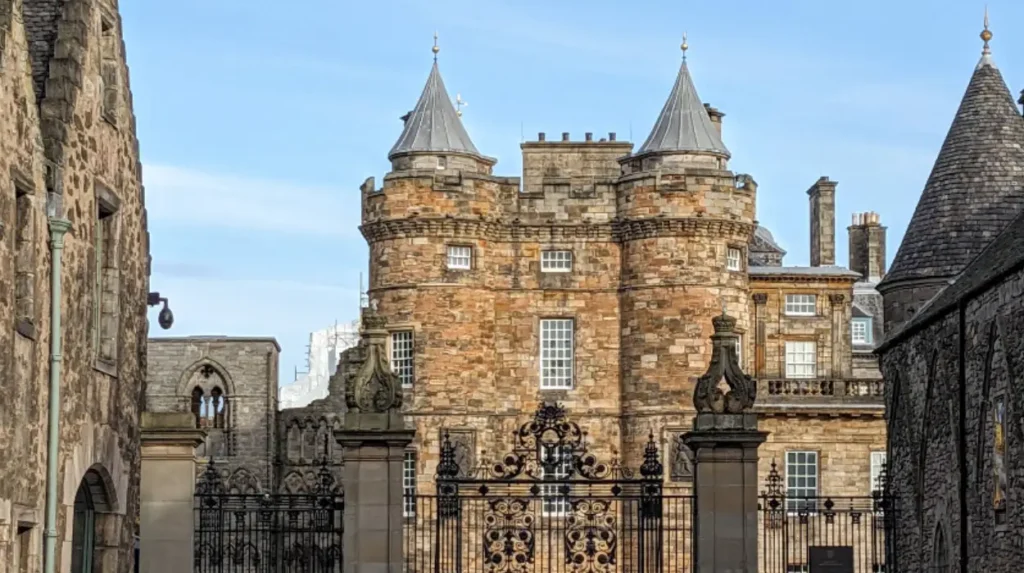
The eastern terminal of the Royal Mile accommodates the Palace of Holyroodhouse and the Scottish Parliament building. Holyroodhouse functions as the official royal residence in Scotland, containing historical apartments used by Mary, Queen of Scots. Opposite the palace, the modern Scottish Parliament displays contemporary architectural designs completed in 2004. This historic axis provides a complete timeline of Scottish political and architectural evolution across 1,000 years.
What Is the Ideal Day Two Itinerary for Edinburgh New Town?
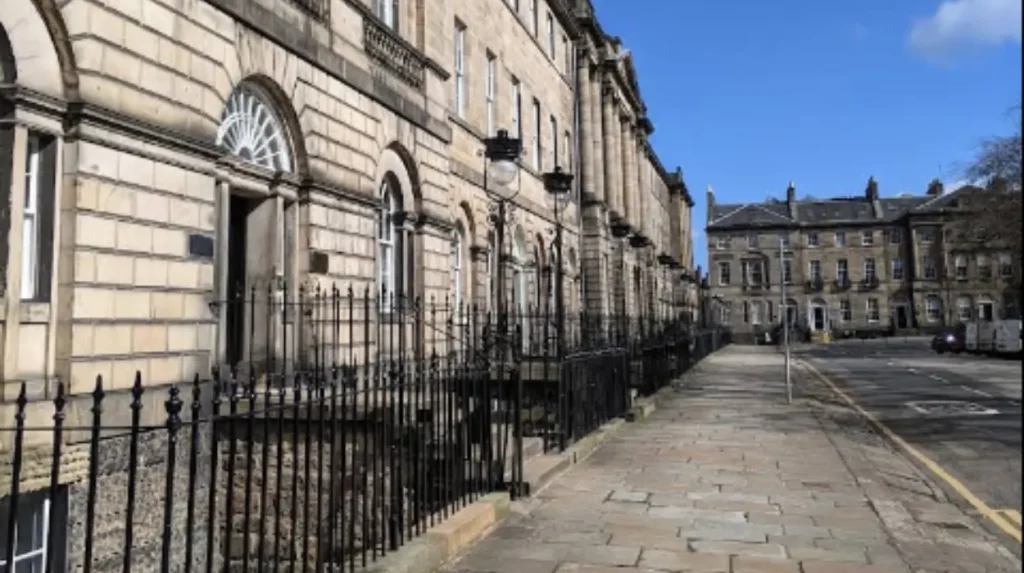
The ideal day two itinerary for Edinburgh New Town focuses on 18th century Georgian architecture, public gardens, and historic viewpoints. The route includes Princes Street Gardens, Charlotte Square, George Street, and the elevation of Calton Hill.
New Town construction began in 1767 following an architectural design contest won by James Craig. The layout features a formal grid pattern designed to relieve overcrowded conditions within the medieval Old Town. Princes Street Gardens forms the southern boundary, occupying the former bed of the drained Nor Loch. The Ross Fountain and the Scott Monument stand within these municipal gardens, offering unobstructed northern views of Castle Rock.
Charlotte Square displays conserved Georgian residential facades designed by architect Robert Adam. The Scottish National Gallery on the Mound contains national art collections spanning the Early Renaissance to the late 19th century. Walking along George Street reveals grand neoclassical commercial structures, high end retail spaces, and civic monuments. The Georgian House on Charlotte Square provides access to restored 18th century domestic interiors, demonstrating historical life among the Scottish Enlightenment elite.
Calton Hill marks the eastern termination of the New Town grid system. The hill accommodates neoclassical structures including the National Monument, the Dugald Stewart Monument, and the City Observatory. The National Monument was modeled after the Parthenon in Athens, earning Edinburgh the historic moniker of Modern Athens. Ascent via the paved pedestrian staircases requires 10 to 15 minutes from Regent Road. Calton Hill provides panoramic viewpoints over the Firth of Forth and the Old Town skyline.
How Should You Spend Day Three Around Dean Village and Leith?
Spending day three around Dean Village and Leith connects picturesque river valleys with historic maritime ports. The itinerary follows the Water of Leith walkway through Stockbridge before transitioning to the historic docks and naval vessels of Leith.
Dean Village originated as a grain milling settlement established along the Water of Leith river valley. Millstones and stone carved plaques remain embedded within historic residential structures throughout the gorge. The Well Court building represents 19th century model housing commissioned for local mill workers. Pedestrian walkways parallel the river, leading directly into the residential district of Stockbridge. Stockbridge features independent shops, Victorian sandstone terraces, and Circus Lane, a paved former mews street.
The Water of Leith Walkway extends through the Royal Botanic Garden Edinburgh. The garden spans 70 acres and houses over 13,000 living plant species within historic glasshouse collections. Public transport or a 30 minute walk connects Stockbridge to the port district of Leith. Leith served as Edinburgh’s primary trade port for centuries, handling goods imported from Baltic and continental European trade routes.
Ocean Terminal in Leith houses the Royal Yacht Britannia, the decommissioned royal vessel serving from 1953 to 1997. Self guided audio tours grant access to five interior decks, including the State Apartments and the Engine Room. The surrounding Shore district contains converted 18th century bonded warehouses, fine dining restaurants, and historic public houses along the waterfront. This district demonstrates the transformation of industrial maritime infrastructure into a contemporary cultural venue.
What Are the Best Times of Year to Visit Edinburgh?
The best times of year to visit Edinburgh are shoulder seasons including May, June, September, and October. These months offer mild weather, extended daylight hours, moderate visitor traffic, and operational accessibility across all primary tourist attractions.
May and June yield average high temperatures of 14°C to 17°C alongside maximum daylight duration approaching 17 hours. Flowering vegetation in Princes Street Gardens and the Royal Botanic Garden reaches peak visual conditions. Tourism numbers remain lower than peak summer levels, resulting in shorter queues at Edinburgh Castle and Holyroodhouse. Accommodation rates remain stable relative to midsummer pricing spikes.
August represents the absolute peak of international tourism due to the Edinburgh Festival Fringe and the Royal Edinburgh Military Tattoo. The population of the city doubles during this month, exceeding one million individuals. Street closures along the Royal Mile impede pedestrian travel speeds, while lodging prices reach maximum annual rates. Travelers seeking low crowd density should avoid August, whereas culture focused travelers target this period specifically for live performance arts.
Autumn months like September and October bring cooler temperatures averaging 10°C to 14°C. Deciduous foliage changes color across Holyrood Park, the Water of Leith, and public gardens. Winter months from November through February feature shorter daylight spans of 7 to 8 hours. Winter brings municipal Christmas markets, Hogmanay celebrations, lower lodging rates, and fewer outdoor queues, making winter viable for indoor museum itineraries.
How Can Travelers Efficiently Navigate Public Transit in Edinburgh?
Travelers efficiently navigate public transit in Edinburgh by utilizing Lothian Buses, Edinburgh Trams, and contactless payment systems. The integrated transit system links Edinburgh Airport, the central railway stations, and outer coastal districts seamlessy.
Lothian Buses operates an extensive bus network across Edinburgh and the Lothians. The fleet includes double decker buses servicing primary corridors every 5 to 10 minutes. Fare payment uses a contact-free system called Tap Tap Tap. Passengers tap a credit card, debit card, or mobile device on the driver’s reader upon entry. The system automatically caps daily charges at the price of a DayTicket when using the same payment card throughout the day.
The Edinburgh Tram network operates a single 18.5 kilometer line connecting Edinburgh Airport to Newhaven via the city center. Key stops include Haymarket Station, West End, Princes Street, St Andrew Square, Foot of Leith, and Ocean Terminal. Trams run at 7 minute intervals during peak operating hours. Passengers must purchase tickets or tap contactless cards at platform validation machines before boarding tram carriages.
Waverley Station serves as the primary railway terminal, situated in the valley between Old Town and New Town. Haymarket Station acts as the secondary commuter rail hub west of the center. Pedestrian movement remains the most effective transport method within the historical core due to pedestrianized zones along the Royal Mile and Rose Street. Taxis and ride-sharing services supplement public transit, though vehicle access remains restricted within Old Town historic closes.
What is the most budget friendly way to travel around Edinburgh for 3 days?
Walking is the most cost-effective travel method because key sights within Old Town and New Town sit close together. For longer journeys to Leith or Dean Village, Lothian Buses provide affordable options. Tap your contactless card on entry to take advantage of capped daily fares.
Is 3 days enough time to see the main sights in Edinburgh?
Three days provides enough time to explore Edinburgh’s core landmarks, historic districts, and cultural highlights. You can explore Old Town, New Town, and Leith without feeling rushed. The timeframe leaves room to visit Edinburgh Castle, Holyroodhouse, and Calton Hill comfortably.
Should I stay in Old Town or New Town for a 3-day visit?
Old Town offers close proximity to historical sights like Edinburgh Castle and the Royal Mile. New Town features wider Georgian streets, excellent shopping, boutique hotels, and lower foot traffic noise. Both districts provide convenient central bases within walking distance of Waverley Station.
What should I pack for a 3-day trip to Edinburgh?
Pack versatile layers, a waterproof jacket, and comfortable walking shoes designed for cobblestones and steep hills. Weather conditions change quickly across all seasons in Scotland. A sturdy umbrella and a small daypack will keep you prepared for sudden rain showers.
Do I need to book Edinburgh Castle tickets in advance?
Booking Edinburgh Castle tickets online in advance is essential because timed entry slots frequently sell out weeks ahead. Advance booking guarantees entry and grants access to online ticket discounts. Early morning slots help you beat peak tourist crowds.