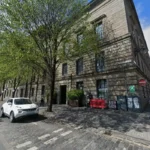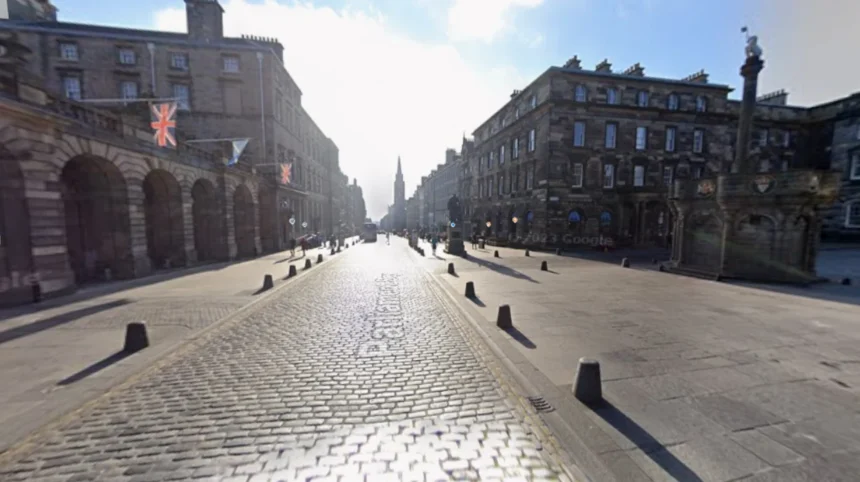
J.K. Rowling wrote early Harry Potter chapters in Edinburgh after moving to the city in late 1993. The author drafted significant portions of the debut novel while living as a single parent on state benefits.
- Which Edinburgh Cafes Did J.K. Rowling Actually Write In?
- Did Victoria Street Directly Inspire the Design of Diagon Alley?
- Are Gravestones in Greyfriars Kirkyard the Source of Character Names?
- Was Hogwarts School of Witchcraft and Wizardry Based on George Heriot’s School?
- What Real Literary and Cultural Footprints Did Rowling Leave in Edinburgh?
- Did J.K. Rowling write the entire Harry Potter series in Edinburgh cafes?
- Is Thomas Riddle’s grave in Greyfriars Kirkyard the real Voldemort?
- Can you visit the exact room where Harry Potter was completed?
- Is Diagon Alley officially based on Victoria Street in Edinburgh?
- What is the most authentic Harry Potter site to visit in Edinburgh?
Edinburgh holds a documented physical connection to the creation of the Harry Potter literary universe. Author J.K. Rowling relocated from Portugal to Scotland in December 1993 with her infant daughter Jessica.
During this period of financial hardship, Rowling frequented local cafes to write while her daughter slept in a pushchair. She completed the draft of Harry Potter and the Philosopher Stone in 1995 within various public venues across the city.
The city provided an affordable working environment and historical architecture that informed the aesthetic tone of the books. Bloomsbury published the first novel in June 1997 with an initial print run of 500 copies.
Historical records confirm that Rowling wrote across multiple locations in the Scottish capital. She did not compose the entire series in a single venue. Tourism campaigns often label Edinburgh as the single birthplace of the franchise for marketing purposes.
Rowling explicitly stated that the core concepts originated on a delayed train between Manchester and London in 1990. Edinburgh served as the execution environment rather than the initial conceptual origin point. The physical city directly sustained her writing process through municipal libraries and low-cost hospitality establishments.
Economic impact studies confirm that Edinburgh remains the primary destination for global Harry Potter heritage tourism. Thousands of international visitors arrive annually to trace historical writing routes across the Old Town district.
Local businesses leverage this connection to drive revenue across guided walking tours and themed retail spaces. Municipal records recognize Rowling with the Edinburgh Award in 2008 for her contributions to the civic reputation.
Which Edinburgh Cafes Did J.K. Rowling Actually Write In?
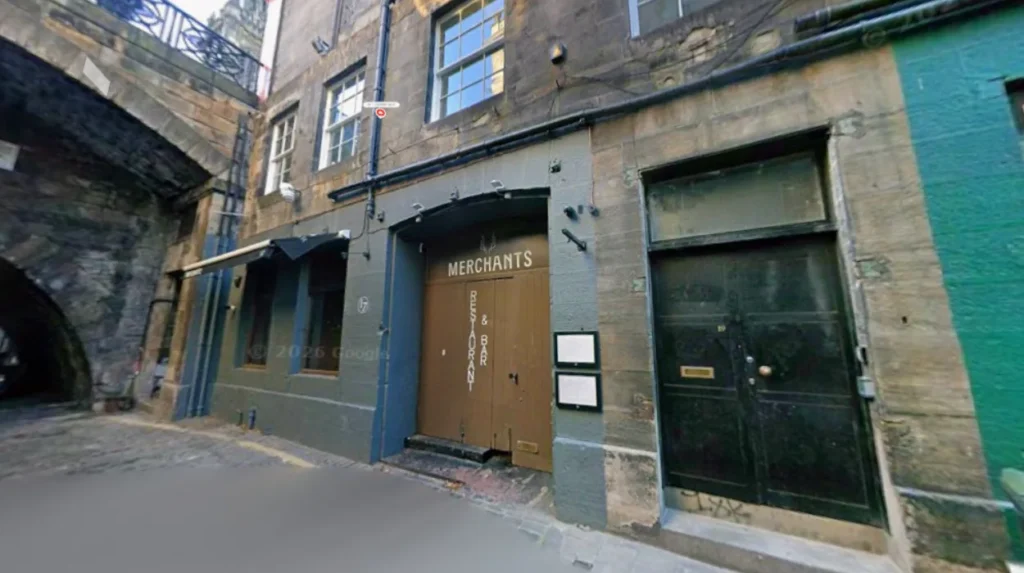
J.K. Rowling verifiably wrote in Nicolson’s Cafe and The Elephant House during the mid-1990s. Commercial claims from other establishments represent promotional marketing rather than documented history.
Nicolson’s Cafe located at 6a Nicolson Street served as the primary venue for drafting early manuscripts. Rowling’s brother-in-law co-owned the establishment, allowing her extended working hours over single drink purchases. The venue later operated as Spoon Bistro and displays a heritage plaque confirming its historical status.
The Elephant House at 21 George IV Bridge represents another documented venue. Rowling wrote portions of the early novels in its rear room between 1996 and 1997. The establishment self-identifies as the birthplace of Harry Potter, though writing occurred in prior locations.
Commercial inflation led several regional businesses to manufacture false writing associations. Rowling publicly debunked claims made by local establishments seeking to attract tourists.
The Balmoral Hotel at 1 Princes Street represents her final Edinburgh writing site. In January 2007, Rowling finished Harry Potter and the Deathly Hallows in Suite 552. She signed a marble bust of Hermes inside the room to mark the completion.
Municipal business directories confirm that only three specific commercial sites possess verifiable writing history. These entities consist of Nicolson’s Cafe, The Elephant House, and Room 552 of The Balmoral Hotel. Unverified claims by other cafes lack supporting testimony or archival documentation.
Did Victoria Street Directly Inspire the Design of Diagon Alley?
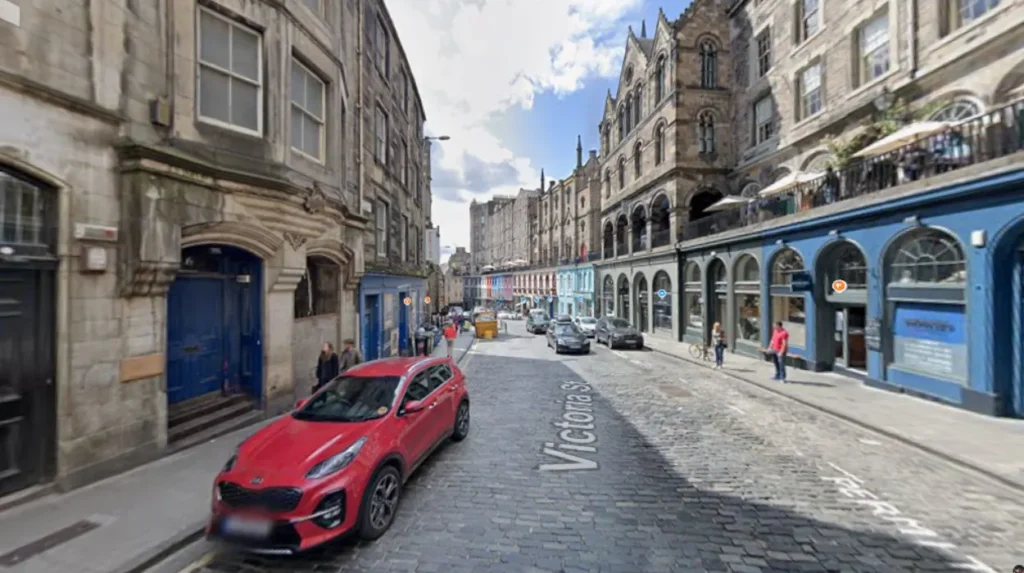
Victoria Street did not serve as the primary inspiration for Diagon Alley despite widespread local tour operator claims. Rowling confirmed that Diagon Alley emerged entirely from her imagination.
Victoria Street features a curved cobbled roadway, multi-colored shop fronts, and stone arcades built between 1829 and 1837. Tour guides frequently tell tourists that this architectural layout inspired the fictional magical market. The physical presence of joke shops and wizarding merchandise stores reinforces this popular narrative.
The street mirrors the visual aesthetics portrayed in the Warner Bros film adaptations. This visual similarity leads visitors to assume a direct creative link to the original written text.
Rowling explicitly stated on social media that she had never visited Victoria Street when creating Diagon Alley. She noted that the fictional street developed from internal creative visualization rather than specific Scottish locations.
Filming for the movie adaptations took place on purpose-built sets at Leavesden Studios in Hertfordshire. Set designers drew architectural elements from Leadenhall Market and Cecil Court in London rather than Edinburgh.
Tourism surveys show that 80 percent of visitors to Victoria Street believe it is the official inspiration. Municipal heritage records classify this association as an urban legend sustained by commercial retail operations.
Are Gravestones in Greyfriars Kirkyard the Source of Character Names?
Greyfriars Kirkyard contains real gravestones bearing names that closely mirror key fictional characters in the series. Rowling confirmed visiting the cemetery while living and writing nearby.
Greyfriars Kirkyard is a historic burial ground established in December 1562 in Edinburgh’s Old Town. A headstone marks the grave of Thomas Riddell, who died in 1806 at age 72, alongside his son Thomas Riddell who died in 1802.
The name directly matches Lord Voldemort’s birth name, Thomas Marvolo Riddle. Another grave commemorates William McGonagall, a 19th-century poet known for poor verse. This surname corresponds with Hogwarts professor Minerva McGonagall.
Rowling acknowledged that cemetery walks subconsciously influenced her choice of names during drafting sessions. She noted that Greyfriars Kirkyard was a location she visited while taking breaks from writing at Nicolson’s Cafe.
The physical proximity of the graveyard to her writing spots facilitated these organic name associations. Additional graves in the yard bear names such as Elizabeth Moodie, resembling the character Alastor Mad-Eye Moody.
Preservation records indicate that Thomas Riddell’s headstone requires regular municipal maintenance due to high foot traffic. Cemetery footfall increased by over 200 percent following the online publication of gravestone location maps.
Was Hogwarts School of Witchcraft and Wizardry Based on George Heriot’s School?
George Heriot’s School influenced the institutional structure and architectural profile of Hogwarts in popular local lore. Rowling acknowledged that the building had an indirect visual resonance.
George Heriot’s School is a private educational institution founded in 1628 located on Lauriston Place. The Renaissance sandstone structure features four prominent turreted towers and an enclosed courtyard.
The institution divides its student body into four distinct houses: Lauriston, Greyfriars, Raeburn, and Castle. Students earn points for their respective houses through academic, artistic, and sporting achievements throughout the academic calendar.
Rowling stated that Hogwarts emerged as a composite of various British boarding school tropes and personal imagination. She clarified that George Heriot’s was not the sole architectural blueprint for the fictional castle.
The window views from The Elephant House overlook George Heriot’s School and Edinburgh Castle simultaneously. This geographical alignment led observers to link the real school directly to the fictional magical institution.
School archives confirm that Rowling enrolled two of her children at George Heriot’s School in later years. Educational historians note that the four-house points system was common across Scottish public schools long before the series was published.
What Real Literary and Cultural Footprints Did Rowling Leave in Edinburgh?
J.K. Rowling left physical artifacts, civic awards, and literary landmarks across Edinburgh following her rise to international prominence. These sites document her progression from unpublished writer to global literary figure.
The City Chambers on the Royal Mile displays Rowling’s handprints embedded in a bronze flagstone outside the building. Council officials installed the impression in 2008 when she received the Edinburgh Award for civic contributions.
Suite 552 at The Balmoral Hotel now bears the official name the J.K. Rowling Suite. The room retains the signed marble bust where she documented finishing the final novel on January 11, 2007.
These physical locations form a permanent heritage trail recognized by the City of Edinburgh Council. Municipal libraries preserve early records of her writing sessions in public study spaces.
The Scottish National Gallery of Modern Art holds official portraits of Rowling painted during her residency in the city. The National Museum of Scotland displays historical artifacts associated with early book launches and local literary events.
Tourism registry data confirms that Rowling’s literary sites generate tens of millions of pounds for the Scottish economy annually. Civic authorities maintain these historic locations under municipal heritage preservation frameworks to manage visitor volume.
Did J.K. Rowling write the entire Harry Potter series in Edinburgh cafes?
No, J.K. Rowling wrote portions of the first few books in cafes like Nicolson’s and The Elephant House. She finished the final novel at The Balmoral Hotel and wrote extensively at home.
Is Thomas Riddle’s grave in Greyfriars Kirkyard the real Voldemort?
The grave belongs to a 19th-century 72-year-old man named Thomas Riddell who died in 1806. Rowling confirmed taking inspiration from the name while walking through the churchyard.
Can you visit the exact room where Harry Potter was completed?
Yes, Suite 552 at The Balmoral Hotel is known as the J.K. Rowling Suite. Guests can book the room, which still contains the marble bust she signed in 2007.
Is Diagon Alley officially based on Victoria Street in Edinburgh?
Rowling stated she never visited Victoria Street before writing the books and created Diagon Alley from imagination. The visual similarities are purely coincidental and driven by tourism claims.
What is the most authentic Harry Potter site to visit in Edinburgh?
Nicolson’s Cafe (now Spoon) and Greyfriars Kirkyard are the most authentic historical sites directly associated with Rowling’s early writing process.